
What if a lockable zipper slows a curious hand but still leaves your bag vulnerable? In a crowded station or busy café, a backpack with lockable zippers can add a useful pause against opportunistic access. But a lock isn’t a guarantee, and not every zipper pull can accept one. The details matter: how the pulls connect, what kind of lock fits, and whether the rest of the bag supports the added layer.
This guide explains what lockable zippers can and can’t secure, then compares zipper and lock designs for travel, commuting, and everyday carry. You’ll learn what to check in a product listing, including compatibility and ease of use, so security doesn’t come at the cost of convenience. The aim is a considered choice, not a promise of theft-proof protection.
Key Takeaways
- Compare lockable zipper pulls, separate padlocks, and non-locking designs for compatibility, setup, and everyday access.
- Check that a backpack’s zipper pulls work with your preferred lock before choosing a lockable design.
- Match capacity and access to your routine, especially if you open your bag often during a commute.
- Check product details to confirm whether a lock is included and which features are specified.
- Assess the whole bag and your carry habits, not just the zipper, when deciding what suits your needs.
What Does a Backpack with Lockable Zippers Actually Secure?
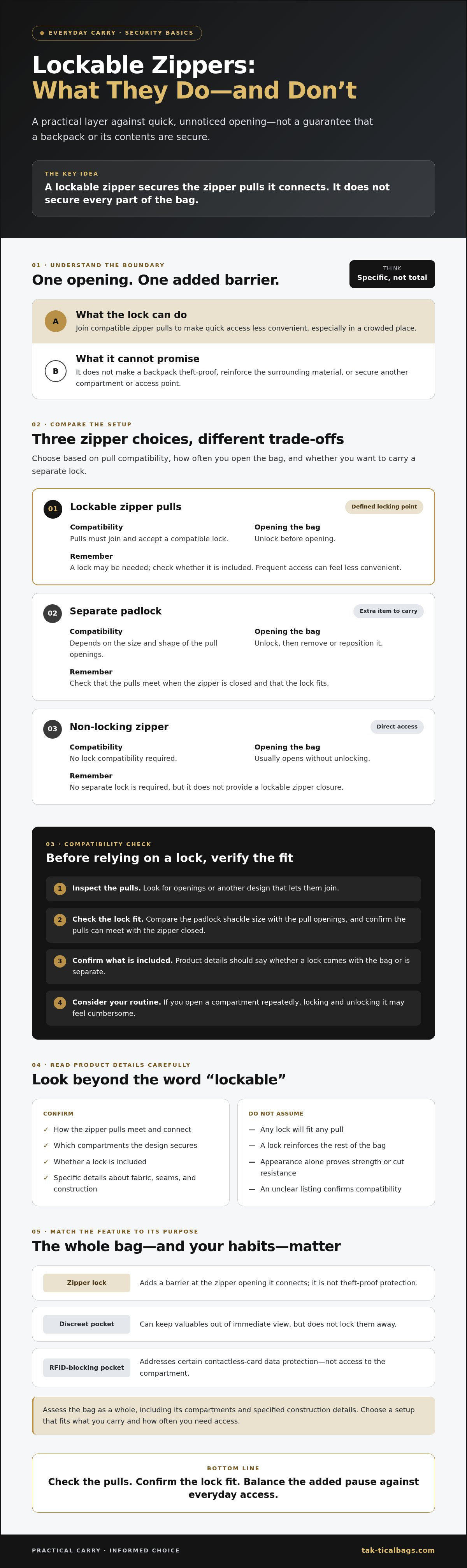
A lockable zipper secures a specific point of entry: the zipper pulls. These pulls have openings, loops, or another compatible shape that lets them be joined by a lock. The added barrier can make quick, unnoticed opening less convenient, especially in a crowded place. It doesn’t secure every part of the backpack or guarantee that belongings will remain untouched.
How do lockable zipper pulls work?
Bring the compatible pulls together, then fasten them with a separate or built-in lock. Designs vary, so check the product details instead of assuming any lock will fit. If you plan to use a padlock, compare its shackle size with the openings in the pulls and confirm they can meet when the zipper is closed. Also check whether a lock is included.
Think of the lock as one part of your carry setup. A luggage lock can provide background on common locking mechanisms and their limitations, but the backpack’s pull design determines compatibility. A bulky or awkward lock may also slow access when you need a transit card, laptop, or other frequently used item.
Are lockable zippers theft-proof?
No. A zipper lock doesn’t make a backpack theft-proof. It may deter casual opening, but it isn’t a guarantee against theft, and it only restricts the zipper pulls it connects. Another compartment or point of access may remain unsecured. The zipper, surrounding material, and other parts of the bag aren’t automatically reinforced just because a lock is attached.
Separate three ideas: zipper security, secure storage, and discreet carry. A lock can make one opening harder to access quickly. It can’t replace choosing a bag that suits what you carry or staying aware of your surroundings. If a product listing doesn’t clearly describe its zipper design or lock compatibility, treat those details as unconfirmed and check before buying.
When comparing a backpack with lockable zippers, look beyond the word “lockable.” Check how the pulls meet, whether a lock comes with the bag, and which compartments the design secures. Then consider how the rest of the backpack fits your routine. The feature is most useful when it adds a practical layer without making everyday access cumbersome.
Backpack Zipper Locks, Pulls, and Security Features Compared
The right setup depends on how the zipper closes, whether you’re willing to carry a separate lock, and how often you need quick access. Compare these options before choosing a backpack with lockable zippers. A zipper lock can add a barrier at an opening, but it doesn’t replace thoughtful compartment design or a review of the bag’s overall construction.
| Design | Compatibility | Ease of access | Added items | Everyday convenience |
|---|---|---|---|---|
| Lockable zipper pulls | Pulls must be designed to join and accept a compatible lock. | Requires unlocking before opening. | A lock may be needed; check whether one is included. | Useful when you want a defined locking point, but less convenient for frequent access. |
| Separate padlock | Depends on the size and shape of the pull openings. | Must be unlocked and removed or repositioned to open the zipper. | The padlock is an extra item to carry. | Works only when the zipper pulls are compatible; otherwise, it won’t attach as intended. |
| Non-locking zipper design | No lock compatibility required. | Usually direct access without unlocking. | No separate lock required. | Simple for regular opening, but doesn’t provide a lockable zipper closure. |
What should you check before adding a lock?
Inspect the zipper pulls, not just the product label. Confirm they have openings or another joining design that accepts your chosen lock. Check that the lock fits and whether it’s included or sold separately. Then consider your routine: if you open the compartment repeatedly, locking and unlocking it each time may feel cumbersome. For air travel, consult the TSA Security Screening page for screening information, and check any lock guidance that applies to your trip.
Which complementary features matter?
Look at how the compartments are arranged. A pocket that keeps valuables out of immediate view can support discreet carry, though it doesn’t lock them away. Review listed details about fabric, seams, and construction, but don’t infer strength or cut resistance from appearance alone. Look for specific product information to support security claims.
RFID-blocking pockets address a different concern from zipper access. They’re designed for certain contactless-card data protection, not to stop someone opening a compartment. Consider each feature according to its purpose, then weigh it against what you carry and how you use your bag.
Compare functional backpack styles at Tak-tical’s backpack selection, then verify the zipper design and lock compatibility in the individual product details.
Choose a Lockable-Zipper Backpack for Your Routine
Start with the day you actually have. A backpack that works for a short commute may feel inconvenient on a trip, while a travel-focused layout may be more than you need for everyday carry. Consider where you’ll carry it, what needs a dedicated place, and how often you’ll open the main compartment. Lock compatibility matters most when it suits the setting, not simply because it appears on a feature list.
What works for commuting and everyday carry?
List your regular essentials, such as a laptop, notebook, water bottle, keys, and transit card. Check whether the compartments keep those items easy to find without complicating your routine. If you reach into the bag often, quick access may matter more than locking every zipper. For crowded journeys, compatible lockable pulls may add a useful pause against casual access. Consider whether the bag’s appearance and organization suit both work and personal settings. For broader daily-use guidance, see this everyday carry backpack guide.
What changes for work and travel?
For work, check the laptop compartment’s listed dimensions against your device, including its width and thickness. A general laptop-size claim may not account for every model or case. Assess device storage separately from zipper security: a lockable main compartment doesn’t confirm that a laptop sleeve fits or protects your computer.
Travel brings more transitions and access checks. Think about which items you’ll need during the journey, where the zippers are located, and whether locking them will slow you down when you need something. If considering a lock for air travel, review the TSA checklist’s guidance on recognized locks. Check current carry-on requirements for your trip rather than assuming one bag size works everywhere. This work and travel backpack guide offers broader trip-planning criteria.
Before choosing a backpack with lockable zippers, weigh security against the rhythm of your day. When comparing functional backpack styles, verify each product listing for the zipper design, lock compatibility, and included accessories. Don’t infer those details from photos or the general product category.
How to Inspect a Backpack with Lockable Zippers Before Buying
A product name or broad phrase like “enhanced security” doesn’t explain how the zipper works. Review the current listing closely, and treat missing details as questions to resolve before ordering. Use this checklist to assess fit, function, and what the lockable feature actually covers.
- Confirm zipper compatibility. Look for explicit details showing that the zipper pulls can be joined or secured with a lock. Don’t assume every zipper accepts one just because the description mentions security.
- Check what’s included. Verify whether a lock comes with the backpack or must be purchased separately. If you plan to use your own, make sure the listing or product information confirms a compatible pull design.
- Match dimensions to your routine. Compare the listed measurements and intended carry category with what you plan to pack. Consider daily essentials, work items, or travel belongings rather than relying on a general capacity description alone.
- Map the compartments and access points. Identify which sections close with zippers, where you’ll store items you reach for often, and whether the lockable pulls cover the compartment you intend to secure.
- Review confirmed construction details. Check the current description for stated materials and features. Don’t infer material, durability, or protective performance from product photos or vague security wording.
Which product details should you verify?
Be specific. “Secure design” doesn’t confirm lock-compatible zipper pulls, and a photo may not show whether the openings fit your lock. If the listing doesn’t say whether a lock is included or which zippers it works with, treat that information as unconfirmed. Verify materials and dimensions in the current description instead of making assumptions based on similar backpacks.
How can you test convenience and fit?
Picture your normal use: opening the main compartment while wearing the bag, retrieving keys, or reaching for a laptop before a meeting. Consider whether adding a lock would interrupt those actions. Check laptop or travel compartments against the way you carry devices and documents. If device storage is central, compare the layout with this laptop bag reference guide.
A backpack with lockable zippers should suit your routine as well as your security preferences. Explore Tak-tical’s backpack selection, then confirm each listing’s zipper compatibility and included features before ordering.
Find a Backpack That Balances Security and Everyday Function
The right choice fits your routine, carries what you need, and makes its features clear. A lockable zipper can add a practical layer at a particular opening. It isn’t a promise of theft prevention, and it shouldn’t outweigh capacity, access, or comfort in your decision. Look at the whole bag, then decide whether the lockable feature supports how you’ll use it.
A final checklist for a confident choice
Before choosing a backpack with lockable zippers, work through these essentials:
- Check compatibility. Confirm that the zipper pulls accept the lock you plan to use. Don’t rely on a general security claim.
- Review what’s included. Find out whether the lock is included or needs to be purchased separately.
- Match capacity to your routine. Consider what you carry each day, whether you need room for work or travel items, and how the listed dimensions compare with your needs.
- Assess access and layout. Check which compartments are secured and whether frequently used items remain practical to reach.
- Rely on confirmed specifications. Review the current listing for stated construction details and features. Don’t assume every backpack shares the same design.
Choose security that fits naturally into your day. If opening and locking a compartment becomes a constant interruption, the feature may not suit your use pattern. If you regularly carry a bag through crowded settings, compatible pulls may be worth considering as one layer of an attentive carry approach.
Explore functional backpack options
Tak-tical offers backpacks for people comparing functional, stylish carry options. The available product information doesn’t confirm a specific lockable-zipper model, so check each current listing for zipper design, compatibility, and included accessories before deciding. Product details can vary, and a feature shown on one backpack shouldn’t be assumed to apply to another.
Take a measured approach: verify the lock fit, compare the organization with your actual needs, and choose features that add value without unnecessary complexity. Then browse Tak-tical backpacks and review the details of any style you’re considering.
Choose with Clarity, Carry with Confidence
A backpack with lockable zippers can add a useful deterrent, but it isn’t theft-proof. The right choice depends on more than the zipper: confirm that the pulls accept your chosen lock, review which compartments it secures, and weigh the added step against how often you need access. Capacity, organization, and confirmed construction details matter too.
Match the bag to your commute, workday, or trip, then check the current product listing carefully. Don’t assume a lock is included or that every backpack shares the same security features.
Tak-tical sells backpacks and other carry bags through its online store, with an emphasis on functional, stylish designs for everyday carry. Explore Tak-tical’s backpack selection and review the listing details to find an option that suits your routine.
Frequently Asked Questions
Are backpacks with lockable zippers more secure?
They can add a deterrent by making a zipped compartment harder to open quickly, but they don’t guarantee that belongings are safe. A backpack with lockable zippers only secures the zipper pulls that the lock joins. Other compartments and parts of the bag may remain accessible. Consider the full design, how you carry valuables, and your surroundings rather than treating the lock as complete protection.
Can you put a lock on any backpack zipper?
No. The zipper pulls need openings or another compatible design that lets a lock connect them. Ordinary pulls may not align or have enough space for a lock’s shackle. Check the product details and compare the pull openings with the lock before buying. Don’t force a lock onto incompatible hardware, since it may not close properly or could interfere with opening the zipper.
What kind of lock works with lockable backpack zippers?
A small padlock may work if its shackle fits through the zipper-pull openings and the pulls can meet when the compartment is closed. Combination and key locks are both options, but compatibility depends on the specific pulls and lock dimensions. Some backpacks may include an integrated lock or a separate lock. Check the listing to confirm what’s included and which mechanism is compatible.
Do lockable zippers prevent pickpocketing?
No. Lockable zippers may make casual access more difficult, but they can’t prevent every attempt to reach or take a bag. A lock only joins compatible zipper pulls, and other access points may remain unsecured. Keep valuables arranged thoughtfully, stay aware of your surroundings, and maintain control of your bag in crowded places. Treat the lock as one deterrent, not a substitute for attentive carry habits.
Are lockable zipper backpacks suitable for everyday use?
They can suit everyday carry if the added security works with your routine. Consider how often you open the main compartment and whether unlocking it each time will become inconvenient. If you frequently reach for items such as keys or a transit card, layout and easy-to-reach pockets may matter more. Choose a design that balances convenient organization with the level of deterrence you want.
What should I check before buying a backpack with lockable zippers?
Confirm that the zipper pulls accept the lock you plan to use, and check whether a lock is included. Review the bag’s dimensions, compartments, access points, and current product specifications, including stated materials. Match the capacity and layout to what you carry and how often you need access. If security wording is vague, verify the details rather than assuming every compartment is lockable or protected.