
Why does technical performance usually come at the cost of sophisticated style? Most hiking bags force a compromise between neon "tourist gear" aesthetics and actual trail durability. You need a system that handles a rugged ascent but remains composed in a city terminal. It's frustrating to manage overly complex strap systems or bags that lack dedicated space for your essential tech.
We agree that your gear should be as versatile as your lifestyle. This guide helps you select hiking bags that balance technical trail requirements with a minimalist, tactical aesthetic for modern readiness. You'll discover how to achieve a streamlined carry system without sacrificing the rugged construction needed for harsh environments. Professional readiness requires gear that performs everywhere.
We'll examine 2026 standards for durability, including how to meet strict 22 by 14 by 9 inch airline carry-on regulations while packing for the trail. You will learn to identify features that allow a seamless transition from the wilderness to urban environments. Elevate your carry with confidence and quiet efficiency.
Key Takeaways
- Shift from bulky gear to streamlined utility for a carry system that transitions across any environment.
- Identify your ideal volume by mastering the 15L to 30L sweet spot for high-performance hiking bags.
- Prioritize 500D to 1000D Nylon and ergonomic harness systems to ensure elite durability and comfort.
- Integrate hydration and technology storage for a sophisticated, organized transition from the trail to the city.
- Eliminate common mistakes like overpacking with a professional checklist focused on functional excellence and minimalist design.
The Evolution of Hiking Bags: Beyond the Trailhead
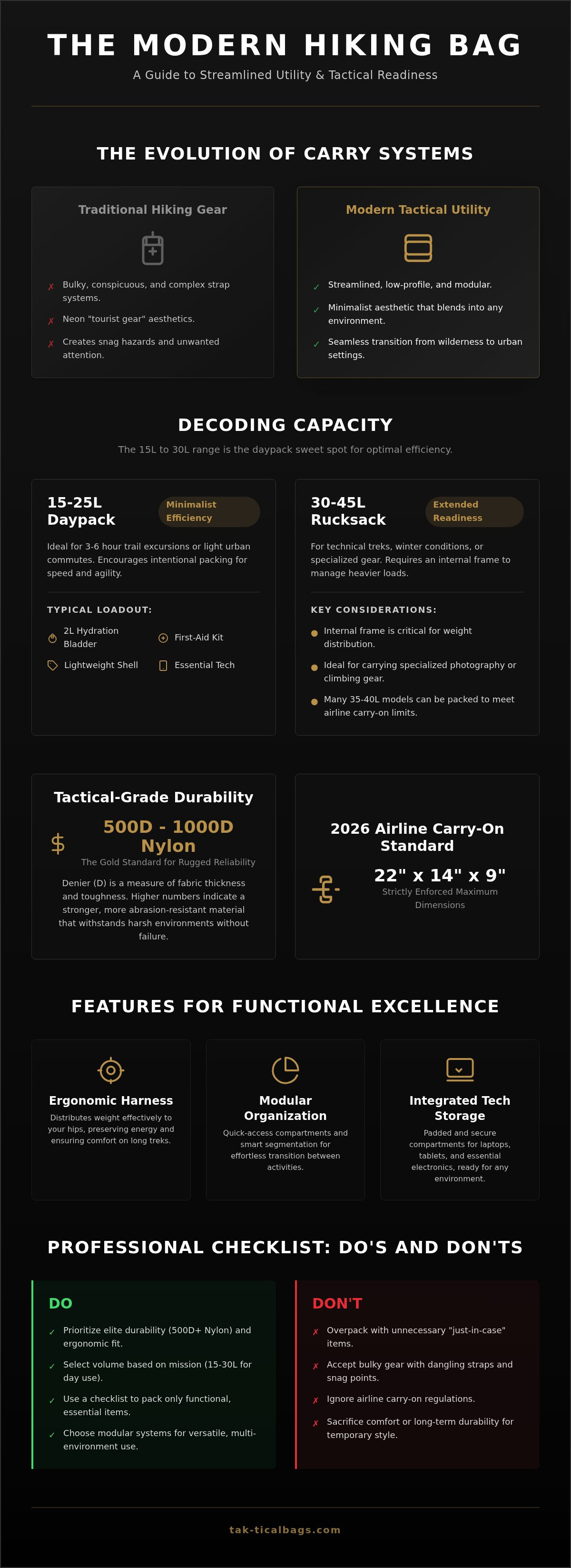
Modern exploration has changed. It's no longer about escaping the world for a few hours. It's about being prepared to move through it with total confidence. Traditional hiking bags often feel like a restrictive uniform for a specific destination. They scream "outdoorsman" in a way that feels out of place the moment you step off the trail. We believe in a different approach. We call it streamlined utility. This philosophy rejects the "bulky gear" mentality of the past in favor of systems that work as hard in the city as they do on a mountain ridge.
The evolution of modern backpacks shows a clear trajectory toward specialized performance. Early designs were simple frames and canvas sacks. Today, we demand more. The hybrid adventurer needs a single, reliable partner for a Tuesday morning commute and a Saturday morning summit. This requires a shift in how we view technical specs. We don't just look at liter capacity. We look at how that capacity is organized. Efficiency is the goal. Design is the tool.
The Problem with Traditional Hiking Aesthetics
Bright colors and dangling straps don't equate to better performance. They often just create snag hazards and unwanted attention. The move toward low-profile silhouettes is about more than just looking good. It's about reducing bulk and improving movement. A minimalist aesthetic allows you to blend into any environment without sacrificing the technical features you need for survival. You can explore this further in our guide on The Art of the Everyday Carry Backpack.
Defining Purposeful Readiness in 2026
Readiness is a state of mind. It means having your gear organized so you never have to hunt for a charging cable or a rain shell. Modern hiking bags must offer modularity. Quick-access compartments are essential for your phone, keys, and navigation tools. This level of organization makes transitioning from a work backpack to a trail-ready system effortless. You shouldn't have to repack your entire life just because your location changed. It's about seamless integration.
Durability is the foundation of this system. We use tactical-inspired materials like 500D and 1000D Nylon because they don't quit. A bag that fails in the backcountry isn't just an inconvenience; it's a liability. Our curated collection of 11 hiking bags is built on this premise of rugged reliability. High-quality craftsmanship ensures your gear remains a constant companion for years. Efficiency meets endurance. That's the new standard for the modern professional.
Decoding Capacity: Finding Your Ideal Volume
Capacity is the foundation of your carry system. It dictates your mobility and your mindset. Choosing the right volume isn't about maximizing space; it's about optimizing efficiency. Most hikers find their stride within the 15L to 30L range. This is the daypack sweet spot. it provides enough room for essentials without the burden of unnecessary bulk. When you choose the right volume, you move with a sense of organized calm.
Weight distribution matters more than total volume. A poorly packed 20L bag feels heavier than a well-balanced 35L rucksack. Your physical frame also plays a critical role. The bag should sit comfortably between your shoulders and your hips. It shouldn't pull you backward or restrict your natural stride. When your pack matches your frame, you maintain total control over your movement. This balance is what defines professional readiness on the trail.
The 15L-25L Daypack: Minimalist Efficiency
These are the tactical style daypacks designed for the hybrid adventurer. They excel during 3 to 6 hour trail excursions or light urban commutes. You can realistically fit a 2L hydration bladder, a lightweight shell, a basic first-aid kit, and your daily tech. Smaller volumes encourage intentionality. You only carry what you truly need. This creates a streamlined experience that lets you focus on the journey rather than managing your gear. It's the ultimate choice for those who value speed and agility.
The 30L-45L Rucksack: Extended Readiness
Sometimes you need more. Technical treks, winter conditions, or specialized photography gear require extra volume. This is where internal frames become critical. They transfer weight to your hips, preserving your energy during long ascents. If you plan to travel, keep the 2026 airline regulations in mind. Major carriers now strictly enforce the 22 by 14 by 9 inch limit, including wheels and handles. A 35L to 40L bag often hits this limit perfectly when packed thoughtfully. It allows you to skip the baggage carousel and head straight to the trailhead.
Finding the right balance ensures you're never under-prepared or over-encumbered. It’s about seamless integration into your daily life and your outdoor pursuits. Explore our curated range of hiking bags to find the specific volume that fits your next mission. Whether you're navigating a mountain pass or a city terminal, the right capacity makes the difference between a struggle and a success.
Technical Features: Durability, Fit, and Function
Technical excellence is non-negotiable. When selecting hiking bags, the internal architecture matters as much as the external silhouette. You need a system that supports your load while protecting your gear from the elements. This balance of durability and function is the hallmark of a professional carry system. Every component must serve a purpose.
Fabric density defines longevity. We prioritize 500D to 1000D Nylon because it withstands the abrasive nature of the backcountry. Denier is a unit of measurement that indicates the mass density of fibers, where higher numbers signify a thicker and more durable fabric. This tactical grade material ensures your pack remains intact through years of heavy use. It resists tears, scuffs, and the general rigors of high-intensity movement.
Comfort stems from ergonomics. An advanced harness system distributes weight across your center of gravity. It prevents the fatigue that often ends a trek early. Hydration is equally critical. Internal sleeves offer a streamlined profile and protect your reservoir, while external pockets provide quick access for bottles. Tactical integration sets our collection apart. MOLLE webbing allows for modular versatility that traditional outdoor brands often overlook. It lets you attach extra pouches or specialized tools exactly where you need them. This customization transforms a standard pack into a specialized tool for your specific mission.
Suspension and Airflow
Ventilated back panels are essential for thermal regulation. They create a channel for airflow, preventing heat buildup during high exertion climbs. Stability requires more than just shoulder straps. Sternum straps and hip belts lock the load to your body, eliminating sway. Proper adjustability ensures the bag sits correctly on your lumbar, protecting your spine and improving overall mobility. A stable load is a lighter load.
Weather Resistance and Protection
Preparedness means accounting for shifting conditions. Durable Water Repellent (DWR) coatings provide immediate protection against light moisture. For sustained downpours, integrated rain covers offer a total barrier. Protecting your tech is a primary concern for the modern adventurer. Padded internal sleeves isolate laptops and tablets from trail vibrations and impact. Your gear stays secure, regardless of the terrain. High utility meets high protection.
Choosing the right hiking bags requires a keen eye for these technical details. It is the difference between gear that simply carries and gear that empowers. Focus on the specifications that match your environment. Reliable performance is built into every stitch.
Standout Selections: The Tak-tical Hiking Collection
Selection is a matter of precision. Our curated collection of 11 hiking bags provides the exact balance of technical trail requirements and urban aesthetics. We've eliminated the "tourist gear" look in favor of professional readiness. This collection avoids the visual clutter of traditional outdoor brands; it favors a minimalist, tactical aesthetic that remains composed in any environment. Every bag is a result of direct-to-consumer value and purposeful design. You get premium craftsmanship without the traditional retail markup.
Your choice of gear reflects your commitment to efficiency. Whether you're planning a rapid ascent or a multi-city journey, the right bag acts as a force multiplier. We focus on high-impact features that improve your movement and organization. Our designs integrate hydration and tech storage seamlessly. This ensures you're prepared for the trail without looking out of place in a professional setting. It's about movement, integration, and refinement.
The All-Rounder: Versatile Daypacks
The Day Hiking Daypack is the primary choice for 90% of trail enthusiasts. It features a sleek silhouette that doesn't snag on undergrowth or crowded transit. Integrated hydration ports ensure you stay fueled without breaking your stride. These bags excel in the 15L to 30L range, providing the "sweet spot" for daily utility and weekend exploration. They are lightweight yet incredibly resilient. This is the ultimate tool for those who value quick transitions and a streamlined carry system.
The Specialist: Heavy Duty Tactical Bags
The Tactical Hiking Backpack is built for users who demand extreme durability. It utilizes reinforced stitching and superior abrasion resistance to handle the harshest environments. The modular potential is a key differentiator; you can add pouches and accessories using the integrated MOLLE system. This allows for a customized experience based on your specific mission requirements. It leverages the 500D to 1000D Nylon standards we've established for elite performance. It's rugged reliability in a sophisticated package.
Minimalist hikers will find compact options that prioritize speed and agility. These smaller packs are perfect for short, intense bursts of activity where every ounce matters. For global travelers, our large-capacity rucksacks are designed to maximize storage while respecting 2026 airline regulations. You don't have to choose between a bag that works and a bag that looks right. You can have both. Efficiency is built into every stitch of our collection.
Ready to elevate your carry system? Browse the complete collection of hiking bags to find the partner for your next journey. Experience the confidence that comes with gear designed for modern readiness.
Finalizing Your Choice: From Selection to the Trail
Selection is the final step in your journey toward readiness. Choosing from the best hiking bags requires a balance of logic and intuition. Your gear is an extension of your intent. It should facilitate movement, not hinder it. Before you commit, run through a final checklist. Ensure the capacity matches your typical mission. Verify that the harness system aligns with your torso length. Confirm the technical features, like hydration ports and MOLLE webbing, suit your specific needs. Finally, ensure the aesthetic reflects your professional standards. A bag that looks right feels right.
Common mistakes often stem from a lack of focus. Overpacking is the most frequent error. It compromises weight distribution and creates unnecessary fatigue. Another pitfall is choosing style over ergonomic fit. A minimalist silhouette is essential, but it must be backed by a functional suspension system. If the bag doesn't sit correctly on your lumbar, the aesthetic value is lost. Maintain your investment with simple care. Wipe the exterior with a damp cloth after trail use. Air dry it away from direct heat. Check all attachment points for integrity. This ensures a lifetime of reliable service.
The Selection Framework
Use this three question test to validate your choice. First, does the volume accommodate my 80% use case without excess bulk? Second, can I carry this bag into a professional environment with confidence? Third, does the harness system support my frame under a full load? Matching your most frequent use case to the bag’s primary feature is the key to satisfaction. If you spend most of your time on day treks, prioritize a streamlined daypack. If you are a global traveler, focus on rucksacks with internal frames. Choose with intent.
Ready for the Journey
There is a profound psychological benefit to being geared up and organized. It creates a sense of empowerment. When your essentials are secured and accessible, you move with a quiet confidence. This is the essence of modern readiness. It is the ability to transition from a high-pressure urban environment to a rugged mountain trail without missing a beat. Purposeful movement starts with the right foundation. Your journey deserves gear that is as ambitious as you are.
Elevate your daily carry and your outdoor experience. Explore the Hiking Bags Collection today to find your ideal partner for the path ahead. Experience the intersection of technical excellence and sophisticated design.
Master Your Modern Readiness
Purposeful movement requires gear that adapts as quickly as you do. You've seen how the right hiking bags bridge the gap between technical trail performance and sophisticated urban utility. By prioritizing elite materials like 1000D Nylon and ergonomic harness systems, you ensure your carry system remains a reliable partner for years. It's about moving beyond the "tourist gear" aesthetic toward a state of organized calm and professional efficiency.
Our collection features 11 curated technical designs that embody a minimalist tactical aesthetic. Whether you're navigating a technical ascent or a global transit hub, your gear should project confidence and readiness. With global shipping available, the transition to a more streamlined lifestyle is within reach. It's time to stop compromising on style or durability. Your gear should be as ambitious as your itinerary.
Elevate your carry—Shop the Hiking Bags Collection
Step onto the trail with the certainty that your gear is built for excellence. Your next journey begins with the right foundation. Move with purpose and stay ready for whatever the day demands.
Frequently Asked Questions
What size hiking bag do I need for a day hike?
A capacity of 15L to 30L is the ideal range for most day hikes. Smaller 15L to 20L hiking bags excel during short, three-hour excursions where you only need water and a light shell. If you're tackling variable weather or carry extra photography gear, a 25L to 30L pack provides the necessary volume without becoming cumbersome. It's about matching your gear list to the mission's duration.
Are tactical backpacks good for hiking?
Tactical backpacks are excellent for hiking because they prioritize durability and modularity. These designs typically utilize high-denier materials like 1000D Nylon, which resists abrasions from rock and brush better than standard consumer packs. The inclusion of MOLLE webbing allows you to customize your external carry. This tactical-inspired construction ensures your bag survives harsh environments while maintaining a professional, minimalist aesthetic.
What is the difference between a rucksack and a backpack?
The primary difference lies in the closure system and load-bearing intent. Rucksacks often feature a top-loading design with a cinch closure and a protective lid; they're built for heavy, rugged loads. Backpacks usually utilize zippered openings and offer more specialized internal organization for tech and daily essentials. Both serve the modern adventurer, but rucksacks are often preferred for technical treks where maximum durability is required.
How should a hiking bag fit my body?
A proper fit ensures the weight is distributed primarily across your hips rather than your shoulders. The pack should sit snugly against your back, with the bottom of the bag resting on your iliac crest. Adjust the shoulder straps so there are no gaps, but ensure they don't pinch. Use the sternum strap to stabilize the load. A well-fitted bag prevents fatigue and allows for natural, unrestricted movement on the trail.
Do I need a waterproof hiking bag?
Water-resistant fabrics with DWR coatings are generally more practical than fully waterproof bags for most hikers. Truly waterproof packs are often heavier and lack the breathability needed for high-exertion climbs. For sustained downpours, an integrated rain cover provides a total barrier without the weight penalty. This approach keeps your gear dry while allowing the pack to remain lightweight and versatile across different climates.
Can I use my hiking bag as a carry-on for flights?
Many hiking bags are suitable for carry-on use if they adhere to the standard 22 by 14 by 9 inch size limit. In 2026, airlines have become stricter with enforcement, so it's vital to measure your pack when it's fully loaded. Packs in the 20L to 35L range typically meet these requirements. Choosing a bag with a minimalist silhouette makes it easier to navigate cabin aisles and overhead bins.
What should I look for in a hydration-compatible bag?
Prioritize bags with a dedicated internal sleeve and a reinforced exit port for the hydration tube. The sleeve should keep the reservoir vertical to prevent shifting as the water level drops. Look for shoulder straps that feature routing loops or clips to keep the bite valve accessible. A well-designed system integrates hydration seamlessly, ensuring you stay fueled without needing to stop or remove your pack.
How do I clean and maintain my hiking backpack?
Clean your bag by hand using a damp cloth and mild, non-detergent soap. Never put your pack in a washing machine, as the agitation can damage technical coatings and mesh components. Air dry the bag in a shaded area away from direct heat sources. Regularly check zippers for debris and apply a silicone lubricant if they become sticky. Proper maintenance ensures your gear remains a reliable partner for years.