
What if your backpack isn’t what’s making your work outfit feel too casual? A bulky shape, an overfilled bag, or a loose, one-shoulder carry can throw off an otherwise polished look. It’s a common concern when you need to bring a laptop and daily essentials to work. Learning how to look professional with a backpack starts with treating it as part of your outfit, not just a place to store your things.
A work-ready backpack can look practical and considered. Choose a shape and color that suit your workplace, then keep the bag neat and close to your back. Small choices make a difference, from coordinating it with your clothes to carrying only what you need.
This guide will help you choose a backpack that fits your dress code and daily routine, build a cohesive look around it, and carry your work essentials without creating a bulky silhouette. You’ll also learn when a dedicated laptop bag may better suit your needs. The result is a composed, comfortable commute and a style that feels intentional from the first meeting to the end of the day.
Key Takeaways
- Learn how to look professional with a backpack by making it feel like a considered part of your outfit, not an afterthought.
- Assess a bag’s proportions and details against your frame, clothing, and daily carry needs.
- Adjust how restrained or expressive your bag looks to suit formal, business-casual, or hybrid-work settings.
- Use a simple morning checklist to coordinate your outfit, pack essentials, and check your bag’s overall appearance.
- Refine your choices over time so your backpack works naturally with your workplace and routine.
How to Look Professional With a Backpack: Start With the Impression
You may need to carry a laptop, documents, and everyday essentials without compromising a polished appearance. That balance is achievable. A backpack isn’t automatically too casual. Its effect depends on how it works with your outfit and the setting you’re entering. The goal isn’t to follow one fixed formula, but to make your bag look like an intentional part of your professional routine.
What makes a backpack look professional?
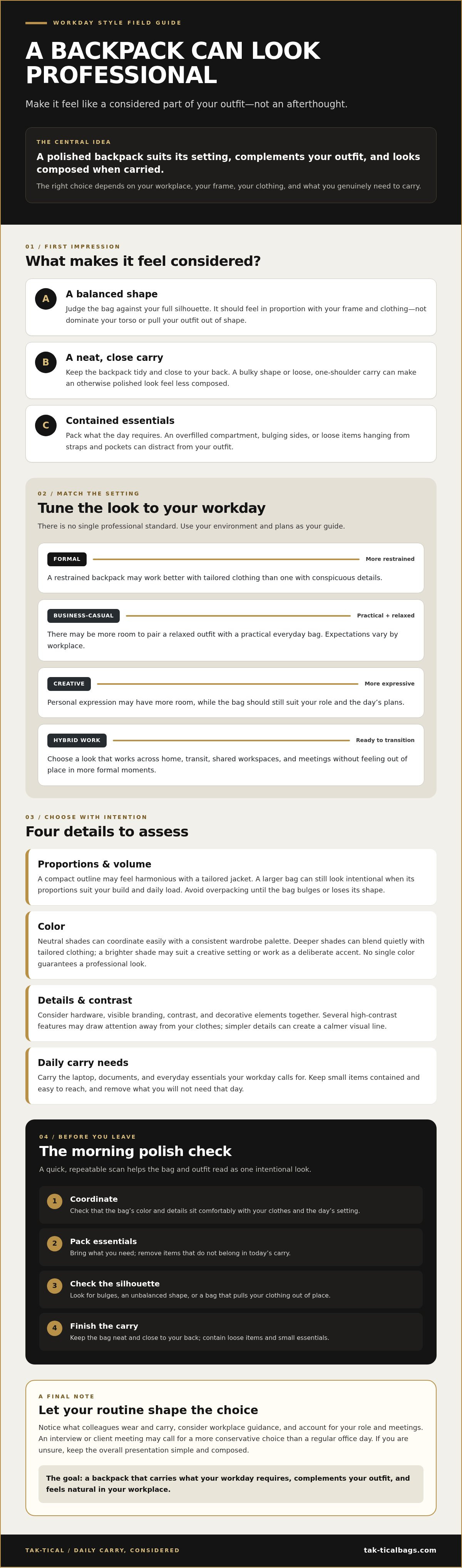
A professional-looking backpack suits its setting, complements the outfit, and appears composed when carried. What that means can vary from person to person and workplace to workplace. Start with the overall presentation: the bag is in tidy condition, its proportions feel balanced with your clothing, and its details don’t compete for attention.
Consider what people see at a glance. An overfilled main compartment can distort the bag’s shape, while loose items hanging from straps or pockets can make the whole look feel less considered. Visible clutter can distract even when the rest of your outfit is polished. Pack what you need, keep small essentials contained, and check that the bag sits neatly with your clothes. Function and style can work together when the contents are organized.
How workplace expectations change the answer
Professional dress doesn’t follow one universal standard. In a formal office, a restrained backpack may work better with tailored clothing than a bag with conspicuous details. In a business-casual setting, there may be more room to combine a relaxed outfit with a practical everyday bag. Business casual varies by workplace, so use the term as a starting point, not a complete styling rule.
Creative workplaces may allow more personal expression, but the bag should still suit your role and the day’s plans. Hybrid work adds another consideration: you might move between home, transit, shared workspaces, and meetings. Choose a look that transitions comfortably without appearing out of place during the more formal parts of your day.
Take cues from your environment. Notice what colleagues carry and wear, and check any workplace guidance before settling on a daily approach. Your role and the people you meet matter, too. An interview or client meeting may call for a more conservative choice than a regular office day. If you’re unsure, keep the overall presentation simple and composed. That’s a practical starting point for deciding how to look professional with a backpack, before fine-tuning proportion, color, and details for your setting.
Choose Backpack Proportions, Color, and Details That Suit Work
Once you understand your workplace expectations, assess how a backpack will sit within your outfit. The most polished choice isn’t automatically the smallest or plainest. It’s the one that feels balanced with your frame and clothing while holding what you genuinely need to carry. Proportion and restraint help a practical bag look considered rather than like an afterthought.
What backpack shape and size look balanced?
Look at the backpack against your full silhouette, not on its own. A bag that extends far beyond your torso or pulls your clothing out of shape can dominate the outfit. A more compact outline may feel harmonious with a tailored jacket, while a larger bag can still look intentional if its proportions suit your build and daily load.
Volume matters, too. An overpacked bag can bulge at the sides or lose its shape, making even a coordinated outfit feel less composed. Before leaving, remove anything you won’t need that day. Keep essentials organized and easy to reach, and avoid filling every pocket simply because it’s there. The aim is a bag that carries what your workday requires without looking like it holds more than it needs to.
Which colors and details work across professional outfits?
Neutral shades can be easy to coordinate with a range of work clothes, especially if your wardrobe already has a consistent palette. But no single color guarantees a professional look. A deeper shade can blend quietly with tailored clothing; a brighter one may suit a creative setting or serve as a deliberate accent. Consider how the color relates to your outfit instead of following a rigid rule.
Details shape the impression as much as color. Consider contrast, hardware, visible branding, and decorative elements together. A bag with several high-contrast features may draw attention away from your clothes, while a simpler design can create a calmer visual line. That doesn’t mean every detail has to disappear. Choose accents that feel in step with your personal style and the setting.
For more inspiration on how backpack styles can work with clothing, explore MR PORTER'S Ultimate Guide To Backpacks. Use it as a reference, then judge each option against your workplace, wardrobe, and needs. To compare everyday carry options, browse functional backpack styles and consider which proportions and details feel most natural for your routine.
Match Your Backpack to Business, Business-Casual, and Hybrid Work
The same backpack can read differently in different settings. Let the formality of your clothes and your workplace expectations guide how much visual restraint you choose. These examples are starting points, not fixed dress-code rules. Adjust them for your role, the people you meet, and how your workplace operates.
| Work setting | Outfit example | Backpack approach |
|---|---|---|
| Formal | Suit or tailored separates | Keep the overall look composed. Choose a tidy, proportionate bag with details that don’t compete with the outfit. |
| Business-casual | Blazer, shirt, trousers, or a polished knit | Allow a little more personal style while keeping the bag coordinated and work-appropriate. |
| Hybrid work | Smart layers that transition between home, office, and meetings | Prioritize a versatile appearance that feels intentional in both relaxed and more formal settings. |
Can a backpack work with a suit or blazer?
It can, if the bag’s scale and condition complement the tailoring rather than overwhelm it. Picture a clean-lined backpack sitting neatly against a suit or blazer, without bulging pockets or distracting details. The outfit remains the focus. Still, highly formal workplaces, roles, or occasions may have specific expectations, so observe local norms before making a backpack your default. No single style will suit every suit or situation.
How should you style a backpack for business-casual work?
Business-casual outfits often leave room to balance structure and ease. A blazer with trousers, or a polished knit with smart separates, can pair naturally with a restrained backpack. Aim for harmony, not exact matching. Your bag doesn’t need to duplicate your shoes or belt; it should relate to the outfit through its overall tone, proportion, and level of detail. For another perspective on refined work carry, see the article on a sophisticated approach to laptop bags.
Hybrid work calls for flexibility. You may move from a relaxed home setup to an office day or an in-person meeting, so consider whether your backpack suits each setting. Keep the outfit and bag aligned with the most formal part of your schedule. If you’re comparing options for your routine, the guide to best backpacks for work can help you think through what suits your workday. This is a practical way to approach how to look professional with a backpack: dress for the setting, then choose a bag that supports the whole look.
Use These Steps to Keep Your Backpack-and-Work Outfit Polished
A composed workday look comes down to a few practical checks. Run through them in order, from the demands of your day to how the bag sits once it’s packed. This turns how to look professional with a backpack into a repeatable routine, not a last-minute styling puzzle.
What should you check before leaving for work?
- Start with the day. Check your schedule, commute, and any workplace guidance. A client meeting or formal presentation may call for a more conservative outfit and bag choice than a regular office day.
- Coordinate the outfit. Consider the full look before adding the backpack. Check that its overall tone and visual weight fit your clothing, rather than trying to match every accessory exactly.
- Inspect the bag. Look for visible dirt, damage, loose items, and bulging compartments. A quick tidy can make a familiar bag feel more intentional.
- Pack only what you need. Carry your daily essentials and remove items left over from another day. Place frequently used items where you can reach them without unpacking everything. A purposeful everyday-carry backpack guide can help you decide what belongs in your regular load.
- Check the fit. Adjust the straps so the bag sits securely and comfortably, without swinging or pulling awkwardly on your clothing.
- Do a final look-over. Check your silhouette from the front and side. Make sure the bag isn’t distorting your outfit and that nothing is dangling or visibly untidy.
How can you carry a backpack without looking underdressed?
For commuting, wearing both straps can create a more balanced, composed appearance than letting the bag hang from one shoulder. Adjust them so the backpack feels secure and comfortable for your body and the weight you’re carrying. If it feels awkward or shifts as you move, pause and readjust instead of forcing the fit.
Once you arrive, let the setting guide what happens next. Take the backpack off during a meeting, interview, or formal conversation if keeping it on would feel distracting or out of place. Set it down neatly beside you or in an appropriate spot. The transition from commute to meeting is part of the presentation, too.
Keep your routine simple and consistent. For a work-ready carry option, explore functional backpacks and consider what suits your commute and daily essentials.
Make Professional Backpack Style a Natural Part of Your Routine
Professional backpack style isn’t about following a single formula. Let your workplace guide the bag’s proportion, how it coordinates with your clothes, and the way you carry it. Then repeat the simple checks that help you feel prepared. As your schedule or work setting changes, adjust the details rather than starting from scratch.
How do you keep a work backpack looking composed?
Make a quick visual check part of your routine. Look over the exterior, straps, and pockets for visible dirt, loose items, or a shape that looks overfilled. Clear out anything you no longer need for the day. A lighter, more organized load can help the backpack sit neatly and keep your overall look from feeling cluttered.
Follow the care instructions supplied with your specific bag. Materials and finishes can have different care needs, so don’t assume one cleaning method suits every backpack. Treating the bag thoughtfully helps keep its appearance in line with the rest of your work wardrobe.
How can you explore bags that fit your daily routine?
Start with your own day, not a trend. Make a short list of what you carry, where you work, and how you commute. Note when you need a laptop or other work essentials, whether you move between different settings, and how formal your usual meetings are. These details can help you decide whether a backpack or laptop bag is the more natural category to explore.
For a broader way to think through everyday carry, consult a guide to everyday-carry backpacks as you review your list. Then compare your real needs with your preferred work look. Does the bag feel proportionate with your clothes? Can you carry your essentials without filling every compartment? Does its overall appearance suit the settings you visit most?
Those questions bring the core idea into practice: context first, then coordination and a comfortable carry. Keep refining your choices as your routine evolves. If you’re ready to consider options for your workday, explore Tak-tical’s functional backpacks and laptop bags.
Carry Your Workday With Confidence
Professional style comes from making choices that suit your actual workplace. Consider how your backpack’s proportions and details work with your outfit, keep the load focused on daily essentials, and adjust your approach for formal meetings, business-casual days, or a hybrid schedule.
That’s the practical answer to how to look professional with a backpack: let the setting guide your choices, then carry the bag neatly and comfortably. A consistent morning check can help you keep your outfit coordinated and your bag tidy without overthinking the details.
Tak-tical offers backpacks and laptop bags focused on functional, stylish everyday carry. If you’re considering a bag that fits your routine, explore Tak-tical’s bags for purposeful everyday carry.
Choose what supports your day and feels natural with your work wardrobe. A few considered habits can make practical carry feel polished, wherever work takes you.
Frequently Asked Questions
Can you look professional while wearing a backpack?
Yes, a backpack can look professional when it suits your workplace and works with your outfit. Consider its overall shape, condition, and visual details, then pack only what you need to avoid a bulky appearance. How to look professional with a backpack depends less on following one strict style rule and more on presenting the bag as an intentional part of your workday look.
How do you wear a backpack with a suit?
Choose a backpack that feels proportionate with the suit and doesn’t distract from its clean lines. Keep it tidy, avoid overfilling it, and check that straps or pockets don’t pull your jacket out of shape. Workplace norms matter, especially in highly formal settings. During a meeting or other formal interaction, take the bag off and place it neatly nearby if that feels more appropriate.
What color backpack looks most professional?
No single color is always the most professional. Neutral shades can coordinate easily with different outfits, but the right choice depends on your wardrobe, workplace, and personal style. Think about the full effect: the bag’s color, contrast, hardware, branding, and decorative details. A brighter color can still feel considered if it suits your setting and complements the rest of your look.
Can I wear a backpack to a job interview?
Often, yes, but consider the employer, role, and interview setting before choosing what to carry. If you’re unsure about the workplace’s expectations, opt for a tidy, visually restrained bag that doesn’t compete with your interview outfit. Keep it organized and remove it before the conversation begins if leaving it on would feel distracting. A laptop bag may also suit your needs, depending on what you’re bringing.
How can I make my backpack look less casual at work?
Start with the overall presentation. Coordinate the bag with your work clothes, keep it clean and in good condition, and avoid a visibly overfilled shape or loose items hanging from it. Wear both straps when appropriate so it sits securely, and take it off during meetings if the setting calls for it. A composed outfit and a neatly carried bag work together to create a more polished impression.
Is a laptop backpack appropriate for business casual?
A laptop backpack can suit business-casual clothing if its appearance fits your workplace. Pair it with smart separates, such as a blazer, trousers, or a polished knit, and keep the bag’s details in step with the outfit. Exact matching isn’t necessary. Consider how you move through your workday, too, and choose a look that feels appropriate for both routine office time and planned meetings.
How do I choose a backpack that works for both commuting and the office?
List what you carry each day, where you work, and how you commute. Then consider whether the backpack’s proportions fit your frame and clothing, whether it holds your essentials without looking overpacked, and whether its appearance suits the settings you visit. Check that it feels comfortable when carried. Tak-tical sells backpacks and laptop bags focused on functional, stylish everyday carry, so compare the categories against your routine.