
What if your packing cubes made your bag feel more crowded instead of more organized? The difference comes down to how you use them. Learning how to use packing cubes effectively starts with giving each cube a clear purpose, setting aside space for items you’ll need quickly, and fitting the cubes to your bag.
Packing cubes can group clothing, keep essentials together, and make unpacking simpler. But overfilling them or placing frequently used items at the bottom can leave you rummaging through your bag. A simple system keeps belongings sorted and travel essentials within reach, without treating every cube as extra storage.
This guide explains how to choose what goes in each cube, pack it without wasting space, and arrange cubes for easy access. You’ll also learn how to adapt the same approach to a carry-on, backpack, or day-to-day bag. The result is a considered setup that works across different trips, with less digging and less disorder.
Key Takeaways
- Learn how to use packing cubes effectively by assigning each one a clear category before you start packing.
- Use a consistent packing sequence to spot duplicates and choose a folding or rolling method that suits your clothes.
- Arrange cubes to fit your bag, keeping items you’ll need during the journey easy to access.
- Maintain order on the go by returning items to their assigned cubes and separating worn clothes from clean ones.
- Adjust your setup to the bag you carry and the essentials your trip requires.
How to Use Packing Cubes Effectively: Start with a Clear Packing Plan
Packing cubes are lightweight organizers that group belongings inside a larger bag. Think of them as movable compartments: instead of letting loose clothing spread through your bag, give each category a defined place. A packing cube can make items easier to spot and retrieve in a carry-on, backpack, or larger travel bag.
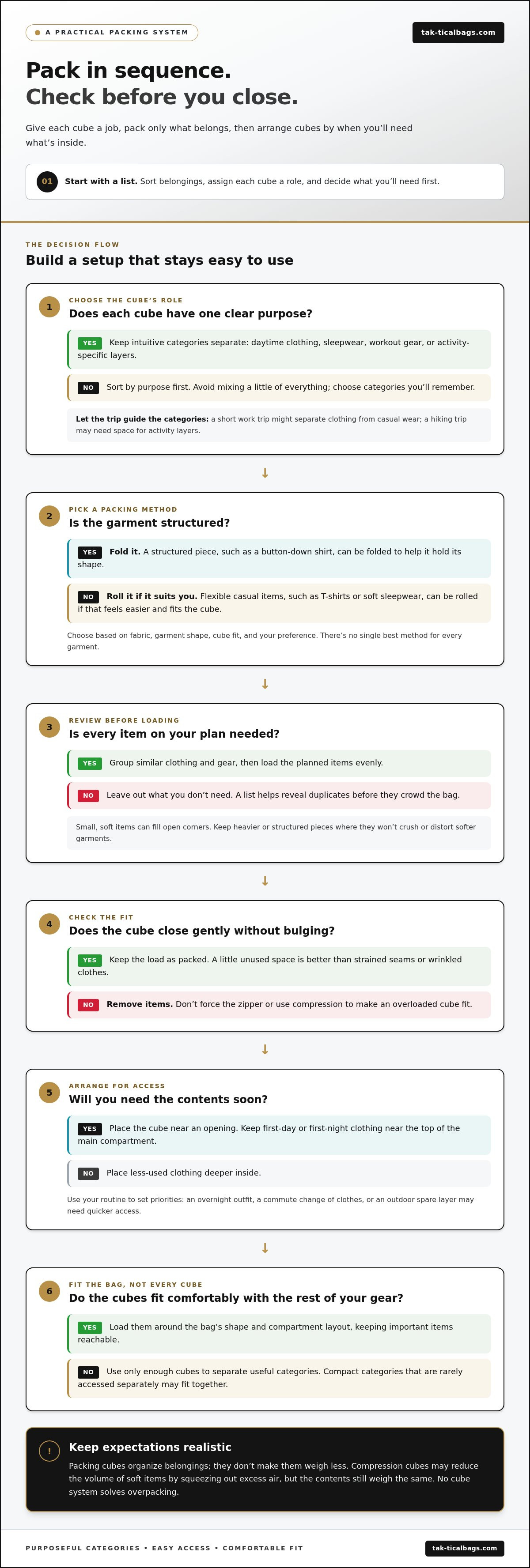
Start with a simple sequence: sort your belongings, assign each cube a role, then place cubes according to when you’ll need what’s inside. For example, keep sleepwear separate from daytime clothing, and put a cube with your first-day essentials near the bag opening. You’ll have a clear plan before you start loading.
Set realistic expectations. Cubes can make a bag feel more orderly, but they don’t make belongings weigh less. Compression cubes may reduce the volume of soft items by squeezing out excess air, but the contents still weigh the same. And no cube system can solve overpacking. If a cube is difficult to close or bulges against the bag, remove items rather than forcing the zipper or adding more compression.
What should each packing cube hold?
Give each cube one intuitive purpose. You might group daytime clothing in one, sleepwear in another, and workout gear in a third. Choose categories you’ll remember during a busy trip. Keep unrelated items separate instead of mixing a little of everything together. That way, you can reach for what you need without opening several cubes or unpacking the whole bag.
Let your routine shape the categories. A short work trip might call for a clothing cube and a separate cube for casual wear. A hiking trip may need a dedicated space for activity-specific layers. There’s no universal arrangement. Choose labels that make sense to you and use them consistently.
How many packing cubes should you use?
Use only enough cubes to separate the categories that matter. The right number depends on what you’re carrying, how much room your bag has, and how often you’ll access each group. Start with the essentials, then check whether the cubes fit comfortably alongside the rest of your gear.
Resist the urge to fill every cube. Extra organizers can take up room without adding useful separation. If two categories are compact and rarely accessed separately, they may fit together. Keep the system streamlined, and let your bag’s shape and compartment layout guide where each cube belongs. That’s the practical foundation for how to use packing cubes effectively: organize with purpose, not simply by using more containers.
How to Sort, Fold, and Load Packing Cubes Without Overpacking
A reliable packing routine makes each cube easier to use and helps prevent last-minute additions from crowding your bag. Follow the same sequence each time: make a list, group items by purpose, fill the cubes, then review what you packed.
- Make a list. Note what the trip requires before opening a cube. This makes duplicates easier to spot.
- Group items. Keep similar clothing and gear together, using the categories you’ve assigned to each cube.
- Fill selectively. Pack the planned items, then pause before adding anything extra.
- Review. Remove items you don’t need and check that each cube closes without strain.
This sequence is a practical starting point for how to use packing cubes effectively. For more ideas on sorting items and planning outfits, see Travel Sentry’s guide to how to use them effectively.
Should you roll or fold clothes in packing cubes?
There’s no single best method for every garment. Fold structured pieces, such as a button-down shirt, to help them hold their shape. Roll flexible casual items, such as T-shirts or soft sleepwear, if that feels easier and fits your cube. Choose based on the fabric, garment shape, and your own preference. Keep similar items together rather than rearranging everything to follow one universal technique.
How do you fill cubes without wasting space?
Lay out each category before packing it. A quick visual check can reveal an extra top or another item that serves the same purpose. Then load the cube evenly. Tuck small, soft items into open corners, but avoid creating hard pressure points against delicate clothing.
Pay attention to heavier or structured pieces, too. Place them where they won’t crush or distort softer garments. If the contents push against the sides or make the cube look misshapen, take something out. Close the zipper gently instead of forcing it or relying on compression to make an overloaded cube fit. A little unused space is better than strained seams or wrinkled clothes.
Once your cubes are packed, check how they fit the bag you carry and how easily you can reach what you need. A suitable carry-on bag or backpack can support an organized setup while keeping your packing routine straightforward.
How to Arrange Packing Cubes for Carry-Ons, Backpacks, and Different Trips
Arrange packed cubes around access, bag shape, and the purpose of your trip. Keep items you’ll need soon near an opening and put less-used clothing deeper inside. This makes a carry-on easier to navigate at a hotel, helps keep a backpack balanced on the move, and keeps a larger travel bag orderly between stops.
Think about your routine, too. For a commute, keep a change of clothes or activity gear separate from work essentials. For an overnight trip, place the next day’s outfit where it’s easy to reach. Outdoor travel may call for quick access to a spare layer. Wirecutter’s guide to how to pack with packing cubes offers additional practical context for arranging items.
Where should packing cubes go in a carry-on?
Place first-day or first-night clothing near the top of the main compartment, so you can retrieve it without unpacking everything. Tuck spare layers and occasional-use garments farther in. Keep travel documents and other quick-access essentials in a consistent pocket or compartment instead of burying them beneath cubes. The goal is a predictable layout, not a tightly filled bag.
Carry-on size limits vary by airline. As a general reference, major U.S. airlines commonly use a 22 x 14 x 9-inch limit, while Southwest allows 24 x 16 x 10 inches. Rules can change, and dimensions may include wheels and handles, so check your airline’s current requirements before you travel.
How should packing cubes fit inside a backpack?
Choose cube shapes that sit naturally within the backpack’s main compartment. Don’t force a bulky cube into a narrow area or let it block an opening you use often. Place frequently accessed items near a zipper or another accessible opening, where the bag’s design allows. Distribute weight thoughtfully by keeping heavier contents close to your back and avoiding a lopsided load that can feel uncomfortable to carry.
A larger travel bag usually allows more flexibility. Keep cubes you’ll use soon in one section or near the top, and place infrequently needed items deeper inside. In any bag, test the layout before leaving: open the compartments you’ll rely on, check that essentials are reachable, and adjust anything that shifts or presses awkwardly.
That’s the practical logic behind how to use packing cubes effectively across different bags: arrange by access first, then adapt the order to your trip and the bag’s structure.
How to Keep Packing Cubes Useful During the Trip
A packing system only works if you keep using it after the first day. Return each item to its assigned cube instead of setting it wherever there’s room. That small habit keeps categories easy to find and makes your next pack-up quicker. It also helps you see what’s clean, what’s worn, and what you haven’t needed.
Keep the original order where possible: frequently used items near the opening, less-needed belongings deeper inside. Adjust only when your plans change. A cooler forecast may mean moving a spare layer closer to the top, while a new activity may make a specific outfit or piece of gear easier to reach.
How do you separate clean clothes from laundry?
Keep worn clothing apart from clean items with a dedicated laundry pouch, washable bag, or separate compartment. Avoid putting damp clothing directly against dry garments. Isolate wet items until you can care for them according to the garment instructions and dry them appropriately. Keep the laundry container in the same part of your bag so it doesn’t disrupt the rest of your setup.
How can you unpack and repack faster?
Open only the cube that holds what you need. If you want a fresh shirt, take it from that category rather than emptying the whole bag. After use, return anything still clean to its original cube. Before repacking, review what remains and remove items you no longer need to carry, such as clothing set aside for laundry.
Keep the category system simple enough to follow when you’re tired or moving between stops. If sleepwear always has one place and activity clothing another, you won’t need to search through every cube. This is a practical part of how to use packing cubes effectively over several days: maintain the routine, but let it flex with the trip.
Revise the arrangement when conditions change. If the weather shifts, move a useful layer closer to the opening. If you add an outdoor activity, give its essentials an accessible place instead of mixing them into unrelated categories. For a short stay, you may only need to open one cube and keep the rest packed. For a longer stop, unpack the categories you’ll use while keeping clean clothing grouped.
Choose a bag that suits your routine and makes your organized setup practical to carry. Explore bags for travel and daily carry.
Build a Packing-Cube System Around the Bag You Carry
A useful packing-cube routine should work with your bag, not compete with it. Plan categories, fill only the cubes you need, then place them by access priority. The shape of a carry-on, backpack, or hiking bag can change how cubes fit, so adapt the layout to the compartments and openings you actually use.
Start by considering your routine and essentials. A work trip may call for an easy-to-reach change of clothes alongside separate work gear. A short outdoor outing may need space for activity clothing and a spare layer. Keep the bag’s purpose clear, too. A system for day-to-day carry won’t necessarily need the same categories as one for an overnight stay.
What makes a bag work well with packing cubes?
Look at the main compartment’s shape, the opening style, and how the cubes sit inside. A cube that fits the space naturally is easier to load and retrieve than one that leaves awkward gaps or blocks access. Prioritize comfort and reach over filling every inch. The best setup supports your essentials and intended use, whether that’s work travel or a short outdoor outing.
For broader guidance on matching a bag to your routine, explore this carry-on bag guide. Use the same practical lens for any bag: consider what you carry, where it needs to go, and how quickly you need to reach it.
What is the simplest packing-cube routine to repeat?
Choose categories before packing and keep each one in a consistent cube. Load items you’re least likely to access first, then position daily essentials near the opening. After the trip, note what stayed unused and refine your list. This keeps the system responsive to your routine instead of turning it into a fixed arrangement you have to work around.
That’s the core of how to use packing cubes effectively: create clear categories, pack selectively, and place each cube according to when you’ll need it. For your next trip, check that the packed setup fits the bag comfortably and leaves important items accessible. If your current carry doesn’t support that routine, explore work and travel backpacks suited to organized daily carry.
Make Your Next Pack Feel Effortless
A dependable packing-cube system starts with clear categories, not extra containers. Sort belongings by purpose, fill cubes selectively, and place them according to when you’ll need them. The right approach to how to use packing cubes effectively also adapts to your bag, itinerary, and the essentials you carry.
Keep the system simple on the move. Return items to their assigned cubes, separate worn clothing, and adjust your layout when plans or weather change. After each trip, note what you didn’t use. Those small refinements make the next packing list more considered and your bag easier to navigate.
Your cubes work best when they fit the way you travel. If you’re ready to choose a bag that supports an organized routine, explore bags designed for purposeful carry. Browse Tak-tical’s backpacks, laptop bags, carry-on bags, and hiking bags to find a style that suits your daily carry or next trip.
Frequently Asked Questions
How do you use packing cubes effectively?
Start by sorting belongings into useful categories, such as daily clothing, sleepwear, and activity gear. Assign each category a cube, then arrange the cubes in your bag by access priority. Keep essentials near the opening and occasional-use items deeper inside. Leave enough room to close each cube comfortably. During the trip, return items to their assigned places so the system stays easy to follow.
Do packing cubes actually save space?
Packing cubes primarily help you group and locate belongings; ordinary cubes don’t automatically reduce the volume of clothing. Compression styles may reduce bulk for some soft items, but they can’t reduce weight, and over-compressing may wrinkle clothes or strain the cube. Use cubes to create order first. Then assess whether your packing method and the packed cubes fit comfortably in your bag.
Can you use packing cubes in a backpack?
Yes. Choose cubes that fit the backpack’s compartments without making the load awkward or uncomfortable to carry. Place frequently used items near an accessible opening, then put less-used clothing deeper inside. A simple category system can suit commuting, overnight travel, or outdoor outings. Adapt the cube size and placement to the backpack’s shape, opening style, and the essentials you carry.
How many packing cubes do you need for a trip?
There’s no fixed number for every traveler. Start with the categories you genuinely need to separate, then consider your trip length, activities, clothing, and bag capacity. A small, clear setup is often easier to maintain than filling every available cube. After the trip, note which items you used and which stayed packed. Use those observations to adjust your next packing list.
What should you put in a packing cube?
Use cubes for items that are easier to manage when grouped, such as clothing by type, outfits by day, or gear for a specific activity. Keep frequently needed essentials accessible rather than burying them in a cube at the bottom of your bag. During the trip, separate worn or damp items from clean clothing with a dedicated pouch or washable bag.