
A backpack can look travel-ready and still fail to fit beneath your seat. Choosing a personal item backpack for women means balancing airline size limits with the essentials you want close at hand. Don’t rely on appearance or advertised capacity alone.
It’s reasonable to want one bag that looks polished, holds what you need, and works across trips. The challenge is that airlines don’t share one universal personal-item size, and a backpack’s packed shape can differ from its empty measurements. A bag that seems compact at home may be harder to place under the seat once it’s full.
This guide explains how to choose a bag based on dimensions and your travel routine, then weigh comfort, organization, and easy access against capacity. You’ll learn what to check in airline rules, how to measure a packed bag, and which practical details to review before you buy or pack. The goal is a personal item that carries your daily essentials and fits the way you travel.
Key Takeaways
- Choose a personal item backpack for women by comparing its dimensions with the rules for each airline and fare on your itinerary.
- Test strap comfort and pocket access with the items you plan to carry, not with an empty bag.
- Compare backpacks, totes, and compact carry-on bags based on how you move, access essentials, and manage the load.
- Measure the packed backpack and check its fit before departure, since contents can change its shape.
- Once you’ve defined your needs, explore Tak-tical’s backpack range and verify dimensions and features on the product page.
What makes a backpack a personal item for women travelers?
A personal item is the bag you plan to keep beneath the seat in front of you, rather than place in the overhead bin. Airlines set their own baggage allowances and size limits, which can depend on the carrier, route, aircraft, and fare conditions. Check the current policy for your exact trip before choosing a personal item backpack for women.
The term Hand luggage broadly covers cabin baggage, but your airline’s rules determine which bag counts as a personal item and what you may bring alongside it. A personal item is generally intended for under-seat storage; a larger carry-on is generally intended for the overhead bin. Neither label guarantees the same allowance across airlines or fares.
“For women” should describe a traveler’s preferences, not assume one body type or packing style. A comfortable fit depends on your frame, how you adjust and wear the straps, and what you carry. Your ideal bag might be a compact option for short trips or one with room for work essentials. Let your routine guide the choice.
How is a personal item different from a carry-on backpack?
Start with where you expect to store the bag. A personal item is meant to go beneath the seat, keeping essentials within reach. A larger carry-on is typically stored in the overhead bin. Airlines define allowances and dimensions independently, and under-seat space can differ by aircraft. A backpack that qualifies on one itinerary may not qualify on another because the carrier, fare, or route-specific policy differs. Check each airline’s current baggage page and your booking details before flying.
Which essentials should a personal item backpack hold?
Start with what you’ll need during the journey, not everything you might use at your destination. A practical core list includes:
- Travel documents and phone
- Wallet and other personal essentials
- Water, if permitted under applicable screening rules
- A laptop or tablet, only if your work or trip requires one
Keep frequently needed items easy to reach, and consider how the packed bag’s shape may affect its under-seat fit. Separate daily necessities from clothing, spare shoes, and other belongings that can travel in checked luggage. This helps you choose capacity with purpose. The best fit is the bag that suits your routine and your airline’s rules, not simply the one that holds the most.
Which personal item backpack features matter most for women?
Prioritize how the backpack carries before counting compartments. Adjustable shoulder straps let you fine-tune the fit, while a thoughtful pocket layout can keep essentials easy to reach. The right combination depends on your body, travel routine, and typical load, not on a one-size-fits-all idea of what a women’s backpack should feel like.
How should a women’s backpack fit when fully packed?
Pack the items you expect to travel with, adjust the straps so the bag sits securely, and check that you can move freely without pressure or shifting. Take a short walk with it on. Notice whether the weight feels comfortable and whether the bag pulls backward or bumps against you. Comfort is personal and can change with the load and strap adjustment.
Give capacity the same practical test. A larger bag may tempt you to bring extras, but added volume and overfilling can make the pack harder to place beneath a seat. Check the bag’s dimensions when it’s full, not just when it’s empty. Look for bulging pockets or a rounded shape that could affect its fit. For a personal item backpack for women, useful capacity is the space your essentials need without unnecessary bulk.
Which organization features improve airport access?
Match pockets to your habits. Travel documents and small essentials may belong in an easy-to-reach pocket; valuables and electronics may need a separate space that feels secure to you. Consider whether the pocket openings are easy to reach while wearing the bag and whether the closures suit your preferences. Keeping frequently used items separate can mean less rummaging during check-in and boarding.
If you plan to carry a laptop or tablet, check whether the bag has a suitable space for your device and whether that placement works with how you pack. Review the TSA's 'What Can I Bring?' list for current guidance on items permitted in carry-on and personal bags. Requirements can depend on the item, so confirm before packing.
Before deciding, do a simple load test:
- Pack your usual travel essentials, including any device you expect to carry.
- Adjust the straps and walk around to assess comfort and stability.
- Check every pocket for reach, closure, and access that suits your routine.
- Measure the fully packed bag and watch for bulges that affect its shape.
Once you know which features and fit work for you, explore Tak-tical’s backpack range as one option for functional, stylish everyday carry. Compare each product’s listed dimensions and features with your needs before choosing.
Backpack, tote, or carry-on: which personal item style fits your trip?
The right format depends on how you move and what you need close by. A commute with a laptop calls for different access than a short flight with a light day bag. Compare the carrying experience first, then check whether the packed bag’s measured dimensions meet the airline’s current personal-item rules. A label such as “personal item” or “compact carry-on” doesn’t guarantee acceptance.
| Bag style | Hands-free movement | Access and load | Under-seat practicality |
|---|---|---|---|
| Backpack | Leaves both hands free for transit and gate changes. | Shoulder straps distribute the load across both shoulders; access depends on pocket placement. | Can work well if its packed dimensions and shape fit the airline’s allowance. |
| Tote | Usually carried by hand or over one shoulder. | Open access can make essentials easy to reach, though a heavier load may feel less balanced. | A flexible shape may be convenient, but measure it packed and check the rules. |
| Compact carry-on | Often has a handle or wheels, but may be less convenient in crowded spaces. | Can suit more clothing or gear, depending on its capacity and design. | May be intended for overhead storage, so don’t assume it qualifies as a personal item. |
For a specific reference, American Airlines lists personal item size limits of 18 x 14 x 8 inches. That is the airline’s published allowance, not a universal standard. Check the policy for every carrier on your itinerary and compare its stated dimensions with the bag you’ll actually bring.
When does a backpack work better than a tote?
A backpack can be practical for commuting through a station, carrying a device, or moving between gates with both hands free. But the category alone doesn’t ensure comfort. Strap adjustment, fit, and packed weight matter. A tote may suit a shorter, lighter routine when quick access is the priority. Try your intended load in either style before deciding.
When should you choose a compact carry-on instead?
Choose a carry-on when your trip calls for more clothing or gear and you expect to use overhead-bin storage. A bag with more room may exceed your personal-item allowance, even if it looks compact. If you’re weighing everyday work use against travel capacity, the work and travel backpack guide can support that broader decision. Still, verify the bag’s dimensions and the airline rules for each trip. A personal item backpack for women is best judged by fit and routine, not its category name alone.
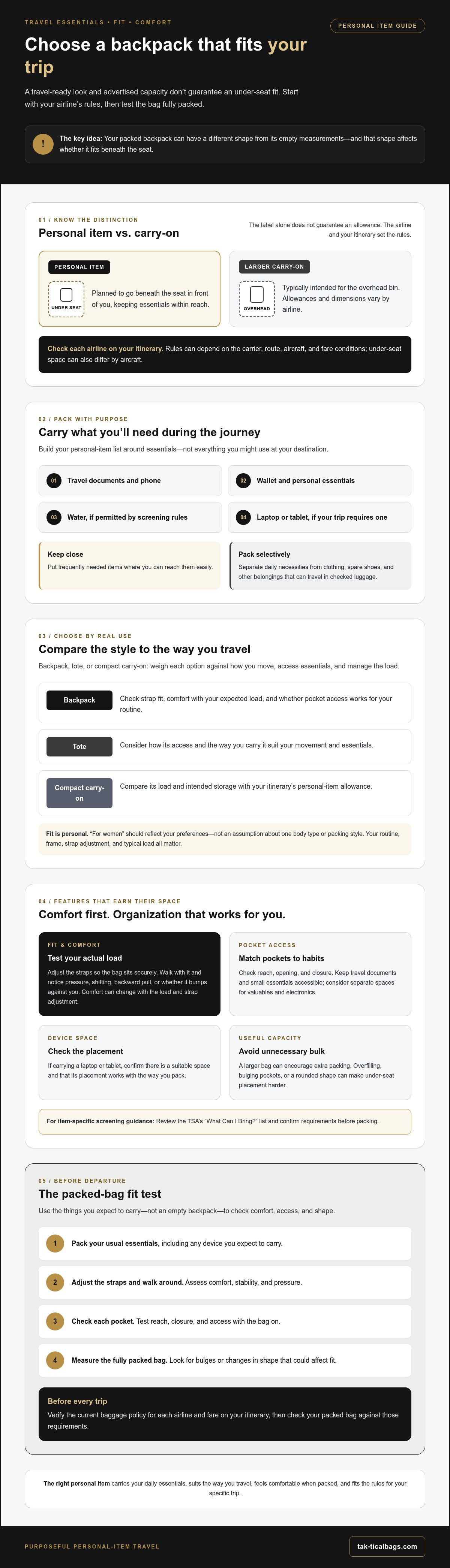
How to choose and test a personal item backpack before your trip
A few checks before departure can show whether a bag works for your itinerary, not just on paper. Use this sequence to choose a personal item backpack for women based on the rules you’ll fly under and the items you actually plan to carry.
- Check each airline’s policy. Look up current personal-item dimensions, baggage allowance, and fare conditions for every carrier on your itinerary. On a connecting journey, check whether each carrier has its own rules. Use the airline’s published policy rather than relying on a generic size chart.
- List your essentials. Note the items that need to stay with you, such as travel documents, a water bottle, personal necessities, and any laptop or tablet. This keeps you focused on useful capacity instead of choosing a bag simply because it offers more space.
- Compare the bag’s dimensions. Review the product’s listed measurements against the limits for your flights. If dimensions aren’t clear, confirm them before buying. Account for pockets, handles, and any parts that extend beyond the main body.
- Test the packed fit. Load your essentials and measure the bag in its intended travel shape. Check that the zippers close without forcing the fabric or making the bag bulge. An empty bag’s dimensions may not reflect its packed shape.
- Wear it, then decide. Adjust the straps and walk around with the planned load. Check that the bag feels secure and that you can reach frequently used items without unpacking everything.
What should you verify in the airline’s personal item policy?
Confirm the allowance as well as the dimensions. A fare may affect which bags are included, and different airlines on one itinerary may apply different requirements. Check your booking and the airlines’ current baggage pages close to travel. Don’t assume that a bag accepted on the outbound flight will qualify for every carrier or leg on the return journey.
How can you test a backpack before packing for departure?
Pack the same items you expect to bring, including your device and its accessories if you’ll carry them. Measure the bag while it’s filled, check that its closures operate easily, and wear it for a short walk. Try reaching documents or other essentials from their usual pockets. If you’re balancing travel and daily use, the everyday carry backpack guidance can help you consider both routines before settling on a format.
Once you’ve defined your fit and feature needs, explore Tak-tical’s backpack range. Compare the dimensions and details listed for each bag with your airline policies and packed essentials.
Explore Tak-tical backpacks for purposeful personal item travel
Tak-tical is an independent online retailer offering backpacks and carry-on bags, with a stated focus on functional, stylish designs for everyday carry. That focus may suit travelers looking for a bag that can move between daily routines and trips. Still, a general brand description can’t tell you whether a particular backpack fits your essentials or qualifies as an airline personal item.
Use the details shown on each product page to make that assessment. Don’t infer a bag’s size, pocket layout, or device capacity from a photograph or general description. Match the listed specifications to your needs, then compare the bag’s measurements with the current rules for your itinerary.
How can you evaluate Tak-tical options for personal item use?
Start with your travel routine. Consider whether you’ll carry documents, personal essentials, or a laptop or tablet, and whether you prefer a backpack or carry-on format. Review the dimensions and features listed on the product page. If an important detail isn’t provided, seek confirmation rather than assuming. Airline acceptance depends on current policy and the dimensions of the bag when packed.
Before shortlisting, use this quick review:
- Role: Decide whether the bag is mainly for short trips, commuting, or a mix of everyday carry and travel.
- Essentials: Check that the listed features suit what you plan to bring, without assuming unlisted pockets or compartments.
- Fit: Compare confirmed product dimensions with each airline’s current personal-item policy.
- Packed shape: Test the bag with your intended load and check its measurements before departure.
What should you do before choosing your travel backpack?
Shortlist options by intended use, confirmed features, and verified airline requirements. If carrying a computer for work is a central priority, review the laptop bag reference guide as well. It can help you weigh device-carry needs alongside travel use. Keep the final decision grounded in product-page details and your own packed-bag test, not broad claims about a category.
A personal item backpack for women should work for the way you travel and carry your essentials while meeting the rules for your specific flight. Browse Tak-tical’s current backpack selection, compare the listed details, and shortlist options that suit your routine. Before departure, confirm airline requirements and test the packed bag’s fit.
Choose a Bag That’s Ready for Your Routine
The right personal item backpack for women fits both your travel plans and your everyday essentials. Start with the airline’s current rules, then compare the bag’s packed dimensions with its allowance. Check comfort with your intended load, and choose an organization layout that keeps the items you need close at hand.
There’s no need to choose by appearance or capacity alone. A considered fit, accessible essentials, and a clear understanding of your itinerary make for a more confident decision. Verify product details on the relevant product page, then test the packed bag before departure.
Tak-tical’s online store offers backpacks and carry-on bags, with a focus on functional, stylish everyday carry. Once you know which dimensions and features suit your trip, explore Tak-tical backpacks and shortlist options that match your needs. Compare the listed details with your requirements and confirm airline fit before you travel.
Frequently Asked Questions
What size backpack counts as a personal item on a plane?
No single backpack size qualifies as a personal item on every plane; each airline sets its own limits and allowance. For example, current guidance lists United’s limit as 17 x 10 x 9 inches and American’s as 18 x 14 x 8 inches. Check your airline’s latest policy, fare conditions, and itinerary instructions before buying or packing, since published requirements can change.
Can a backpack be both a personal item and a carry-on?
A backpack can function as either a personal item or a carry-on, depending on its size and airline rules. A personal item is intended to fit beneath the seat; a larger carry-on is generally stored in the overhead bin. Airlines set their own baggage allowances, and some fares may include different options. Check the rules for your booking rather than relying on the bag’s label.
How do I know if a backpack will fit under an airplane seat?
Check the airline’s stated dimensions, then measure the backpack when packed as you intend to carry it. Include bulging pockets, handles, and items that alter its shape. An empty bag may measure differently once filled. Compare the packed measurements with the current allowance, and test whether it can fit beneath a seat without forcing it. Comfort matters too, so try it with your actual travel load.
Is a backpack a good personal item for women traveling?
Yes, a backpack can be a practical personal item if its dimensions meet the airline’s rules and it suits your travel routine. Adjustable straps and hands-free carrying may help when moving through transit or between gates, but comfort depends on the individual, load, and strap adjustment. Try it packed before flying. Consider whether you prefer quick access, space for devices, or a lighter setup for a short trip.
Can I use a personal item backpack for a laptop?
Yes, if the backpack can accommodate your device and still meet the airline’s personal-item limits when packed. Check the product page for confirmed device-space dimensions and details about any padding, rather than assuming a laptop will fit based on the bag’s overall size. Pack the laptop as you plan to travel, measure the full bag, and verify the airline’s current baggage policy before departure.
What should I pack in a personal item backpack for a flight?
Prioritize items you need during the journey: travel documents, phone, wallet, and essential personal items. Add a laptop or tablet if your work or trip calls for one, and make sure it fits comfortably. Keep frequently used items accessible, and avoid filling the bag with belongings better suited to checked luggage. Check current airline and security guidance for any item-specific restrictions before packing.
Will the same personal item backpack fit every airline?
Not necessarily. Airlines set their own size limits and baggage allowances, and available under-seat space can vary by aircraft. A backpack accepted on one flight may not meet the rules for another carrier or fare. For a multi-carrier itinerary, check the current personal item policy for every airline on your booking. Measure the bag in its packed shape and compare it with each applicable limit before departure.