
The most useful flight bag isn’t the one packed to the seams. It’s the one that keeps essentials within reach when boarding takes longer than expected or checked luggage is delayed. Knowing what to put in a personal item bag for a flight can help you avoid scrambling for medication, chargers, or travel documents.
It’s easy to second-guess what belongs under the seat, what should go in checked luggage, and whether your bag meets airline rules. A little planning helps you pack less, keep important items close, and avoid surprises at security or the gate.
This 2026 checklist covers practical essentials for your personal item, from identification and medication to electronics, comfort items, and a compact just-in-case kit. You’ll also find reminders about liquid screening and airline size limits, which can vary by carrier and fare. Use it to build a focused flight bag for the cabin, the security line, and unexpected delays.
Key Takeaways
- Use a focused checklist to decide what to put in a personal item bag for a flight. Keep travel documents and in-flight essentials easy to reach.
- Pack electronics and liquids with current screening guidance in mind, and verify the relevant rules before departure.
- Choose comfort, work, and entertainment items to suit your flight and connection. Leave bulky extras elsewhere.
- Organize your bag by when you’ll need each item, so boarding essentials, medication, and comfort items are quick to find.
- Check your airline’s personal item dimensions and choose a bag that suits your routine. Don’t rely on a universal size standard.
What to Put in a Personal Item Bag for a Flight: Start with the Essentials
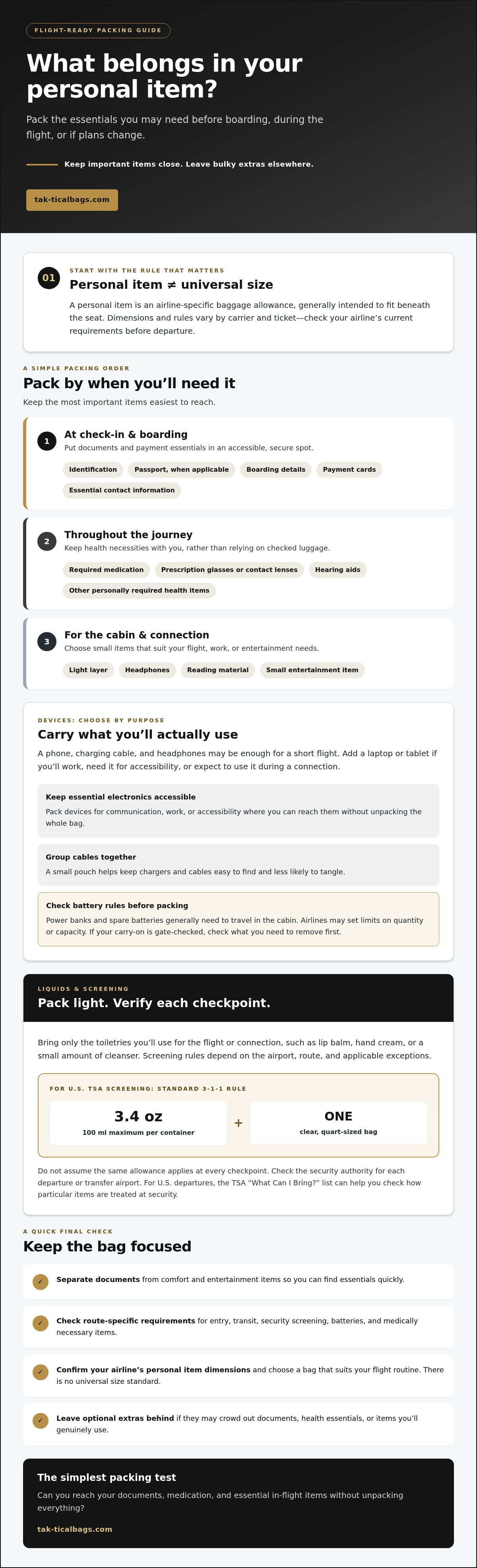
Start with items you may need before boarding, during the flight, or if plans change. Keep travel documents separate from comfort and entertainment items so you can find important things quickly.
A personal item is an airline-specific baggage allowance, not a universal size category. It’s generally intended to fit beneath the seat, but dimensions and rules vary by carrier and ticket. For context on hand luggage terminology, see Hand luggage guidelines, then confirm your airline’s current personal item requirements.
- Documents: identification, passport when applicable, and boarding details
- Travel essentials: payment cards and essential contact information
- Personal necessities: required medication, prescription eyewear, hearing aids, or other health items
- In-flight comfort: a light layer, headphones, reading material, or another small source of entertainment
Think in two groups: documents and necessities you may need to show or access quickly, followed by items that make the journey more comfortable. This keeps the bag focused and helps prevent optional extras from crowding out essentials.
Travel documents, wallet, and flight essentials
Keep identification, your passport if needed, boarding details, payment cards, and essential contact information together in an accessible, secure part of your bag. A dedicated pocket or slim pouch can make them easier to retrieve at check-in and boarding. Before departure, check official government guidance for the entry and transit documents required for your route and circumstances. Requirements can differ by destination, transit point, and traveler.
Medication, glasses, and personal necessities
Pack necessary medication and essential health items where you can reach them throughout the journey, rather than relying on checked luggage. Add prescription glasses or contact lenses, hearing aids, and any other personally required items. If you’re carrying medically necessary liquids or equipment, check current security guidance for your departure airport and airline before packing. Keep instructions or relevant documentation accessible if guidance indicates you may need them.
Use this first pass to answer what to put in a personal item bag for a flight: prioritize documents, health essentials, and items you’ll genuinely use in the cabin. Comfort and entertainment matter, but they come after what you can’t easily replace or retrieve once your larger bag is out of reach.
How to Pack Electronics, Chargers, and Liquids in Your Personal Item
Choose devices by purpose, not possibility. A phone, its charging cable, and headphones may be enough for a short flight. Add a laptop or tablet if you’ll work, need it for accessibility, or expect to use it during a connection. Leave spare gadgets behind if you’re unlikely to reach for them.
Group chargers and cables in a small pouch so they’re easy to find and less likely to tangle. Check current airline and aviation-authority guidance for lithium-ion batteries before packing. Spare batteries and power banks generally need to travel in the cabin, and some airlines set limits on the number you can bring or their capacity. If your carry-on is gate-checked, check what you need to remove first.
Keep essential electronics accessible
Pack the devices you need for communication, work, or accessibility where you can reach them without unpacking the whole bag. Before leaving, confirm whether your airline has specific requirements for batteries or devices. For U.S. departures, the TSA's 'What Can I Bring?' list lets you check how particular items are treated at security. Other countries may have different screening guidance.
Pack only the liquids you’ll use
Keep toiletries to the essentials for your flight or connection, such as lip balm, hand cream, or a small amount of cleanser. Liquid screening rules depend on the airport, route, and applicable exceptions. For U.S. TSA screening, the standard 3-1-1 rule limits containers to 3.4 ounces (100 ml) and requires them to fit in one clear, quart-sized bag. Don’t assume the same allowance applies at every checkpoint. Check the security authority for each departure or transfer airport.
Use this quick comparison as a packing prompt, then confirm the current rules for your trip:
| Item | Where to pack | Rule to verify |
|---|---|---|
| Phone, headphones, essential laptop or tablet | Personal item | Screening instructions and device requirements |
| Power bank or spare battery | Cabin baggage, accessible | Airline limits, battery capacity, and gate-check procedure |
| Charging cables and adapters | Together in a small pouch | Any device-specific restrictions |
| Travel-size toiletries | Easy to remove for screening | Liquid limits and exceptions at each airport |
A tidy setup keeps your personal item focused on what you’ll actually use. If you’re choosing a bag for travel electronics and everyday essentials, explore carry-on bags and compare options with your airline’s requirements.
What Belongs in Your Personal Item for Comfort, Work, or a Connection?
Build the optional part of your flight bag around the trip you’re taking. A short daytime flight may call for headphones and one activity. An overnight journey or a long connection may make an eye mask, earplugs, or a light layer worth the space. Choose items you’re likely to use, not every possible extra.
A personal item isn’t automatically the same size on every airline. It usually needs to fit beneath the seat, but each carrier sets its own allowance. Check your ticket and the airline’s current baggage page before packing. For example, the United Airlines carry-on guide explains that carrier’s baggage rules. Don’t assume its dimensions apply to another airline or fare.
A light comfort kit for the journey
Keep comfort items compact. A refillable water bottle can be useful, but check the departure airport’s current screening rules and any onboard restrictions before bringing it through security. A light layer may help if you tend to feel cold. Add an eye mask or earplugs for a rest-focused trip, or a small book for quiet downtime. These are options, not essentials. Medication and travel documents come first.
Work, reading, and entertainment without overpacking
If you’ll work, carry the device and materials you expect to use, with the relevant accessories together. A laptop bag may suit a work-focused setup. See the existing laptop bag guide when comparing how to carry a computer and its essentials. For a broader approach to keeping daily items organized, consult the everyday-carry backpack article. In either case, focus on what you’ll actually use at your seat.
For leisure, choose one or two activities: a downloaded show and headphones, or a book and a notebook. A full-size pillow, multiple books, and backup entertainment can quickly crowd the bag. Move bulky extras to checked luggage or your separate carry-on, if your airline permits one. The goal is a compact personal item that stays manageable under the seat.
- Short flight: headphones and one compact activity.
- Work trip: laptop or tablet, essential accessories, and only the materials you need.
- Overnight or connection: a light layer, eye mask, or earplugs if they’ll help you rest.
Use this filter to refine what to put in a personal item bag for a flight: will you need it in the cabin, and is it worth the space? If not, leave it out or pack it elsewhere.
How to Organize a Personal Item Bag for Fast Access and Delays
Organize your bag around when you’ll need each item. Place boarding essentials within easy reach, keep health and device necessities accessible throughout the journey, and tuck occasional-use items deeper. This order reduces rummaging at the gate and keeps the bag manageable beneath the seat.
Items you may need during a delay should stay accessible, not buried. A compact just-in-case kit can include essential medication, a spare layer or change of clothes, and basic toiletries. It won’t cover every disruption, but it can help if a connection runs long or checked luggage is delayed. Keep it small and prioritize items that would be difficult to replace quickly.
Pack in the order you’ll reach for things
- Boarding: Put identification, your passport if needed, and boarding details in a secure pocket you can reach without unpacking.
- During the journey: Keep essential medication and devices you rely on, such as a phone or assistive equipment, accessible.
- At your seat: Place headphones, a charging cable, reading material, or a light layer where you can retrieve them easily.
- For contingencies: Fit a compact delay kit deeper in the bag, but don’t bury it beneath bulky items.
- Occasional use: Store anything you may not need until later, such as spare toiletries, toward the bottom or in a separate pouch.
Group similar items without sacrificing access. Keep documents together, cables with electronics, and medication in a consistent, reachable spot. A small pouch can prevent loose essentials from disappearing, but avoid filling every pocket with items you won’t use.
Run a final check before leaving
Confirm the operating airline’s personal-item dimensions and where the bag may be placed. Rules can vary by carrier and ticket. Check current security guidance for liquids, batteries, and unusual or medically necessary equipment, especially if your itinerary includes multiple airports. Then review your documents, medication, device charge, and connection-specific needs.
Use your checklist to confirm what to put in a personal item bag for a flight, then remove anything that blocks access to the essentials. A well-organized backpack or carry-on bag can support this routine. Explore travel backpacks and carry-on bags as you consider which bag category suits your flight routine.
Choose a Personal Item Bag That Fits Your Flight Routine
The right bag fits your airline’s rules and the essentials you’ve chosen to carry. Check its exterior dimensions against the operating airline’s current personal-item allowance, including any limits tied to your ticket. Don’t rely on a universal size standard. A bag that looks compact when empty may take up more space once packed, so assess it with your usual travel items inside.
Think beyond capacity. A suitable personal item should be easy to place under the seat, simple to open when you need something, and organized enough to keep documents and essentials within reach. Consider how you’ll access it while standing in a boarding line and while seated. If you need to move quickly through a connection, straightforward organization can matter as much as space.
Match the bag category to what you carry
A backpack may suit travelers who prefer hands-free carrying, provided its dimensions and packed shape fit the airline’s rules. A laptop bag is a natural category to consider when a computer and work materials are central to your checklist. Tak-tical also offers carry-on bags, but check whether your ticket allows a separate carry-on in addition to a personal item. A bag category alone doesn’t confirm size or airline compliance.
Before choosing, lay out the items you expect to bring. Include travel essentials, necessary medication, devices, and the comfort items you’ll genuinely use. Then compare the packed bag with the carrier’s rules. This turns what to put in a personal item bag for a flight into a practical fit test, rather than a guess based on appearance.
Make the checklist yours before departure
Adjust your packing list for the route, trip length, connections, work plans, and individual accessibility needs. Keep items that support your health, comfort, or travel logistics. Remove extras that add bulk without serving a clear purpose. Recheck the airline’s allowance before each trip, especially if you’re flying with a different carrier or fare.
One final test: can you reach what you need without emptying the bag, and does it fit the permitted space when packed? If both answers are yes, your setup is ready. To compare categories for your routine, explore Tak-tical bags for purposeful travel.
Make Your Next Flight Feel More Organized
A well-packed personal item keeps essentials close without turning your seat space into extra storage. Start with documents, medication, and items you’ll need to reach quickly. Add only the electronics and comfort items that suit your flight, then check current airline and security rules before departure.
Use the checklist to decide what to put in a personal item bag for a flight, and shape it around your route, connection, and personal needs. The right bag should match those contents and fit your airline’s allowance. Confirm the dimensions with your carrier rather than relying on a standard that may not apply to your ticket.
Tak-tical offers backpacks, laptop bags, carry-on bags, and hiking bags through its online store. If you’re considering a bag for your travel routine, explore Tak-tical bags for purposeful travel. Pack with intention, keep what matters accessible, and head to the airport ready for the journey.
Frequently Asked Questions
What should I put in my personal item bag for a flight?
Pack items you may need during boarding, the flight, or an unexpected delay: identification, a passport if required, boarding details, payment cards, essential medication, and necessary devices. Add a charger and a few compact comfort items, such as headphones or a light layer, if you’ll use them. Keep essentials easy to reach, and check your airline’s baggage allowance and current security guidance before departure.
Does a personal item have a standard size for every airline?
No. Airlines set their own personal-item dimensions and placement rules, and allowances may depend on your fare. A personal item is generally intended to fit beneath the seat, but there’s no single size that applies to every carrier. Check the operating airline’s current rules, including your ticket’s baggage allowance, and compare them with your bag’s dimensions when packed.
Can I put medication in my personal item bag?
Yes. Keep medication you may need during the journey in your personal item, rather than relying on checked luggage. Pack it where you can reach it without unpacking the bag. Rules for medically necessary liquids or equipment can differ from standard screening procedures, so check current guidance from the security authority at your departure airport. Ask your airline about any device or equipment requirements that apply to your trip.
Can I bring a laptop and power bank in my personal item?
Usually, travelers carry laptops and power banks in cabin baggage, but check your airline’s current battery rules before flying. Spare lithium-ion batteries and power banks should not go in checked baggage. Some airlines also limit the number or capacity of portable chargers. If a cabin bag is gate-checked, you may need to remove power banks or spare batteries. Keep essential electronics accessible and follow airport screening instructions.
What liquids can I pack in a personal item on a flight?
Pack only toiletries you expect to use, such as hand cream or cleanser, and check the security authority for each airport on your route. For U.S. TSA screening, the standard 3-1-1 rule allows liquids, gels, aerosols, creams, and pastes in containers of 3.4 ounces (100 ml) or less, all fitting in one clear, quart-sized bag. Don’t assume rules or exceptions are identical at every airport.
Should my passport and wallet go in my personal item or carry-on?
Keep your passport, wallet, and boarding details in a secure, easy-to-reach pocket in the personal item you’ll keep with you. That makes them accessible at check-in, security, and boarding without opening an overhead bag. Keep essential contact information with your travel documents. Before leaving, confirm through official sources which identification and entry or transit documents your specific itinerary requires.
What should I pack in my personal item in case my flight is delayed?
Pack a small contingency kit with essential medication, a phone charger, basic toiletries, and a change of clothes if space allows. Add a light layer or a compact snack if useful for your trip, while checking applicable airport and airline rules. Keep the kit accessible rather than burying it beneath occasional-use items. Tailor it to your connection, health needs, and likely time away from checked luggage.