
The most resilient gear doesn't need to look like a battlefield relic to survive the ridge. For too long, outdoor enthusiasts have faced a binary choice. You either carry a flimsy fashion bag that rips on the first rock scramble, or you settle for a bulky, aggressive pack that feels out of place at a trailhead cafe. It's a frustrating compromise. It ignores the needs of the modern, mobile professional who values both aesthetics and utility in every environment.
Finding the right tactical hiking backpack is about achieving a precise balance of military-grade durability and refined, minimalist design. You deserve equipment that moves with you, not against you. We'll show you how to select a daypack that offers purposeful organization and professional-grade materials like Cordura without the excessive bulk. Discover how to elevate your carry system for a seamless transition from rugged trails to global travel. This is about purposeful readiness for your 2026 adventures, ensuring you're always prepared with a system built for longevity and style.
Key Takeaways
- Identify the intersection of military-grade durability and minimalist aesthetics for a more intentional outdoor experience.
- Select a tactical hiking backpack that utilizes laser-cut MOLLE and lightweight laminates to eliminate unnecessary bulk.
- Prioritize ergonomic harness systems and integrated hydration solutions that support long-duration comfort on demanding terrain.
- Choose a carry system tailored to your specific mission, from fast-and-light summit pushes to tech-heavy photography treks.
- Bridge the gap between rugged utility and professional style for gear that excels in both wilderness and urban environments.
What Defines a Functional Hiking Daypack in 2026?
The modern trail demands more than a simple container. In 2026, the definition of a functional hiking daypack has evolved. It's no longer just about volume. It's about a sophisticated convergence of military-grade resilience and human-centric ergonomics. While the History of the modern backpack shows a progression from simple frames to complex suspension, today's focus is on intentionality. We've moved past the era of gear that looks like it belongs exclusively in a combat zone. The new standard is refined readiness.
A tactical hiking backpack in this era avoids the "aggressive" look of the past. Instead, it embraces a minimalist aesthetic that fits the lifestyle of the modern professional. Functionality isn't measured by how many pockets you can cram into a design. It's measured by how those features serve your specific mission. Traditional rucksacks often felt like bottomless pits where gear disappeared. Modern tactical systems provide the structural integrity to keep your equipment accessible and your load stable, even during rapid movement.
The Core Pillars of Tactical Design
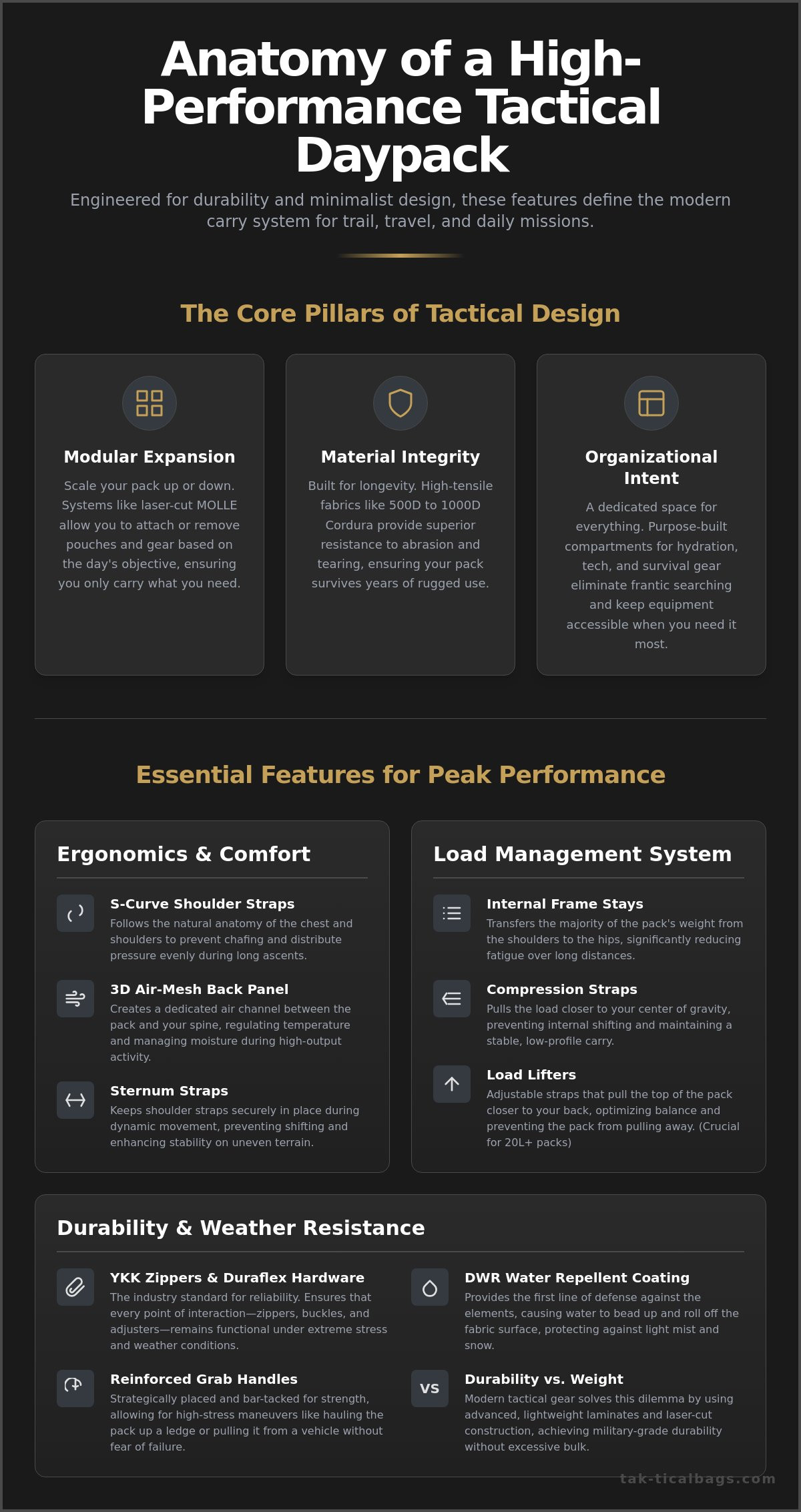
Tactical design is rooted in three main principles. First is modular expansion. Systems like PALS and laser-cut MOLLE allow you to scale your pack up or down based on the day's objective. You only carry what you need. Second is material integrity. Using 500D to 1000D Cordura ensures the bag won't fail when dragged across granite or through dense brush. Finally, organizational intent ensures there's a dedicated space for everything. Your hydration bladder, laptop, and survival kit each have a home. This eliminates the frantic search for gear during a summit push, creating a sense of organized calm.
Why Tactical Gear Outperforms Standard Hiking Packs
Standard hiking bags often prioritize weight over everything else. This leads to flimsy materials that rip easily on the first rock scramble. Tactical gear offers superior structural rigidity. This translates to better load distribution across your hips and shoulders, which significantly reduces fatigue over long distances. Longevity is another key factor. Reinforced stitching and high-end weather-resistant coatings mean your investment lasts for years, not just one season. You gain the ability to customize your setup for every unique trail requirement. It's gear that adapts to your journey, providing a level of reliability that standard consumer bags simply can't match.
Essential Features for High-Performance Hiking Daypacks
Performance is a product of engineering. When choosing a tactical hiking backpack, the focus shifts from simple storage to complex load management. A high-performance daypack acts as an extension of your body. It must respond to movement while maintaining structural integrity. This requires a specific set of features designed for the rigors of the trail and the demands of modern travel. Precision matters in every stitch and strap.
Ergonomics start with the harness system. S-curve shoulder straps are essential because they follow the natural anatomy of the chest and shoulders. This prevents chafing during long ascents. Ventilation technology, such as 3D air-mesh back panels, creates a dedicated air channel between the pack and your spine. This regulates temperature and manages moisture during high-output activity. Compression straps complete the system. They pull the load closer to your center of gravity, ensuring the bag remains low-profile even when half-empty. This prevents internal shifting that can throw off your balance on technical terrain.
Load Management and Comfort
Effective weight distribution relies on more than just padding. Sternum straps keep shoulder pads in place, while removable waist belts provide stability without added bulk for lighter missions. Tactical frames utilize internal stays to transfer weight from the shoulders to the hips, effectively reducing perceived load. Load lifters are adjustable straps located at the top of the shoulder harness that pull the weight of a 20L+ pack closer to the back to optimize balance. These small adjustments prevent the dragging sensation common with lower-quality gear.
Durability and Weather Resistance
Reliability lives in the details. Field failure often starts at a zipper or a buckle. Using YKK zippers and Duraflex hardware ensures every point of interaction remains functional under stress. Weather resistance is equally critical. While DWR (Durable Water Repellent) coatings provide sufficient protection against light mist and snow, integrated rain covers are necessary for sustained downpours. Reinforced grab handles allow for high-stress maneuvers, whether you're pulling your pack from a vehicle or hauling it up a ledge. For those who value these technical nuances, exploring a premium hiking bag collection can reveal the difference that purposeful design makes on the trail.
Hydration integration has also moved beyond the basic sleeve. Modern packs feature dual exit ports for drinking tubes and dedicated routing along the shoulder straps. This keeps water accessible without requiring you to break your stride. It's about maintaining momentum through thoughtful integration. Every feature serves a specific purpose, ensuring you stay focused on the journey ahead rather than the weight on your back.
Top Examples of Functional Hiking Daypacks for Every Mission
Every journey has a specific objective. Your gear should reflect that goal. Choosing a tactical hiking backpack requires an honest assessment of your environment. A summit push in the Rockies demands different features than a digital nomad's trek through the Alps. Efficiency isn't about having everything; it's about having exactly what you need. Precision in selection leads to confidence in execution. You're not just carrying gear; you're managing a system.
The Minimalist Tactical Carry
Speed is the primary advantage of the minimalist. These packs typically range from 15L to 22L in capacity. They focus on agile movement. A sleek profile ensures you won't snag on dense brush or low-hanging branches during a rapid ascent. It's about stripping away the non-essential to prioritize momentum. This design philosophy aligns perfectly with The Art of the Everyday Carry Backpack, where purposeful readiness is the ultimate goal. You'll move faster and feel less fatigue. It's the ideal choice for fast-and-light summit pushes.
The Strategic Travel and Hike Hybrid
Modern professionals often transition between urban landscapes and wild trails within the same day. The hybrid carry is designed for this seamless shift. It features clamshell openings that allow for easy packing and immediate access to your gear. These bags often include durable laptop compartments that double as hydration sleeves. You can find more details in our guide to The Ultimate Convertible Backpack for Travel and Hiking. It's the perfect solution for those who value versatility without sacrificing performance. One bag. Multiple environments.
The tech-integrated hiker is a critical subset of this category. It's built for digital nomads and trail photographers who carry sensitive electronics. These packs offer reinforced padding and weather-sealed zippers to protect expensive optics and laptops. They provide an organized calm in unpredictable environments. You don't have to choose between your career and your passion for the outdoors. Integration makes both possible. It's gear that works as hard as you do.
Rugged terrain requires a heavy-duty explorer. These packs are designed for the most demanding missions where overnight survival is a possibility. They utilize higher-denier fabrics and reinforced frames to handle significant weight. This is where the tactical hiking backpack truly shines. It provides the structural integrity needed to carry heavy tools or emergency supplies through unforgiving landscapes. It's not just a bag; it's a lifeline. You're prepared for whatever the trail throws your way. Confidence comes from knowing your gear won't fail.
Durability vs. Weight: Solving the Tactical Dilemma
A common myth persists in the outdoor community. Many assume a tactical hiking backpack must be heavy to be durable. This is outdated thinking. In 2026, material science has bridged the gap between resilience and weight. You don't have to sacrifice your back to gain military-grade reliability. Modern engineering allows for a streamlined experience on the trail. The dilemma of weight versus durability used to be a zero-sum game. If you wanted a pack that wouldn't rip on a rock scramble, you carried a heavy rucksack. If you wanted to move fast, you carried a flimsy nylon bag. This choice is now obsolete. Modern tactical gear leverages advanced textiles to provide the best of both worlds. It's about working smarter, not harder.
Material Science in 2026
Lightweight laminates have revolutionized the industry. Laser-cut PALS systems replace traditional heavy webbing; this reduces mass without sacrificing modularity. This precision cutting maintains the structural integrity required for heavy loads while stripping away non-essential fabric. It creates a sleeker profile that doesn't snag on branches. Ripstop technology further enhances this efficiency. It prevents small tears from becoming catastrophic failures in the field. 500D Cordura stands as the optimal balance for hiking, offering high abrasion resistance without the excessive weight of 1000D alternatives. Choose your denier based on your specific environment. High-alpine scrambles might require more protection than well-maintained forest paths. High-denier fabrics excel in rocky terrain but add weight. Lower deniers offer speed on groomed trails. Precision in material choice defines your success.
Balancing Your Load-Out
Intentionality is the core of tactical organization. Avoid the trap of over-packing just because your bag has extra volume. Every ounce counts over a ten-mile trek. A low "dry weight" baseline is essential for long-distance comfort. This is the weight of the pack before you add water or gear. Starting light allows for more flexibility later in the journey. Use compression straps to stabilize your center of gravity. This prevents internal shifting and keeps the load close to your spine. A stabilized load reduces the energy required for every step. It allows for a more fluid movement through technical sections. Focus on what is essential. Leave the rest behind. Organized calm starts with a balanced pack. Efficiency is the ultimate goal for the modern explorer.
Ready to upgrade your trail experience? Shop our tactical daypacks to find the perfect balance of weight and strength. Our designs prioritize high-performance materials that won't weigh you down when the terrain gets tough.
Elevating Your Adventure: The Tak-tical Design Philosophy
Great design is invisible. It works without demanding your attention. At Tak-tical, we believe your gear should empower your lifestyle, not complicate it. Our philosophy centers on refined readiness. This means every stitch serves a specific purpose. Every material choice reflects a commitment to longevity. We don't build bags for a single weekend. We build systems for a lifetime of movement. A tactical hiking backpack shouldn't feel like a costume. It should feel like a professional tool that happens to excel on a ridge line. It's about achieving a sense of organized calm in every environment you inhabit.
Sophisticated Utility for the Modern Citizen
Standard military gear often screams for attention with aggressive silhouettes and excessive external webbing. We take a different path. Our designs prioritize clean lines and a quiet, authoritative aesthetic. We hide technical features within a sophisticated urban shell. This allows you to move from a mountain summit to a professional meeting without a second thought. You gain the durability of Cordura and the modularity of PALS without the "tacticool" stigma. This same focus on resilience and style carries over into our Durable Laptop Bags for Travel. Integration is the ultimate luxury for the modern professional. Your gear should be as versatile as your itinerary.
The Intentional Path Forward
Choosing the right gear is an intentional act. It reflects a commitment to organization and efficiency. A functional hiking daypack is a long-term investment in your own mobility. It provides the peace of mind that comes from knowing your equipment is ready for any mission. Whether you are navigating a forest trail or a crowded airport, your carry system should provide stability. We focus on premium, direct-to-consumer quality to ensure your investment lasts for years. This isn't about fashion. It's about functional excellence. It's about being prepared for the unexpected with gear that never compromises on performance or appearance.
The trail is calling. Your journey deserves equipment that matches your ambition and respects your need for efficiency. Don't settle for flimsy alternatives or bulky, outdated rucksacks. Elevate your carry experience with a system designed for the modern explorer. Precision matters. Reliability is non-negotiable. Explore the Tak-tical Hiking Collection today and discover the difference of purposeful design. Your next adventure starts with the right foundation. Move with confidence. Carry with intent.
Master Your Next Mission
The standard for outdoor gear has shifted. You no longer need to choose between flimsy fashion bags and aggressive, overbuilt rucksacks. The modern tactical hiking backpack represents a new era of refined readiness. It combines the resilience of 500D Cordura with a minimalist aesthetic that fits every environment. You gain a carry system that manages weight efficiently through ergonomic engineering. You embrace a design that respects your need for organization and speed. This is gear for the intentional traveler who values both utility and sophistication.
Invest in a system that reflects your commitment to excellence. Our collection focuses on professional-grade durability and a refined minimalist design. We ensure global shipping available for every strategic explorer. Your journey demands equipment that performs under pressure without sacrificing style. It's time to move with purpose and confidence. Elevate your carry with Tak-tical Hiking Bags and prepare for the path ahead. The trail is yours to define. Stay ready. Stay organized. Your next adventure begins now.
Frequently Asked Questions
What is the best size for a functional hiking daypack?
The ideal size for a functional hiking daypack ranges between 18 and 30 liters. A 20 to 25-liter capacity serves as the sweet spot for most enthusiasts, providing enough volume for hydration, extra layers, and a first-aid kit without adding unnecessary bulk. If you're planning technical winter treks or carrying heavy camera equipment, moving toward a 30-liter option ensures better organization and weight distribution.
Can I use a tactical hiking backpack as a daily work bag?
Yes, you can seamlessly transition a tactical hiking backpack into a professional environment if it features a refined, minimalist aesthetic. Modern designs often integrate dedicated laptop compartments and internal organizational grids that keep tech secure and accessible. Choosing a pack with clean lines and a quiet color palette ensures your gear looks appropriate in an office while remaining ready for a post-work trail session.
What is the difference between MOLLE and PALS webbing?
PALS (Pouch Attachment Ladder System) refers to the actual grid of horizontal webbing, while MOLLE (Modular Lightweight Load-carrying Equipment) is the overall system that uses that grid. In the industry, these terms are often used interchangeably. Understanding that PALS is the architecture and MOLLE is the equipment helps you choose compatible pouches and accessories to customize your pack's external carry capacity for specific missions.
Are tactical hiking bags waterproof?
Most high-quality tactical bags are water-resistant rather than fully waterproof. They typically use heavy-duty fabrics like Cordura treated with a DWR (Durable Water Repellent) coating to shed light rain and snow. For protection during sustained downpours or river crossings, it's best to use an integrated rain cover or internal dry bags to ensure your sensitive electronics and survival gear remain completely dry.
How do I clean a Cordura tactical backpack?
Clean your Cordura pack by hand using a soft-bristled brush, mild soap, and lukewarm water. You should avoid machine washing or using harsh detergents, as these can strip away protective coatings and damage the fabric's structural integrity. Focus on spot-cleaning high-wear areas like the base and shoulder straps. Always hang the bag to air dry in a shaded, well-ventilated spot before you store it.
Is a 20L backpack big enough for a full day hike?
A 20L backpack is sufficient for most standard three-season day hikes. This volume comfortably fits a two-liter hydration bladder, snacks, a lightweight rain shell, and essential safety items. It's a perfect choice for those who prioritize speed and agility. If your hike requires specialized gear like climbing helmets or heavy winter insulation, you might find a 25L or 30L pack more efficient for maintaining organization.
Do tactical hiking daypacks fit in overhead airplane bins?
Most tactical hiking daypacks under 35 liters meet standard airline carry-on requirements and fit easily in overhead bins. These packs are engineered for a mobile lifestyle, making them excellent companions for global travel. It's wise to check your specific airline's dimensions before flying, especially if you've added external pouches that increase the bag's overall footprint. Compression straps help keep the profile slim for easier loading.
What features should I look for in a hiking daypack for travel?
Prioritize a clamshell opening for easy packing and a dedicated, padded laptop sleeve for transit security. A high-performance tactical hiking backpack for travel should also include reinforced grab handles and compression straps to stabilize your load in crowded terminals. These features, combined with professional-grade materials, ensure your bag survives the rigors of international baggage handling while performing flawlessly once you reach the trailhead.