
Why does a pack built for the battlefield so often fail on a ten-mile ascent? Most rugged gear prioritizes external attachments over human anatomy. This often leaves you with bruised shoulders and a soaked back panel before you even reach the summit. You shouldn't have to choose between military-grade durability and the refined comfort of a dedicated trail bag. Finding the best tactical hiking backpack in 2026 requires a shift in perspective. It is about intentional carry. It is about readiness without the unnecessary bulk.
We understand that your gear needs to be as adaptable as your itinerary. You value the modularity of a mission-ready system but demand a sleek, minimalist aesthetic that feels at home in any environment. This guide explores how to select a pack that integrates high-denier toughness with sophisticated suspension systems. We have curated the top performers that eliminate unnecessary weight while maximizing utility. From breathable back panels to ergonomic strap designs, discover the evolution of tactical carry for the modern explorer. Prepare for your next journey with gear that respects your pace and your posture.
Key Takeaways
- Move beyond disposable gear by understanding how modular systems provide a tailored, mission-specific fit for any expedition.
- Prioritize ergonomic suspension and breathable back panels to eliminate the common shoulder strain associated with traditional rugged bags.
- Evaluate the performance gap between high-denier tactical fabrics and standard materials to ensure superior abrasion resistance on the trail.
- Learn to balance your loadout within the 20L to 40L range to find the best tactical hiking backpack for your specific mileage goals.
- Transition effortlessly between professional environments and the wilderness with a design philosophy rooted in refined, intentional utility.
The Rise of Tactical Hiking: Why Rugged Gear is Moving to the Trail
The outdoor industry is witnessing a significant pivot. Traditional gear often favors extreme weight reduction at the expense of longevity. Modern hikers are rejecting this disposable culture. They are turning toward gear that survives the harshest conditions. This shift has elevated the search for the best tactical hiking backpack from a niche interest to a trail standard. People want equipment that lasts a decade, not a season.
Purposeful readiness is more than a trend. It is a psychological advantage. Knowing your gear won't fail when you are miles from the trailhead provides a specific type of confidence. The 2026 tactical hiker prioritizes this reliability. They value efficiency, durability, and a clean aesthetic over flashy, fragile alternatives. It is a move toward intentionality in every piece of equipment carried.
Beyond the Aesthetic: The Functional Core
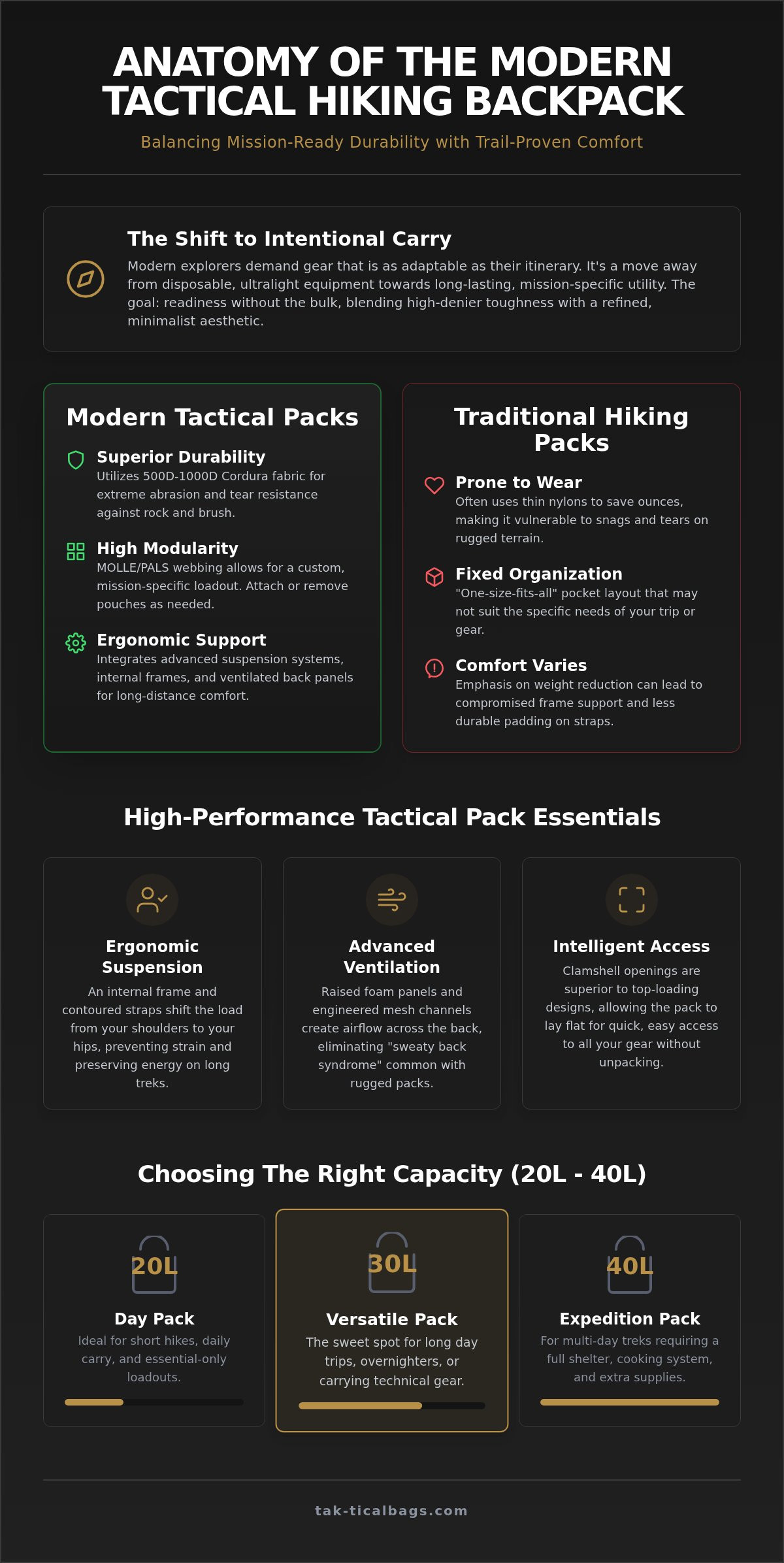
Durability starts with the fiber. While standard trail packs use thin nylons to save ounces, tactical variants utilize 1000D Cordura. This material offers superior abrasion resistance against sharp granite and dense brush. The evolution of Backpack designs and history shows a progression from simple sacks to complex, load-bearing systems. Modern PALS and MOLLE webbing allow for a custom internal and external layout. This solves the "one-size-fits-all" limitation of traditional rucksacks. You can attach exactly what you need and leave the rest behind. The key is balancing this over-built strength with modern weight-saving techniques to keep the pack agile.
Tactical Readiness vs. Military Cosplay
True utility is not about looking like a soldier. It is about performance. Many legacy tactical bags are cluttered with heavy, unnecessary features. The modern approach focuses on low-profile design. We see a move away from aggressive camouflage patterns. In 2026, the best tactical hiking backpack features matte, technical earth tones like wolf grey or ranger green. These shades blend into both wilderness and urban environments seamlessly.
Features should add value, not just bulk. Reinforced grab handles and dedicated hydration ports are essential for long-distance treks. Excessive straps that snag on branches are not. This refined style defines the intentional carry movement. It is a commitment to high-quality craftsmanship without the loud, boisterous branding of the past. Tak-tical leads this transition. We offer hiking bags that feel as professional as they are rugged, ensuring you are prepared for the trail without looking out of place.
Essential Features of a High-Performance Tactical Hiking Pack
Selecting the best tactical hiking backpack involves looking beyond the surface webbing. The true value lies in the suspension system. Traditional military packs often prioritize load volume over long-distance comfort. For the modern hiker, this is a fatal flaw. High-performance packs now integrate internal frames designed to shift weight from the shoulders to the hips. This transition is vital for maintaining energy on steep ascents.
Ventilation is another critical factor. Many rugged bags have a reputation for causing "sweaty back" syndrome. Advanced 2026 designs utilize raised foam panels and mesh channels to promote airflow. This ensures that a durable 500D or 1000D exterior doesn't compromise your body temperature. Hydration compatibility is equally essential. Look for dedicated internal sleeves that keep bladders secure and separate from your electronics.
Eronomic Suspension and Weight Distribution
Comfort on a 10-mile trek is non-negotiable. A high-performance frame must be rigid enough to support heavy loads but flexible enough to move with your stride. Internal frames, often made of lightweight aluminum or composite stays, provide this balance. They prevent the pack from sagging and pulling on your neck. This is where many tactical designs fail; they offer durability without the necessary anatomical support.
Contoured shoulder straps are a requirement. They should follow the natural curve of your body to prevent chafing. Adjustable torso lengths allow for a custom fit, ensuring the hip belt sits exactly where it should. This level of precision is what separates a generic rucksack from a professional tool. If you value this level of detail, explore our collection of refined hiking bags designed for elite trail performance.
Modular Organization and Accessibility
Accessing gear quickly is a tactical necessity. Clamshell openings are generally superior to top-loading designs for hiking. They allow you to lay the pack flat and reach items at the bottom without unpacking everything. This efficiency is crucial during sudden weather changes or short breaks. It keeps you moving rather than searching.
External webbing should be used strategically. While MOLLE is versatile, avoid over-cluttering. Use it for high-utility items like trekking poles, axes, or GPS pouches. Inside, look for dedicated tech sleeves. These compartments protect tablets or laptops during the transition from urban commutes to rugged trails. Every pocket must have a purpose. Organization is not just about having more space; it is about having immediate access to the right gear. Mastering these features ensures you carry the best tactical hiking backpack for your specific adventure needs.
Tactical vs. Traditional Hiking Rucksacks: The Performance Gap
Traditional hiking packs prioritize the scale. They chase the lowest possible weight to appeal to the ultralight market. This often leads to fragile fabrics that fail under pressure or tear against jagged terrain. Tactical designs take a different path. They prioritize resilience. The best tactical hiking backpack provides a level of abrasion resistance that standard ripstop cannot match. You trade a few ounces for a pack that won't shred against a rock face. It is an investment in longevity. This durability ensures that your gear remains a reliable partner regardless of the environment.
The weight-to-strength ratio is the core of the tactical debate. Critics often point to the "weight penalty" of heavier materials. However, this extra weight serves a purpose. It provides the structure needed to carry dense loads without the pack deforming. It allows for reinforced stitching at every stress point. For the hiker who values readiness, this trade-off is essential. You gain a bag that handles real-world abuse while maintaining its ergonomic shape.
Material Science: Cordura vs. Ripstop
Understanding denier ratings is essential for trail longevity. Most traditional packs use 100D to 210D ripstop nylon. It is thin and prone to punctures. Tactical gear typically starts at 500D Cordura and often moves to 1000D for high-wear areas. This isn't just about thickness; it's about the weave. Cordura handles friction better. It lasts longer. Modern treatments like TPU coatings offer superior weatherproofing compared to standard DWR. TPU provides a physical barrier that doesn't wash off over time. This creates a more sustainable choice. You buy one bag for a decade. You don't replace it every two years.
The Modularity Advantage
Traditional rucksacks rely on fixed internal pockets. If your gear doesn't fit the pre-set dimensions, you lose efficiency. Tactical modularity changes the math. External PALS webbing allows you to add pouches only when needed. This increases your effective capacity without adding permanent bulk to the main compartment. It allows for a customized loadout that evolves with your mission.
Consider accessibility. A dedicated medical pouch on the exterior is faster than digging through a top-loading bag during an emergency. You can adapt the same pack for a four-hour stroll or a twelve-hour summit. Simply swap the attachments. This versatility makes the tactical weight penalty worth the cost. The "penalty" is actually a safety margin. Your hiking bag becomes a daily carry tool. It transitions from the mountain to the office without looking out of place. It is a refined, purposeful solution for the modern professional. This integration of style and utility is the hallmark of the 2026 hiker.
How to Choose the Right Capacity and Loadout
Choosing the right capacity is a balancing act between readiness and mobility. A pack that is too small forces you to leave essential safety gear behind. A pack that is too large becomes a literal burden. Finding the best tactical hiking backpack involves identifying your specific trail goals. The 20L to 40L spectrum covers the majority of single-day and short multi-day missions. Within this range, internal organization and compression systems become the primary drivers of stability.
Compression straps are often overlooked. They are essential when your pack isn't full. They pull the load closer to your center of gravity. This prevents gear from shifting during technical scrambles or rapid descents. This level of intentionality is central to The Art of the Everyday Carry Backpack. It is about being prepared without being encumbered. Every strap and pocket should serve a specific function in your movement.
Day Hike vs. Weekend Trek
For most tactical hikers, 25L is the sweet spot. While some urban-focused reviewers suggest 20L is sufficient, technical trails demand more. You need space for extra layers, a comprehensive medical kit, and at least three liters of water. A 25L pack provides this volume while maintaining a sleek profile. It is the ideal size for a rigorous eight-hour journey.
Transition to a 40L tactical rucksack when your mission extends overnight. This capacity allows for lightweight sleep systems and additional rations. The minimalist approach isn't about carrying less; it's about carrying smarter. High-denier fabrics provide the structure needed to scale your load without the bag losing its shape. It ensures the bag remains a stable platform even when pushed to its volume limit.
Securing Your Essentials
Loadout strategy is as important as the bag itself. Place your heaviest items, such as hydration bladders and tools, close to your spine and centered between your shoulder blades. This minimizes the leverage the pack has on your back. It keeps the weight over your hips. Follow this hierarchy for optimal balance:
- Bottom: Lightweight, bulky items like spare clothing or a base layer.
- Middle (Close to back): Heaviest gear, including water and survival tools.
- Top: High-frequency items like snacks, headlamps, and navigation gear.
- External: Wet gear or trekking poles attached via MOLLE webbing.
Utilize external webbing for items that are bulky or damp. This preserves internal volume for sensitive gear like electronics or dry clothing. For a deeper look at organization, read our guide on How to Pack a Backpack for a Day Hike. Proper placement ensures that even a fully loaded bag feels integrated with your body. Readiness requires the right foundation. Explore our tactical-style everyday backpacks to find a system that balances rugged capacity with sophisticated trail ergonomics.
Tak-tical: Refined Performance for the Modern Hiker
Most gear forces a choice between rugged utility and urban sophistication. We reject that compromise. Our commitment to technical excellence and refined utility drives every design. We build for the individual who moves between professional environments and mountain summits without missing a beat. This hybrid lifestyle demands gear that is both resilient and understated. By focusing on the intentional carry movement, we have developed what many consider the best tactical hiking backpack for the versatile professional. It is about readiness. It is about seamless integration.
Our "Less is More" philosophy is about stripping away the distractions. We remove the excessive straps, bulky external frames, and loud branding found on traditional military gear. We keep the structural integrity. This results in a pack that feels lighter and looks sharper while maintaining its mission-ready heritage. It respects your time and your aesthetic. For those seeking specific daily solutions, our guide on Best Functional Hiking Daypacks 2026 details how tactical performance translates to modern trails. Efficiency is our benchmark.
Minimalist Aesthetics, Maximum Durability
Professional hikers require a specific silhouette. You need a bag that fits in an overhead compartment and survives a granite scramble. Our hiking range is built for 2026 and beyond. We use premium, high-denier fabrics that resist abrasion without looking aggressive. These tactical-style bags are the ultimate travel companions. They offer organized efficiency for long-haul flights and ergonomic comfort for twelve-mile treks. It is durability you can wear anywhere. The sleek lines hide a core of immense strength. We don't just build bags. We engineer reliable partners for your daily journey.
Join the Purposeful Carry Movement
Choosing a direct-to-consumer specialist ensures you receive maximum value. We focus our resources on craftsmanship rather than traditional retail markups. Our customers report seamless transitions from city streets to remote peaks. They value the quiet empowerment that comes from being truly prepared. Every detail is curated to support your movement. We understand the demands of a fast-paced, mobile lifestyle. Our bags provide an organized calm in a chaotic world. It is time to stop settling for bulky, unrefined gear. Elevate your trail experience with Tak-tical Hiking Bags and discover the power of organized readiness. The best tactical hiking backpack is the one that adapts to your life, not the other way around. Experience the difference of refined utility today.
Elevate Your Next Expedition
The evolution of the trail pack is here. You no longer need to sacrifice refined aesthetics for rugged reliability. By prioritizing high-tensile durability and sophisticated ergonomic suspension, you ensure your gear survives the most demanding terrain. The search for the best tactical hiking backpack ends where intentional design meets trail-ready comfort. Choose a system that adapts to your unique movement; whether you are traversing a remote mountain ridge or navigating a fast-paced urban commute.
Tak-tical provides a modern, minimalist tactical design that removes unnecessary clutter while maintaining maximum strength. Our commitment to technical excellence ensures every bag remains a reliable partner for years to come. We offer global shipping on all purposeful carry gear, making premium utility accessible wherever your next mission takes you. It's time to invest in equipment that respects your pace and your professional standards. Every detail is curated to support a lifestyle defined by readiness and efficiency.
Explore the Tak-tical Hiking Collection and prepare for a future of organized readiness. Your next summit is waiting.
Frequently Asked Questions
Are tactical backpacks good for long-distance hiking?
Yes, provided they feature an ergonomic suspension system and internal frame. While legacy military bags focused on durability alone, modern versions integrate trail-ready comfort. The best tactical hiking backpack in 2026 balances high-denier resilience with load-shifting technology. This allows you to carry heavy gear over varied terrain without the chronic shoulder strain typically associated with unrefined gear. It's about combining toughness with anatomical support for the human body.
Why do tactical backpacks have so many straps and loops?
These features comprise the PALS and MOLLE systems designed for modular customization. They allow you to attach external pouches, medical kits, or tools like trekking poles and axes. This external modularity increases your effective capacity without cluttering the main compartment. It enables a tailored loadout for specific missions. You can adapt the bag's configuration from a simple day trek to a technical summit attempt by swapping modular attachments.
Is a tactical backpack too heavy for a day hike?
Not if you prioritize a 500D Cordura build over heavier 1000D options. While tactical materials are denser than standard ripstop nylon, the added weight provides essential structure and protection. A 25L pack usually weighs between 2.5 and 4 pounds. This slight weight increase is a safety margin. It ensures your bag won't fail when navigating sharp granite or dense brush. The durability outweighs the minimal weight penalty for most serious hikers.
What is the best material for a tactical hiking backpack?
500D to 1000D Cordura nylon is the industry standard for tactical durability. It offers exceptional abrasion resistance and high tensile strength compared to the lightweight 210D nylons used in traditional packs. For the best tactical hiking backpack, look for materials treated with TPU or DWR coatings. These treatments enhance weather resistance and ensure the fabric doesn't absorb moisture. This material choice creates a piece of gear that lasts for decades rather than seasons.
Can I use a tactical hiking backpack for air travel carry-on?
Yes, most tactical packs in the 20L to 35L range fit standard airline overhead bin dimensions. Their rectangular, low-profile designs often make them more efficient for travel than rounded traditional hiking bags. Dedicated tech sleeves protect your laptop during transitions. Because they lack the rigid, protruding frames of large expedition rucksacks, they slide easily into tight spaces. Always verify the specific exterior dimensions against your airline's current baggage policy.
How do I clean and maintain a tactical Cordura backpack?
Clean your pack using a soft brush, mild soap, and lukewarm water. Avoid machine washing or drying, as the heat and agitation can damage the internal coatings and structural stays. Focus on high-wear areas like the back panel and shoulder straps where salt from sweat accumulates. Rinse thoroughly and hang the bag to air dry in a shaded area. Regular maintenance preserves the fabric's integrity and ensures the zippers operate smoothly.
What size tactical backpack do I need for a 10-mile hike?
A capacity of 25L to 30L is ideal for a rigorous 10-mile journey. This volume provides enough space for three liters of water, extra layers, a first-aid kit, and technical tools. It maintains a sleek profile that doesn't hinder your movement on steep ascents. If you are carrying specialized photography gear or heavy cold-weather clothing, consider scaling up to a 35L pack. Efficiency is found in matching the bag's volume to your specific loadout.
Are tactical backpacks waterproof?
Most are highly water-resistant but not fully submersible. High-denier Cordura naturally repels water, and internal TPU coatings provide a significant barrier against rain. However, moisture can eventually seep through seams or zipper teeth during prolonged exposure. For extreme conditions, utilize a dedicated rain cover or internal dry bags to protect sensitive electronics. This layered approach ensures your essentials stay dry during sudden mountain storms while maintaining the bag's breathable performance.