
The most sophisticated gear often looks like the simplest. You've likely felt the frustration of choosing between a cluttered daypack covered in unnecessary straps or a rucksack that feels out of place once you leave the trailhead. Finding the best hiking backpacks shouldn't mean sacrificing a refined aesthetic for technical performance. It's time to demand more from your equipment.
You deserve gear that transitions as fluidly as your lifestyle. This guide breaks down the technical excellence of 2026's leading designs. We analyze the physics of modern suspension systems and clarify the confusion surrounding liter capacity. You'll gain the confidence to select a pack that offers both organized calm and rugged durability. From the integration of bio-based materials to advanced ergonomic load distribution, discover how to elevate your next journey with intentional utility. Prepare for a more efficient way to move through any environment.
Key Takeaways
- Understand the mechanics of suspension and how it transfers 80% of pack weight to your skeletal structure.
- Identify the best hiking backpacks by prioritizing technical excellence over cluttered, non-functional aesthetics.
- Learn the critical distinctions between daypack and rucksack capacities for a seamless urban-to-trail transition.
- Discover why torso length is the most vital measurement for achieving a precise, ergonomic fit.
- Apply the 80% capacity rule to maintain optimal stability and movement on any terrain.
The Evolution of the Hiking Backpack: Why Technical Excellence Matters
Movement defines the modern hiker. A backpack is no longer a simple container. It is an integrated carry system designed to disappear on your back. The clunky, external frame behemoths of the past have vanished. In their place, we find streamlined, high performance internal suspension systems. These systems prioritize the natural mechanics of the human body. They allow for a level of agility that was previously impossible. Choosing from the best hiking backpacks in 2026 requires looking beyond the fabric. It requires understanding the engineering behind the carry.
2026 marks the arrival of Refined Utility. This design philosophy moves past the obsession with being just "ultralight." It focuses on purposeful construction. The psychological impact of organized gear is profound. When every strap has a function and every pocket has a place, you experience a sense of organized calm. You aren't fighting your equipment. You move with confidence. This mental clarity is just as vital as physical endurance. A well designed pack reduces cognitive load, letting you focus on the horizon rather than the pressure on your shoulders.
Beyond the Trail: The Rise of Versatile Carry
The modern citizen doesn't live in a vacuum. Your journey might start on a morning train and end on a mountain ridge. This urban to trail transition requires aesthetic refinement. A bag that looks like a neon survivalist kit feels out of place in professional settings or city streets. Refinement is now a functional requirement for the global traveler. It allows one piece of gear to serve multiple lives. Durability is the backbone of this strategy. High quality materials ensure your investment lasts for years, making it a sustainable choice for a long term gear collection. We see a shift toward materials that offer high denier counts without the bulk.
Identifying Quality in a Saturated Market
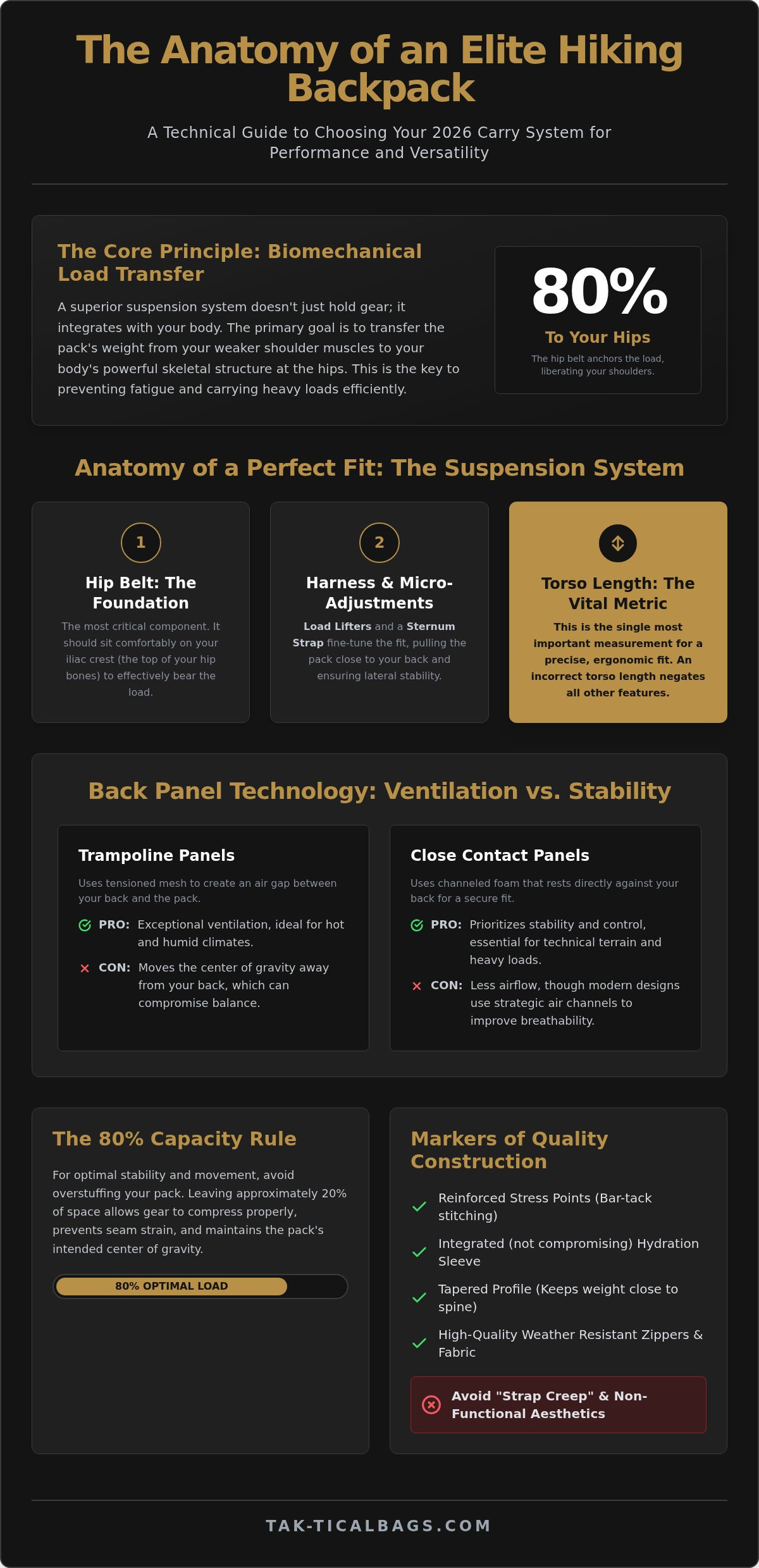
Avoid the trap of strap creep. Many brands over-engineer their products with unnecessary buckles, cords, and "busy" features that add weight without adding value. These designs create confusion and snag on brush. Look for material integrity over flashy branding. The best hiking backpacks prioritize clean lines and intuitive access. Technical minimalism is the elimination of excess to enhance performance. When evaluating a potential pack, look for these markers of quality:
- Reinforced Stress Points: Bar tack stitching at load bearing areas.
- Integrated Hydration: Dedicated internal sleeves that don't compromise cargo space.
- Tapered Profiles: Designs that keep the center of gravity close to your spine.
- Weather Resistance: Coatings and zippers that protect contents without needing a separate rain cover.
True excellence is found in the details. It's the way a hip belt contours to your frame or the silent operation of a premium zipper. By focusing on technical excellence, you ensure your gear is a partner, not a burden.
The Anatomy of Excellence: Suspension and Load Distribution
Suspension is the engine of your pack. It dictates how weight feels on the move. Even the best hiking backpacks can fail if the internal architecture is flawed. A superior carry system doesn't just hold gear; it integrates with your body. It transforms a heavy load into a manageable extension of your frame. When the suspension is engineered correctly, the pack feels lighter than the scale suggests. This is the hallmark of technical excellence.
The hip belt serves as the foundation. Its primary role is to transfer 80% of the pack's weight to your skeletal structure. By anchoring the load to your iliac crest, you liberate your shoulders from primary weight bearing duties. This prevents premature muscle fatigue and preserves your energy for the ascent. Load lifters and sternum straps provide the necessary micro-adjustments. Load lifters pull the weight forward, keeping the center of gravity tight against your spine. Sternum straps prevent the harness from sliding, ensuring stability during lateral movements. A commitment to refined hiking bags means prioritizing these internal mechanics over external aesthetics.
A persistent debate exists between breathability and stability. Trampoline back panels use tensioned mesh to create an air gap. This offers exceptional ventilation in humid climates. However, it moves the load further from your back, which can compromise balance on technical terrain. Close contact panels prioritize control and precision. They use channeled foam to balance airflow with a secure, stable fit. Your choice depends on your environment and the intensity of your movement.
The Invisible Tech: Frames and Back Panels
Frames provide the rigidity required for heavy carries. Internal peripheral frames use a lightweight wire loop to maintain pack shape and direct weight to the hip belt. For lighter loads, high density framesheets offer sufficient support with increased flexibility. Contoured back panels are designed to mirror the natural curvature of the spine. This anatomical alignment ensures the pack moves with you rather than against you. Effective load distribution anchors the pack to the hips to prevent long-term lumbar strain.
Ergonomics of the Shoulder Harness
Fit is personal. The shape of the shoulder harness determines how the pack sits on your chest and neck. S-curve straps are often preferred for contoured builds, while J-curve straps suit broader, straighter frames. Look for dual-density foam in the padding. High density foam maintains its structure under load, while a softer outer layer prevents chafing. Width also matters. A wider strap disperses pressure across a larger surface area, effectively eliminating pinch points during long days on the trail. Identifying these details is essential when selecting the best hiking backpacks for high performance use.
Matching Capacity to Objective: Daypacks vs. Rucksacks
Capacity is the foundation of efficiency. A 20L daypack and a 50L rucksack serve distinct purposes. Choosing between them requires an honest assessment of your objective. The best hiking backpacks provide stability through correct volume management. Follow the 80% rule. Your bag should be roughly 80% full to maintain its intended shape. An underfilled pack lacks structure. An overfilled one strains the suspension and compromises the zippers. Technical minimalism allows for smaller, more efficient pack sizes without compromising utility. It encourages you to carry only what is essential. For specialized environments, consult The Modern Day Hiking Rucksack for deeper technical analysis.
Volume is often misunderstood as a measure of how much you can fit. In reality, it's a measure of how the pack will carry that weight. A larger bag isn't always better. Excess space allows gear to shift, which disrupts your center of gravity. Conversely, a pack that is too small forces you to strap items to the exterior. This creates "swing weight," making the pack feel heavier and less stable. Aim for a volume that allows everything to live inside the main compartment. This keeps the load tight and your movements precise.
The Versatile Daypack (18L - 30L)
The 18L to 30L range is the sweet spot for peak bagging and local trails. These packs prioritize speed and agility. They integrate hydration sleeves and quick access pockets for high tempo movement. A small hiking backpack is the ultimate tool for the minimalist traveler. It fits into overhead bins and moves effortlessly through crowded transit hubs. It represents the intersection of urban refinement and trail readiness. These packs utilize lightweight frames or framesheets to support essentials without adding unnecessary bulk.
The Multi-Day Rucksack (40L - 65L+)
Sustained autonomy requires more volume. Multi-day rucksacks ranging from 40L to 65L are engineered for heavy loads, sleep systems, and several days of supplies. At this scale, suspension becomes non-negotiable. Weights exceeding 15kg demand advanced load distribution to protect your frame. High performance internal frames direct weight to the hips, preserving your agility on steep terrain. Strategic organization is key to a balanced carry. Learn how to pack a backpack to optimize weight distribution and comfort. This ensures the heaviest items remain centered and stable, preventing the pack from swaying during technical descents. Proper packing isn't just about space; it's about physics.
- 18L-25L: Fast-paced day hikes and gym-to-trail transitions.
- 25L-35L: Technical day trips requiring extra layers or climbing gear.
- 40L-55L: Weekend backpacking and lightweight multi-day journeys.
- 60L+: Extended expeditions requiring maximum autonomy.
Selecting the best hiking backpacks means matching the tool to the task. Don't carry more volume than your objective demands.
The Strategic Selection Framework: How to Choose Your Pack
Technical precision starts with the fit. Measuring your torso length is the most critical step in this framework. It dictates how the suspension interacts with your skeletal frame. A pack that is too long will sag and pull at your shoulders. One that is too short will sit too high, causing instability and neck strain. Locate your C7 vertebra, the prominent bone at the base of your neck, and measure down to the top of your iliac crest. This measurement is your blueprint for comfort. Without it, even the best hiking backpacks will feel like a burden.
Never judge a pack by its empty weight. A bag that feels featherlight in the store can become a liability once it's loaded. Identifying the best hiking backpacks requires a test under tension. Load your potential selection with at least 10kg of weighted sandbags or gear. Walk, climb, and bend. Observe how the weight shifts. If the straps pinch or the load sways, the geometry isn't right for your body. A high-quality carry system should feel like an extension of your torso, not an attachment.
Step 1: Determine Your Primary Environment
Your environment dictates your material requirements. Arid trails demand maximum ventilation and high-tenacity fabrics that can withstand abrasive rock. Temperate rainforests require superior moisture management. While integrated rain covers offer convenience, they often act as sails in high winds. Waterproof fabrics provide a more permanent solution but can increase the pack's base weight. Cordura is a benchmark for abrasion resistance in 2026. Look for high denier counts in high-wear areas like the bottom panel and side pockets to ensure long-term durability.
Step 2: Assess Your Carry Philosophy
Your philosophy influences every aspect of your gear. Are you an ultralight minimalist or a comfort-focused traditionalist? Minimalists often prefer roll-top closures for their simplicity and ability to compress the load as supplies are consumed. Traditionalists may value the organization of a lid with multiple access points. Perform a feature audit before you buy. Do you actually need 12 external pockets? Every zipper and seam is a potential point of failure. Technical minimalism is about choosing gear that offers elevated efficiency without unnecessary clutter.
Select your next partner in movement. Explore our collection of premium hiking bags to find a pack that aligns with your selection framework and supports your mobile lifestyle.
- Torso Fit: The foundation of weight distribution.
- Material Integrity: Choose fabrics based on terrain, not just weight.
- Feature Utility: Eliminate excess straps and pockets that don't serve a purpose.
- Dynamic Testing: Always evaluate the suspension under a realistic load.
Tak-tical’s Approach: Refined Hiking Bags for the Modern Citizen
Tak-tical exists at the intersection of technical excellence and urban refinement. We don't believe you should choose between a high-performance carry system and a sophisticated aesthetic. Our approach is defined by a "less is more" philosophy. We strip away the clutter to reveal a bag that moves as fluidly as you do. While many of the best hiking backpacks focus solely on wilderness survival, we design for the modern citizen. This means creating gear that feels at home in a boardroom or on a mountain ridge. It's gear that respects your environment.
Our functional hiking daypacks outperform generic alternatives by prioritizing movement and integration. We don't add straps for the sake of appearance. Every seam and buckle serves a specific purpose. This commitment to functional excellence elevates the everyday carry experience. It's about readiness. It's about having the confidence that your gear can handle the rigors of any environment without looking out of place. Identifying the best hiking backpacks in 2026 involves looking for this level of intentionality. We provide the tools; you provide the momentum.
Crafted for Longevity
We utilize premium materials selected for their durability and weight. These aren't just bags. They're investments in your mobile lifestyle. Our silhouettes are sleek and purposeful. They avoid the "busy" look of traditional outdoor gear. This focus on refinement ensures your pack belongs in any environment, from global travel hubs to remote trails. We focus on textiles that withstand the rigors of global travel while maintaining a polished appearance. The Tak-tical promise is one of readiness and organized calm. You know exactly where your gear is. You know it's protected by high-quality craftsmanship.
Your Next Step in Purposeful Carry
Integrating a Tak-tical hiking bag into your existing gear roster is a seamless process. We design for compatibility and versatility. Our direct-to-consumer model allows us to maintain a high level of craftsmanship while offering premium quality. We cut out the middleman to focus on the details that matter to you. This ensures that every dollar is reflected in the integrity of the stitching and the resilience of the frame. You receive a product that has been scrutinized for functional excellence. Elevate your journey with intentional gear. Choose a partner that understands the demands of a fast-paced, mobile life. It's time to move with purpose.
- Direct-to-Consumer: Premium quality without the traditional retail markup.
- Versatile Design: Aesthetics that transition from professional settings to the trail.
- Purposeful Construction: Every feature is vetted for utility and movement.
Elevate Your Movement with Intentional Design
Technical excellence isn't found in the number of straps. It's found in the seamless integration of suspension and skeletal alignment. You now have the framework to identify the best hiking backpacks by prioritizing torso fit and purposeful capacity. True utility means your gear performs on the ridge and remains composed in the city. This seamless transition is the hallmark of the modern citizen who refuses to compromise on aesthetics or performance.
Pursue a carry system that eliminates clutter to enhance your focus. Our equipment features high-impact minimalist design engineered for technical durability. We offer global shipping for the strategic traveler who values readiness in every environment. Every detail is curated to provide a sense of organized calm during high-tempo movement. You deserve gear that works as hard as you do, regardless of the terrain.
Explore the Tak-tical Hiking Collection for Refined Performance. Your next journey deserves a partner that values craftsmanship as much as you do. Step forward with a pack that moves with you. The trail is waiting.
Frequently Asked Questions
What is the best liter capacity for a day hike?
A volume of 18L to 30L is ideal for most day hikes. This range provides enough space for essential layers, hydration, and nutrition without adding unnecessary bulk. Choosing a pack within this sweet spot ensures you maintain agility on technical trails while keeping your center of gravity stable and controlled.
How do I know if a hiking backpack fits me correctly?
Correct fit is defined by the hip belt sitting directly on your iliac crest and the shoulder harness contouring your frame without gaps. The weight should feel anchored to your hips rather than pulling on your neck or shoulders. Always use your specific torso measurement to ensure the pack length matches the curvature of your spine.
What is the difference between a hiking backpack and a travel backpack?
Hiking packs prioritize load distribution, technical suspension, and breathability for active movement over varied terrain. Travel packs focus on organization, security features, and accessibility for transit hubs. While some refined designs bridge this gap, a dedicated hiking system offers superior ergonomics for long hours of sustained physical effort.
Should I choose a lightweight or a heavy-duty hiking backpack?
Your choice should depend on your total base weight and the ruggedness of your primary environment. Technical minimalism allows the best hiking backpacks to offer heavy-duty durability without the weight penalty of traditional, over-built designs. Prioritize high-tenacity fabrics like Cordura to ensure your gear withstands years of abrasion and movement.
Are waterproof hiking backpacks actually necessary?
Fully waterproof packs are rarely necessary unless you are engaging in packrafting or constant maritime exposure. Water-resistant fabrics paired with a dedicated rain cover provide better versatility and breathability for most hikers. This approach protects your gear effectively without the added weight and stiffness of fully submersible, airtight materials.
How do I clean and maintain my hiking backpack for longevity?
Clean your pack by hand using lukewarm water and a mild, non-detergent soap to preserve technical coatings. Avoid washing machines and dryers; they can destroy internal frames and degrade fabric integrity. Always hang the pack to dry in a shaded, well-ventilated area to prevent UV damage and mold growth.
What is a suspension system in a backpack?
The suspension system is the integrated architecture of the frame, shoulder harness, and hip belt. It functions as the engine of the pack, directing weight away from your shoulders and toward your stronger skeletal structure. A well-engineered system allows you to move with organized calm and efficiency even when carrying a full load.
Can I use a tactical backpack for hiking?
You can use a tactical pack if it features a robust internal frame and an ergonomic harness system. Many of the best hiking backpacks now incorporate tactical-grade durability with refined, minimalist silhouettes. Ensure the specific model offers sufficient back panel ventilation and load-lifting capabilities for sustained movement on steep or uneven trails.