
Why do we still accept the awkward pause of reaching for a bottle when every second of momentum matters? True efficiency requires gear that moves with you. A premium hiking backpack with water bladder is no longer just a utility. It's the foundation of an uninterrupted journey. You likely value the ability to transition from a rugged ascent to a professional environment without carrying gear that looks childish. It's frustrating when bulky designs or leaky reservoirs break your focus and your flow.
This guide helps you master the technical nuances of hydration-ready carry. You'll learn how to achieve hands-free hydration for seamless movement while maintaining a sleek, minimalist aesthetic. We examine the latest hardware that ensures your system remains easy to clean and ready for action. With the global hiking gear market reaching 91.45 billion dollars in 2026, we focus on the sophisticated tools that define modern readiness. Prepare to elevate your carry and ensure peak efficiency on every trail.
Key Takeaways
- Understand how integrated hydration systems maintain your momentum by providing hands-free water access without the need to stop.
- Identify the ideal reservoir capacity for your specific needs, ranging from minimalist 1.5 liter urban sprints to versatile 2.5 liter day hikes.
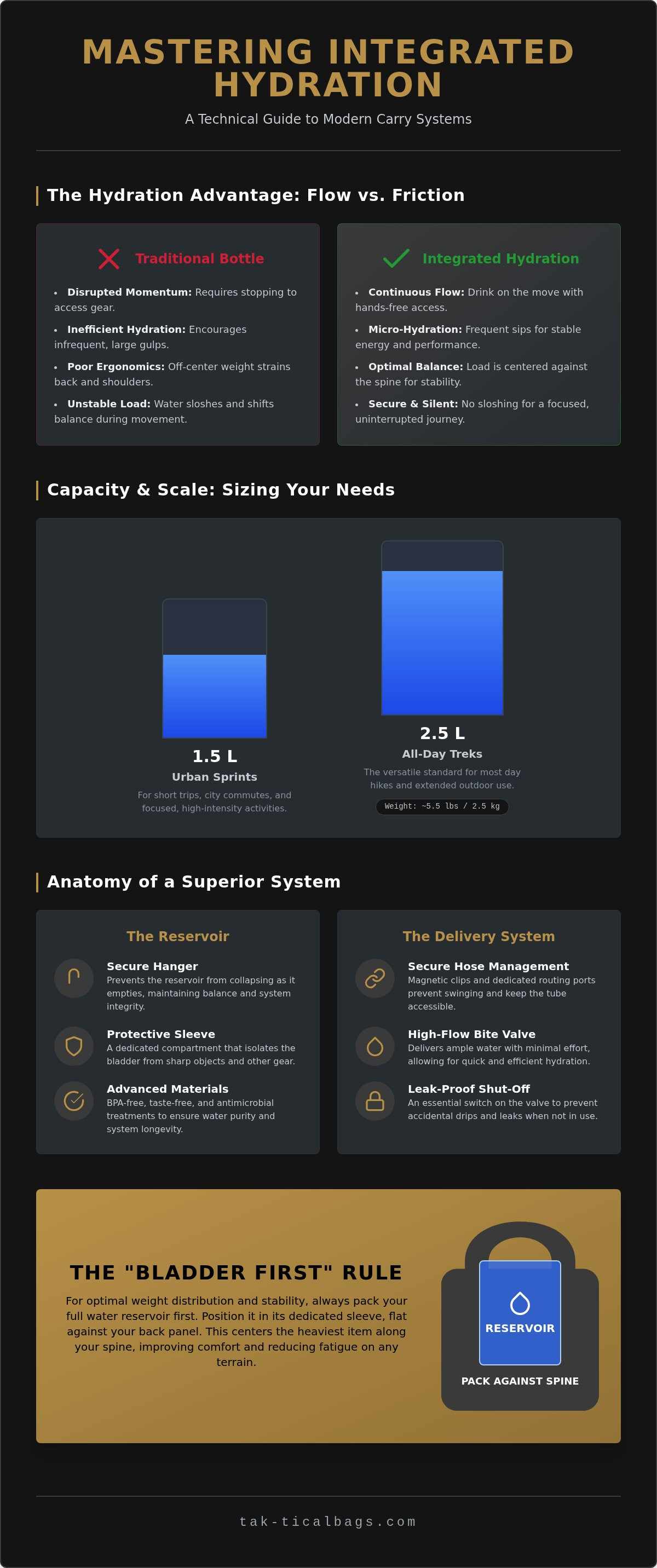
- Master the "Bladder First" rule to optimize weight distribution and hose routing within your hiking backpack with water bladder.
- Discover the technical nuances of reservoir sleeves and routing configurations that protect your gear and ensure easy access.
- Learn how to choose a design that balances tactical durability with a minimalist aesthetic, suitable for both technical trails and city streets.
Beyond the Bottle: The Case for Integrated Hydration
A modern hydration pack is a purpose-built system designed for constant readiness. It consists of three primary components: a flexible reservoir, a delivery tube, and a bite valve. Unlike traditional bottles, a hiking backpack with water bladder allows you to sip water without breaking your stride. It's about maintaining a state of flow. Traditional methods demand a compromise. You stop; you reach; you lose your pace. Integrated systems remove these friction points entirely. Every element is designed to ensure you remain hydrated without losing focus on your surroundings.
The science of micro-hydration supports this approach. Drinking small amounts of water frequently is more efficient for the body than consuming large gulps at long intervals. Frequent sipping keeps your hydration levels stable and prevents the discomfort of a heavy, water-filled stomach. Because the bite valve is always within reach, micro-hydration becomes an effortless habit rather than a chore. This consistent intake leads to better endurance and sharper mental clarity throughout your journey.
This concept extends far beyond technical trails. The modern professional needs this level of integration for fast-paced urban environments. A sleek hiking backpack with water bladder transitions seamlessly from a morning mountain ascent to a crowded city commute. It offers a level of organized efficiency that traditional bags cannot match. You stay prepared for the demands of a mobile lifestyle while maintaining a refined, minimalist aesthetic that fits into any professional setting.
Momentum and Efficiency
Stop less. Move more. This is the primary advantage of integrated hydration. You don't need to unbuckle your pack or search through side pockets to find a bottle. This efficiency keeps your eyes on the horizon or the path ahead at all times. It's a game-changer for technical terrain where balance and focus are critical. By removing the need to halt, you maintain your physical momentum and mental rhythm. Your journey becomes a single, continuous experience rather than a series of disjointed stops.
Weight Distribution and Ergonomics
Water is heavy. A full 2.5-liter reservoir weighs approximately 5.5 pounds. Placing this weight in external side pockets creates an imbalance that strains your shoulders and back. A dedicated internal sleeve centers this load against your spine, which is your body's natural center of gravity. This alignment reduces physical fatigue and improves your overall stability. Furthermore, integrated sleeves compress the reservoir as it empties. This prevents the distracting "slosh" and shifting that occurs with loose bottles, ensuring your carry remains silent and secure during every movement.
Technical Anatomy: What Makes a Superior Hydration Pack?
A superior system is more than the sum of its parts. It's a cohesive unit where every component serves a specific purpose. When choosing a hiking backpack with water bladder, the focus shifts from simple storage to technical integration. High-quality construction ensures that the hydration hardware remains a silent, reliable partner throughout your journey. Efficiency is found in the details; it's the difference between gear that supports you and gear that demands your attention.
The Reservoir Compartment
Protection starts with the sleeve. A dedicated internal sleeve is essential; it separates the reservoir from sharp objects like keys or technical tools. This compartment must include a secure hanger. Without one, the bladder collapses as it empties, shifting the weight and disrupting your balance. Modern designs often include insulation layers. These layers maintain a consistent water temperature, preventing your hydration from becoming unpleasantly warm during long exposures to the sun.
Material integrity is non-negotiable. Look for reservoirs that are BPA-free and taste-free to ensure your water remains pure. Advanced antimicrobial treatments are now standard in 2026, preventing the growth of mold and bacteria in hard-to-reach corners. These features reduce the need for aggressive cleaning and extend the lifespan of your gear. If you value a refined aesthetic and rugged utility, explore the functional hiking bags designed for these exact demands.
Tube and Valve Performance
Routing defines your accessibility. While over-the-shoulder routing is common, side-exit configurations offer a sleeker profile for urban environments. Secure the tube with magnetic clips on the sternum strap. This prevents the hose from swinging during movement. High-flow bite valves are equally critical. They should provide effortless water delivery with a simple bite, requiring minimal suction to stay hydrated.
Small details make the difference. A reliable shut-off switch on the valve prevents accidental leaks when the pack is set down. Dust covers keep the mouthpiece clean in gritty environments. Quick-disconnect hoses allow you to leave the tube routed through the pack while you remove the bladder for a refill. This modularity saves time and simplifies the maintenance process. Every technical choice should contribute to a sense of organized calm and peak efficiency on the trail.
Capacity and Scale: Sizing Your Hydration Needs
Choosing the right volume is a calculation of duration and intensity. A hiking backpack with water bladder provides the framework; the capacity you carry defines your range. Precision is the goal. Carrying excess water adds unnecessary weight that creates fatigue. Carrying too little compromises your safety and performance. In 2026, hydration standards are defined by three primary tiers of readiness.
1.5 Liters: The Minimalist Standard. This volume is ideal for short trails or intense urban sprints lasting one to two hours. It maintains a sleek, low-profile silhouette that doesn't hinder movement in crowded spaces or technical terrain. It's the preferred choice for those who value speed and light carry over long-range capacity.
2.0 to 2.5 Liters: The Versatile Core. This range represents the sweet spot for standard day hiking. It provides enough hydration for a full day of activity in moderate climates without over-packing. Most users find this capacity offers the best balance of weight and endurance. It's a reliable foundation for varied environments.
3.0 Liters and Beyond: Arid Readiness. High-exertion routes or desert climates demand maximum volume. This capacity ensures readiness in environments where refill points are non-existent. It's essential for long-duration missions where hydration is the primary survival factor.
Matching Volume to Activity
Select your volume based on the clock and the environment. For short 60 to 90 minute efforts, 1.5L keeps your pack light and responsive. Full-day adventures require at least 2.5L to ensure safety throughout the journey. Tactical considerations also play a role. You might carry extra volume for emergencies or for shared use with a partner. Always match the scale to the specific demands of your route.
The Impact on Pack Volume
Water requires space. A full reservoir consumes significant internal volume, often displacing other technical gear. When selecting the best hiking backpack for your needs, account for this displacement. A 2.5L bladder adds approximately 2.5kg of weight and takes up several liters of storage. Plan your kit carefully to maintain organized efficiency. A hiking backpack with water bladder should feel balanced, not overstuffed. Every liter of water reduces your storage for layers or equipment. Balance is essential for peak performance and sustained comfort.
Precision Packing: Optimizing Weight and Water Access
Efficiency begins before you step onto the trail. The way you organize your hiking backpack with water bladder determines your comfort over long distances. Many hikers make the mistake of packing their hydration last. This creates unnecessary friction. A full reservoir is difficult to slide into a packed bag and can put undue pressure on your other gear. Follow the "Bladder First" rule. By securing your hydration before adding technical equipment, you ensure the heaviest weight is perfectly centered and stable.
Your movement style dictates your access preference. Internal sleeves maintain a sleek, professional silhouette that fits urban environments. External access points allow for faster refills during high-intensity efforts. Regardless of your choice, balance the load by distributing soft gear around the central hydration pillar. This stabilizes the water and provides a protective cushion for the reservoir. Managing the hose is equally critical. Route it tightly along the shoulder strap to prevent snags while keeping the bite valve within immediate reach. Explore our range of premium hiking bags to see how integrated hydration elevates your daily carry.
The Loading Sequence
Preparation prevents failure. Always fill and test the reservoir seal before placing it in the bag. A small leak at home is an easy fix; a leak on the trail is a disaster. Slide the bladder into the dedicated sleeve while the bag is empty. This allows the water to settle into its natural shape without being compressed by other items. Once the hydration is secure, pack your soft goods, such as layers or towels, around it. This creates a buffer that prevents the bladder from shifting and provides extra insulation to keep your water cool.
Maintenance and Longevity
Longevity is achieved through consistent care. Many users struggle with mold growth in hoses and reservoirs. The "Freeze Method" is a highly effective, minimalist solution. After rinsing your bladder, place it directly in the freezer. This prevents bacterial growth without the need for harsh chemicals. For a deeper clean, utilize specialized cleaning tablets or a natural solution of lemon and baking soda. These methods keep your water tasting fresh and extend the life of the materials. Regularly inspect the seals and bite valves for signs of wear. Replacing a small O-ring or valve cover is a simple task that prevents significant leaks during your journey. Organized maintenance ensures your gear is always ready for the next adventure.
Refined Readiness: The Tak-tical Approach to Trail Utility
True readiness doesn't require a loud aesthetic. It requires a balance of capability and composure. A hiking backpack with water bladder from Tak-tical is designed for the individual who moves between worlds. We reject the notion that technical gear must look like technical gear. Instead, we focus on quiet empowerment. Our philosophy centers on organized, intentional carry. Every feature serves a purpose. Every line is deliberate. You gain the advantage of integrated hydration without sacrificing a professional appearance.
High-denier materials provide the foundation for this utility. We utilize advanced nylon and polyester blends that offer weight savings of 30 to 40 percent compared to traditional heavy-duty fabrics. This ensures your bag remains light while resisting the abrasions of both technical trails and daily commutes. It's about durability that doesn't feel or look bulky. This refined approach to trail utility ensures you are prepared for whatever the day demands. You don't have to choose between rugged performance and a sophisticated silhouette.
Tactical Performance for Modern Trails
Performance is built into the architecture of our bags. We incorporate modular attachment points, such as subtle MOLLE webbing, to allow for external gear expansion when needed. This modularity ensures your pack adapts to the mission. Whether you are attaching a trauma kit for a remote hike or a tech pouch for travel, the system remains secure. Our construction techniques focus on high-stress points, ensuring the bag withstands heavy loads without compromising its structure. For a deeper look at our hardware, explore our guide to the best functional hiking daypacks 2026.
Aesthetic Integration
A clean exterior is the hallmark of sophisticated design. We utilize stealthy hydration ports that maintain a minimalist profile when the tube is not in use. This prevents the "extreme sport" look that often feels out of place in professional environments. Our color palettes are carefully curated to blend into urban landscapes. Shades of charcoal, deep olive, and obsidian provide a modern, versatile look. By elevating the concept of everyday carry, we provide a tool that moves seamlessly from the office to the summit. It's a commitment to functional excellence and refined utility that respects your lifestyle and your time.
Elevate Your Movement and Readiness
Mastering the technical nuances of your carry is the final step toward seamless movement. You now understand that a hiking backpack with water bladder is a tool for uninterrupted focus; it serves you equally well on a technical trail or a city street. By prioritizing the "Bladder First" rule and selecting a capacity that matches your specific duration, you ensure peak efficiency during every mile. Readiness is about more than just gear. It's about the quiet empowerment of being organized and intentional.
Our approach balances tactical durability with a refined, minimalist aesthetic that fits every environment. We provide the reliability required for high-impact professional life and rugged outdoor adventures. Experience the difference of gear designed for those who value both utility and style. Explore Tak-tical's range of hydration-ready hiking bags and enjoy global worldwide shipping on every order. Your next journey deserves the clarity of integrated hydration and the confidence of superior craftsmanship. Stay prepared for everything ahead.
Frequently Asked Questions
Is a water bladder better than a bottle for hiking?
Yes, a bladder is superior for maintaining momentum and ensuring consistent micro-hydration. Unlike bottles, which require you to stop and reach, a hiking backpack with water bladder provides hands-free access through a bite valve. This allows you to drink small amounts frequently, which is more efficient for the body than large gulps. It also centers the weight of the water against your spine, improving your overall balance.
Can I put a water bladder in any hiking backpack?
Not every bag is designed for this integration, though many modern daypacks include compatible features. A dedicated reservoir sleeve and a routing port for the hose are essential for a true hydration-ready experience. Without these, a bladder may collapse or shift, causing discomfort. Tak-tical focuses on functional hiking bags that incorporate these technical details seamlessly, ensuring your gear remains organized and efficient during every journey.
How do I choose the right size water bladder for my pack?
Match the bladder capacity to your bag's internal sleeve and your typical trip duration. A 1.5L reservoir is ideal for short, high-intensity efforts, while 2.5L is the standard for full-day adventures. Remember that water is heavy and consumes significant internal storage space. Ensure your pack has enough total volume to accommodate both the full reservoir and your essential technical gear without feeling overstuffed or unbalanced.
Are hydration bladders hard to keep clean?
Modern hydration systems are designed for easy maintenance through advanced materials and modular parts. Many reservoirs now feature antimicrobial treatments that prevent mold and bacterial growth. Utilizing specialized cleaning tablets or the "Freeze Method" between uses keeps the system fresh with minimal effort. Quick-disconnect hoses also simplify the process, allowing you to clean individual components without removing the entire routing setup from your hiking backpack with water bladder.
Do water bladders make your water taste like plastic?
High-quality reservoirs utilize BPA-free and taste-free materials to ensure your water remains pure. If you notice a faint taste in a new bladder, a simple rinse with lemon juice and baking soda usually neutralizes it. Choosing premium hardware prevents the chemical leaching often found in cheaper alternatives. Maintaining a clean system is the most effective way to ensure every sip is refreshing and free from unwanted flavors.
How do I stop my hydration bladder from leaking in my bag?
Preventing leaks requires a disciplined approach to packing and maintenance. Always test the reservoir seal before placing it in your bag and follow the "Bladder First" rule to avoid compressing the system with heavy gear. Ensure your bite valve has a reliable shut-off switch to prevent accidental drips when the pack is set down. Regularly inspecting O-rings and hose connections will help you identify and address wear before it causes a problem.
Can I put ice in my hiking water bladder?
You can certainly add ice to your reservoir, provided it has a wide-mouth opening. This is an excellent way to keep your water cool during high-temperature excursions or long days in the sun. Some specialized sleeves even offer insulation to prolong this effect. Be mindful of condensation, as cold reservoirs can create moisture inside your bag; packing soft goods around the bladder helps absorb any dampness and provides extra thermal protection.
What is the best way to dry a hydration reservoir?
Proper drying is the most critical step for long-term hygiene. After rinsing, use a reservoir hanger or a dedicated drying rack to keep the internal walls apart, allowing for total airflow. Ensure the bladder is completely upside down so moisture can drain out through the opening. For the hose, blowing out excess water or using a specialized brush ensures no droplets remain trapped in the tube, preventing mold growth between your adventures.