
Your daily carry shouldn't have an expiration date. Most professionals treat gear as a consumable, replacing frayed straps and jammed zippers every few months because the city is surprisingly unforgiving. It's a cycle of waste that compromises your efficiency. You deserve a heavy duty backpack that acts as a silent, reliable partner rather than a recurring expense.
We know the frustration of a bag that looks sleek but fails when fully loaded on a crowded subway. Resilience doesn't have to look like tactical overkill. It's possible to find a balance between rugged strength and minimalist aesthetics. This guide shows you how to identify the markers of true durability, from high-denier fabrics to reinforced hardware. Discover how to choose gear that survives the rain, the commute, and the next decade of movement. We'll explore the engineering details that define a bag built for the purposeful professional.
Key Takeaways
- Understand why materials like 1000D Ballistic Nylon are the foundation of a heavy duty backpack built for urban friction.
- Learn to balance tactical resilience with professional style by focusing on minimalist, "Gray Man" design principles.
- Identify the 20L to 30L capacity range that offers the perfect volume for tech and daily essentials without the bulk.
- Discover why a suspended laptop sleeve is a non-negotiable requirement for protecting hardware during a high-speed commute.
- Transition from short-term gear to an intentional carry system engineered to last a decade in the city.
Defining the Heavy Duty Backpack for the Modern Era
Urban life is a grind. It demands a level of material resilience that standard nylon simply cannot provide over a long timeline. For the modern professional, a heavy duty backpack is no longer a niche choice for hikers or soldiers; it is a baseline requirement for a mobile lifestyle. This shift marks a departure from the "student bookbag" silhouette toward a professional carry standard that prioritizes longevity. True heavy duty construction is a measure of resilience against three specific forces: friction from concrete and transit walls, the internal weight of high-end hardware, and the unpredictability of metropolitan weather.
Choosing a bag with these specifications offers a sense of quiet empowerment. There is a psychological advantage to knowing your gear won't fail at a critical moment. When your tools are protected by intentional engineering, you achieve a state of organized calm that allows you to focus on the work rather than the carry. The evolution of Backpack designs and materials has moved beyond simple canvas, integrating technical fabrics that were once reserved for extreme environments into the daily commute.
The Shift from Tactical to Practical
Traditional military bags often fail in a professional setting. They are too aggressive, covered in excessive webbing, and lack the refinement needed for a boardroom. However, the DNA of those bags—their durability and organization—is essential. The modern innovator looks for tactical style everyday backpacks that strip away the visual noise. This "minimalist tactical" aesthetic focuses on internal strength while maintaining a sleek exterior. It's about readiness without the high-profile look. You get the reinforced stitching and abrasion resistance of a field bag in a shape that complements a tailored coat.
Durability vs. Weight: The Modern Trade-off
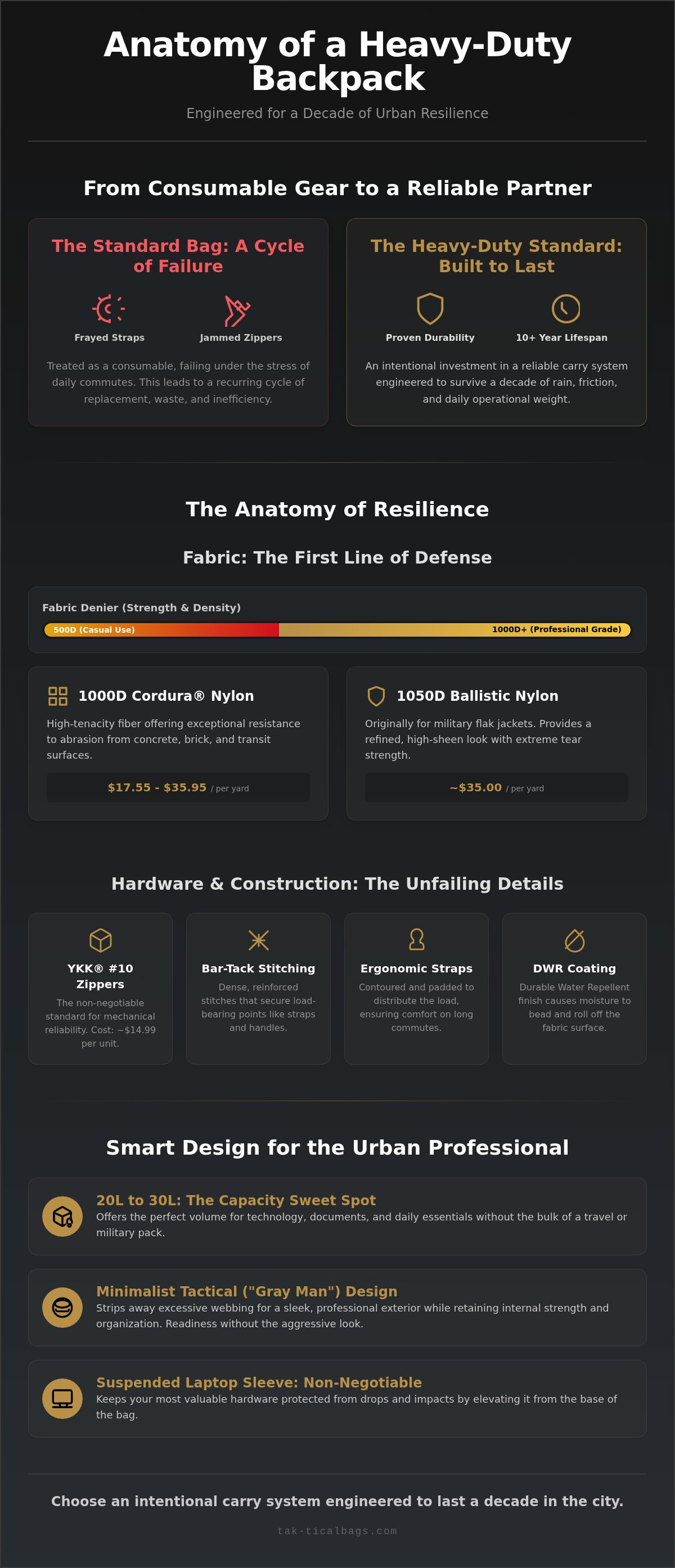
It's a common myth that a heavy duty backpack must be inherently bulky or cumbersome. Modern material science has solved the weight-to-strength ratio. High-denier fabrics like 1000D Cordura or 1050D Ballistic Nylon provide incredible tear resistance while remaining light enough for all-day wear. As of August 2026, the retail price for 1050D Ballistic Nylon sits around $35.00 per linear yard, reflecting its status as a premium, high-performance textile. Using these advanced materials allows for a slim profile that doesn't sacrifice structural integrity. This integration of strength and lightness is what defines a high-performance rucksack for the city. It ensures your bag remains a reliable partner for a decade, surviving the subway and the elements with ease.
The Anatomy of Resilience: Materials and Hardware
Resilience starts at the fiber level. A standard bag might look the part, but it often fails when the seams give way under the weight of a laptop and daily essentials. Construction defines longevity. When you invest in a heavy duty backpack, you are paying for the technical engineering that prevents mechanical failure. High-quality materials ensure the bag maintains its structure and aesthetic even after years of high-frequency use. It's the difference between a bag that lasts six months and one that survives a decade.
The Cordura and Ballistic Nylon Standard
Fabric denier is the primary measure of textile density and strength. While lightweight 500D nylon works for casual use, professional-grade resilience requires a higher threshold. Cordura is a high-tenacity air-treated nylon fiber. As of August 2026, 1000D Cordura nylon fabric retails between $17.55 and $35.95 per yard, reflecting its durability. It offers exceptional abrasion resistance against concrete and transit floors. For a sleeker finish, 1050D Ballistic Nylon is the benchmark. Originally engineered for military flak jackets, this material costs approximately $35.00 per linear yard and provides a refined, high-sheen look without sacrificing tear strength.
Reinforcement: Zippers, Straps, and Stitching
Hardware represents the most common failure point in modern carry gear. A jammed or broken zipper renders the most expensive fabric useless. This is why YKK zippers are a non-negotiable standard for heavy-duty builds. Specifically, a YKK #10 extra heavy-duty zipper, which retails for about $14.99, provides the mechanical reliability needed for main compartments. Beyond the teeth, look for bar-tack stitching. These dense, reinforced stitch patterns secure load-bearing points like strap attachments and top handles.
Ergonomic design is just as critical as material strength. Poorly distributed weight can lead to backpack-related injuries, causing strain on the neck and shoulders. Contoured, padded straps help distribute the load across your frame, maintaining comfort during long commutes. Weatherproofing adds the final layer of protection. Durable Water Repellent (DWR) coatings allow rain to bead off, while waterproof laminates provide an impenetrable barrier for your electronics. If you value this level of uncompromising material integrity, explore our range of professional backpacks designed for the modern innovator.
Urban Utility vs. Tactical Overload
True utility in an urban environment requires a careful balance. You need the resilience of tactical gear without the overt military aesthetic that often accompanies it. This is the "Gray Man" concept. It prioritizes high performance and readiness while maintaining a low-profile look. A professional heavy duty backpack should integrate seamlessly into a corporate office or a high-end cafe. It avoids the "tactical overload" common in many alternatives that rely on visual gimmicks rather than structural integrity.
Excessive Molle webbing is a frequent culprit of this overload. While external loops offer modularity for field operations, they are often a liability in the city. They add unnecessary weight and catch on surroundings during a crowded commute. More importantly, they project an aggressive image that may not align with professional standards. A refined carry solution prioritizes internal organization over external bulk. It places the focus on accessible compartments and protected pockets, ensuring your essentials are secure but out of sight.
Minimalist Aesthetics, Maximum Performance
A sleek exterior is a mark of intentional design. It hides a technically advanced interior that organizes your digital life. The "less is more" philosophy ensures that every zipper, seam, and pocket serves a specific purpose. By stripping away visual noise, you achieve a sense of organized calm. This approach elevates your everyday carry from a simple container to a sophisticated tool of efficiency. It's about readiness that feels composed rather than chaotic.
Versatility: From Commute to Carry-On
The best gear transitions with you. A well-engineered heavy duty backpack is versatile enough to serve as a carry-on bag for international travel. Its durability ensures it survives overhead bins and airport handling, while its refined look remains appropriate for client meetings upon arrival. Compression straps play a vital role here. They allow you to maintain a slim profile during the daily commute while expanding for extra capacity when needed. This adaptability bridges the gap between a high-stakes work environment and a spontaneous weekend adventure. Whether you're navigating a subway or a trail, your bag should remain a reliable partner in every environment.
Selecting Your Purposeful Carry: A Checklist
Identifying the right gear requires a focus on functional excellence. A heavy duty backpack isn't just about the exterior shell; it's about how the internal architecture supports your daily rhythm. The goal is to find a bag that disappears on your back while keeping your essentials organized and protected. It's a tool of efficiency, not just a container.
- Capacity: Aim for the 20L to 30L range. This is the "Goldilocks" size for urban life. It provides enough volume for a laptop, gym gear, and daily essentials without becoming a burden in tight spaces like elevators or subways.
- Access Points: Consider your workflow. A clamshell design opens flat for total visibility, making it ideal for travel. A top-loader offers quick access in crowded environments but can lead to a "black hole" effect if internal organization is lacking.
- Breathability: Look for molded back panels with air-channeling. This prevents the discomfort of a "sweaty back" during high-intensity commutes or summer heat.
The Suspended Tech Compartment
Your laptop is likely your most valuable tool. In a standard bag, the laptop sleeve often sits flush with the bottom panel. This is a significant design flaw. A high-performance heavy duty backpack utilizes a suspended sleeve, often referred to as a "false bottom." This creates a physical gap between the device and the base of the bag. A suspended sleeve prevents the laptop from hitting the ground when the bag is dropped. High-density EVA foam padding adds another layer of defense, absorbing shocks that would otherwise damage sensitive hardware.
Ergonomics for the Long Haul
Comfort is a direct function of weight distribution. Even a light load can feel heavy if the straps are poorly designed. Professional bags use dual-density foam in the shoulder straps to prevent them from "bottoming out" under weight. Load-lifters and sternum straps become necessary for loads over 15 pounds, as they pull the weight closer to your center of gravity. This engineering ensures the bag maintains its shape and doesn't sag, even when it's only partially filled. It's about maintaining structural integrity and personal comfort simultaneously.
Ready to upgrade your daily carry with intentional engineering? Shop our collection of backpacks built for the modern professional.
The Tak-tical Standard: Engineered for Everyday Resilience
Tak-tical exists at the intersection of extreme durability and urban sophistication. We don't believe you should choose between a bag that lasts and a bag that looks professional. Our heavy duty backpack designs are built specifically for the urban innovator who values high-quality craftsmanship and modern reliability. We treat every piece of gear as a partner in your daily journey. It's a silent, reliable tool for those who prioritize efficiency and a sense of organized calm.
Integrating tactical style everyday backpacks into professional life requires a highly refined eye. We strip away the unnecessary bulk and aggressive visual noise found in traditional field gear. We focus instead on structural integrity and purposeful organization. This commitment ensures that your carry remains a constant, reliable force in an ever-changing mobile lifestyle. It provides the confidence of readiness without compromising your professional aesthetic.
Sophisticated Design Meets Rugged Utility
Our design philosophy follows a "less is more" mentality. We utilize premium, technical textiles to create a minimalist frame that conceals immense technical strength. This approach is central to our specialized laptop bags. These pieces are engineered for the digital professional who requires uncompromising protection for expensive hardware. We prioritize the internal architecture of the bag. Every cable, drive, and device has a dedicated, secure space. This ensures you maintain a sleek, professional profile even when carrying a full mobile office through a crowded city.
Ready for Anything: The Global Traveler
The modern professional's world doesn't have borders. Your gear must adapt to every environment you encounter. A Tak-tical heavy duty backpack handles the seamless transition from metropolitan streets to hiking trails. This versatility is woven into the DNA of our construction. We design for a lifestyle that evolves and expands. Whether you're navigating a high-stakes morning commute or a spontaneous weekend expedition, our bags provide the necessary resilience. They offer the technical excellence required for the outdoors and the refined utility needed for the boardroom.
Invest in a carry system that reflects your commitment to excellence. Purposeful readiness starts with the right gear. Choose a partner built for the long haul that survives the elements and the clock. Elevate your daily journey with a bag designed for the intentional life.
Elevate Your Standard of Carry
Urban life demands gear that doesn't just look the part but performs under pressure. A heavy duty backpack is a foundational tool for the modern professional. It provides the resilience needed to protect high-end tech and daily essentials across every environment. By prioritizing technical materials like 1050D Ballistic Nylon and ergonomic features like suspended laptop sleeves, you invest in gear that lasts a decade rather than a season. It's a commitment to technical readiness.
True utility is found in the balance of a minimalist tactical aesthetic and uncompromising strength. Our focus on modern reliability for urban professionals ensures every bag is a silent partner in your daily journey. We remain dedicated to premium craftsmanship focused on functional excellence, stripping away the bulk to leave only what's necessary for your success. It's time to stop replacing frayed straps and embrace a carry system built for the intentional innovator.
Explore Tak-tical’s collection of refined heavy duty backpacks and discover the difference of engineered resilience. Step into your next meeting or your next adventure with the confidence of total readiness.
Frequently Asked Questions
What makes a backpack "heavy duty" compared to a standard bag?
Standard bags prioritize cost and lightness. A heavy duty backpack focuses on resilience through high-denier technical fabrics, reinforced bar-tack stitching at stress points, and industrial-grade hardware. These components ensure the bag survives high-friction environments like subways and concrete floors. It's an investment in structural integrity that prevents common failures like frayed seams or torn straps during a demanding commute. Resilience is measured by longevity under pressure.
Is a 1000D Cordura backpack too heavy for daily use?
It's a common misconception that durability requires excessive weight. While 1000D Cordura is a denser textile, the total weight difference is often negligible when compared to the benefits of tear and abrasion resistance. Modern designs distribute this weight through ergonomic strap systems and molded back panels. This engineering ensures you maintain a sense of lightness and organized calm throughout the day without sacrificing material strength.
Do heavy duty backpacks come with laptop protection?
Premium builds treat digital protection as a core requirement. High-performance models feature dedicated compartments with high-density padding and suspended sleeves. This "false bottom" design ensures your device never touches the ground when the bag is dropped. It's a critical feature for any professional who carries expensive hardware. Reliability inside the bag is just as important as the ruggedness of the exterior shell.
Can I use a tactical-style backpack in a professional office setting?
You can integrate tactical durability into a corporate environment by choosing a minimalist aesthetic. Avoid excessive external webbing, loud camouflage patterns, or aggressive patches. Focus on "Gray Man" designs that hide their technical strength behind a sleek, monochromatic frame. This approach provides all the utility of field gear while maintaining a sophisticated and composed image that's appropriate for client meetings or boardrooms.
How do I clean and maintain a heavy duty nylon backpack?
Maintenance is straightforward but requires a gentle touch. Use a damp cloth with mild soap to spot clean dirt or stains. Avoid using a washing machine, as the agitation can damage the internal coatings and structural foam. Don't use a dryer; instead, hang the bag to air dry in a shaded area. This simple routine preserves the water-repellent finish and keeps the fabric looking sharp for years of use.
What is the best capacity for a heavy duty commuter backpack?
The 20L to 30L range is the ideal capacity for most urban professionals. This volume provides enough space for a 16-inch laptop, charging cables, and a light jacket or gym clothes. It remains slim enough to navigate crowded transit systems without bumping into other commuters. Choosing a bag in this size range ensures you have purposeful readiness without the unnecessary bulk of a trekking pack.
Are heavy duty backpacks waterproof or just water-resistant?
Most technical bags are water-resistant. They utilize Durable Water Repellent (DWR) coatings and tight weaves like Ballistic Nylon to bead off light rain and splashes. While these materials protect your gear during a typical commute, they aren't submersible. For total waterproofing, look for bags with seam-sealed construction or specialized waterproof laminates. For daily urban use, high-level water resistance is generally sufficient to keep your electronics dry and secure.
Why are YKK zippers so important for durability?
Zippers are the most frequent mechanical failure point on any bag. YKK zippers are the global benchmark for reliability because they're engineered to withstand high tension and repeated use without snagging or breaking. A heavy duty backpack equipped with #8 or #10 YKK zippers ensures that your main compartments remain accessible and secure. It's a small detail that defines the overall longevity and modern reliability of your carry gear.