
A truly waterproof hiking backpack is no longer a niche luxury for extreme explorers. It's a fundamental requirement for the modern citizen who refuses to let a sudden downpour dictate their schedule. You've likely felt that flash of panic when a light drizzle turns into a torrential soak. You worry about your laptop, your camera, and your peace of mind. Most bags fail exactly when you need them most, leaving you with ruined electronics and a heavy, sodden mess.
We understand that you demand more than just a bulky dry bag. You need a solution that balances technical excellence with a refined, urban aesthetic. This guide will help you master the technical nuances of elite gear. You'll learn how to identify genuine protection and choose a pack that secures your essentials in any environment. We'll decode the mystery of IP ratings, explore the 2026 shift toward heat-sealed construction, and showcase the minimalist designs that transition seamlessly from the rugged trail to the professional commute. Prepare to invest in a piece that offers total confidence and elevated utility.
Key Takeaways
- Master the material science behind TPU and PVC to ensure your gear withstands the elements while maintaining a refined profile.
- Identify the specific IP ratings required to choose a waterproof hiking backpack that provides absolute security for your digital essentials.
- Perfect the roll-top seal and internal packing architecture to achieve an airtight finish and a balanced center of gravity.
- Select a silhouette that balances ergonomic suspension with a minimalist aesthetic, allowing for a smooth transition between different environments.
The Strategic Necessity of Waterproofing on the Trail
Nature remains inherently unpredictable. A sudden atmospheric shift can transform a serene afternoon into a relentless downpour in minutes. In these moments, your gear is only as reliable as the vessel carrying it. A waterproof hiking backpack serves as a strategic fortress for your essentials. While traditional hikers focused on keeping spare socks dry, the modern traveler carries a digital core of expensive tablets, cameras, and power banks. Protecting these high-value assets is no longer optional; it is a requirement for anyone who integrates technology into their adventures.
There is a profound psychological advantage to elite protection. When you aren't preoccupied with the integrity of your zippers or the permeability of your fabric, you gain the freedom to engage deeply with your environment. Confidence leads to focus. This sense of readiness transforms the experience from a struggle against the elements into a controlled, intentional journey. By definition, a waterproof hiking backpack utilizes impermeable fabrics and specialized construction techniques to ensure moisture never reaches the interior, regardless of external conditions.
Water-Resistant vs. Waterproof: Knowing the Difference
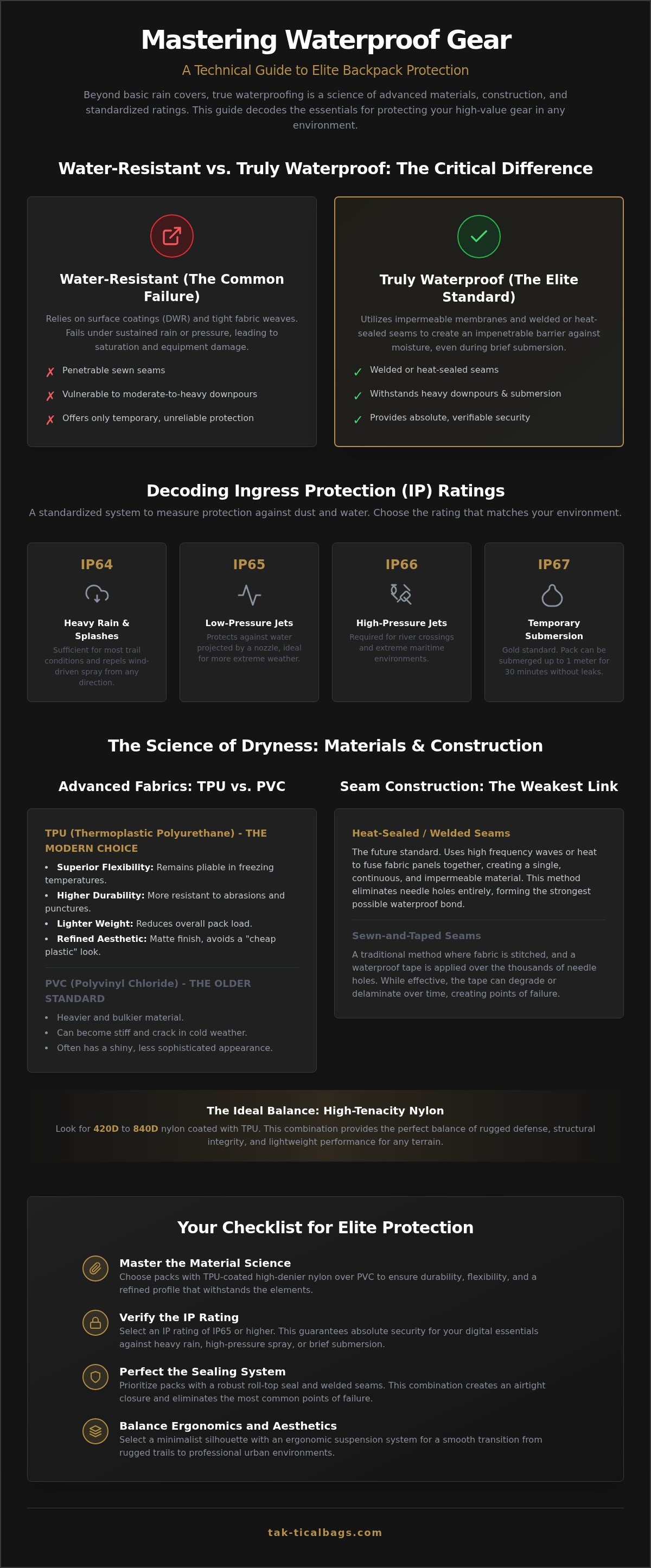
Understanding the distinction between these two terms is vital for gear longevity. Water-resistant bags typically rely on DWR coatings and tight weaves to shed light moisture, but they eventually saturate under sustained pressure. True waterproofing requires impermeable membranes and welded or heat-sealed seams that can withstand heavy downpours or even brief submersion. To quantify this, the industry uses the Hydrostatic Head rating, which measures the specific height of a water column needed to penetrate a fabric. For those seeking standardized benchmarks, the IP Code ratings provide a clear scale for dust and liquid ingress protection.
The Evolution of Modern Carry: From Trail to City
The modern citizen demands gear that transcends specific environments. You shouldn't need a different bag for a rainy commute and a weekend summit. Past solutions often involved bulky, unattractive dry bags that looked out of place in professional settings. The new standard emphasizes sleek silhouettes and technical fabrics that offer high-level protection without sacrificing a polished appearance.
- Integration: Merging tactical-grade durability with refined, minimalist aesthetics.
- Utility: Transitioning from a rugged ridge line to a high-stakes boardroom effortlessly.
- Innovation: Moving away from shiny plastics toward matte, sophisticated finishes that endure.
This shift represents a commitment to functional excellence. It ensures your carry remains a reliable partner in every facet of your mobile lifestyle, providing an organized calm that reflects your personal standard for quality craftsmanship.
Decoding Technical Ratings: IP Ratings and Material Science
Achieving total dryness requires a nuanced understanding of material engineering. It isn't enough for a bag to look sleek; it must perform under pressure. The technical integrity of a waterproof hiking backpack depends on two critical factors: its ingress protection rating and its fabric composition. Mastering these details allows you to invest in gear that offers modern reliability rather than temporary protection.
The IP Rating System for Hikers
The Ingress Protection (IP) scale provides a standardized measure of how well a pack resists dust and water. For most trail conditions, an IP64 or IP65 rating is sufficient to repel heavy rain and wind-driven spray. If your journey involves river crossings or extreme maritime environments, look for IP66 or IP67. These ratings indicate the bag can withstand high-pressure jets or temporary submersion without compromising the interior. IP68 remains the gold standard, reserved for specialized gear designed for prolonged underwater exposure. Choosing the right rating ensures your digital core remains secure in any climate.
Advanced Fabrics: Beyond the Surface
Material choice dictates both the weight and the aesthetic of your carry. While older designs often used PVC, modern innovators favor Thermoplastic Polyurethane (TPU). TPU offers superior flexibility and durability without the shiny, plastic look of cheaper alternatives. It's lighter, more resistant to abrasions, and remains pliable in freezing temperatures. High-tenacity nylon with a significant denier count provides the structural integrity needed for harsh terrain. A 420D or 840D nylon strikes the perfect balance between lightweight movement and rugged defense.
Construction is the final pillar of protection. Sewn-and-taped seams involve stitching fabric together and applying a waterproof tape over the needle holes. This is effective but can degrade over time. Radio-frequency (RF) welded seams are the superior choice. This process uses electromagnetic energy to fuse fabric layers at a molecular level, creating a single, impenetrable bond. It's a hallmark of a durable investment. For those who prioritize this level of craftsmanship in their daily carry, exploring a collection of hiking bags designed with tactical precision is the next logical step.
The role of denier count shouldn't be overlooked. A higher denier indicates a thicker, stronger fiber. While it adds a small amount of weight, the trade-off is a bag that resists punctures and tears during demanding treks. Modern coatings now allow these heavy-duty fabrics to maintain a degree of breathability while blocking external moisture. This integration of science and style is what defines the next generation of outdoor gear.
Selecting Your Silhouette: Capacity, Fit, and Versatility
Choosing the right silhouette is an exercise in intentionality. Your mission defines your volume. A waterproof hiking backpack must do more than just repel moisture; it must carry its load with a refined efficiency that matches your pace. Whether you are navigating a coastal trail or a rain-slicked city grid, the geometry of your pack dictates your comfort and your capability. Prioritize a design that balances internal simplicity with external modularity to ensure you are ready for any environment.
Capacity Guide: Matching Volume to Mission
Volume selection requires a realistic assessment of your gear. The 20L to 30L range is the sweet spot for the modern citizen. This size handles the seamless transition from a morning commute to a sunset trail. Industry data from 2025 shows the 20L to 40L segment accounted for over 50.0% of the active backpack market share, proving its dominance in versatile carry. For multi-day technical treks or overnight global travel, 35L to 50L rucksacks provide the necessary depth. Be aware that technical waterproof construction, particularly TPU-laminated fabrics, does not stretch. A 30L waterproof pack often feels more restrictive than a standard nylon bag, so choose your volume with a slight buffer for ease of access.
Fit and Ergonomics: The Foundation of Comfort
A bag is only as good as its suspension system. Comfort starts with a load-bearing hipbelt that transfers weight from your shoulders to your pelvic structure. This is critical when carrying a full kit over uneven terrain. Adjustable torso lengths ensure the pack aligns with your unique anatomy, preventing fatigue during the long haul. Sternum straps and high-density shoulder padding provide the stability needed for dynamic movement. Because waterproof fabrics block airflow as effectively as they block rain, ventilated back panels are essential. Look for suspended mesh designs or molded foam channels. These features prevent the "sweat-trap" effect, keeping you composed and dry from the inside out.
Efficiency also requires external versatility. Integrated tactical attachment points allow you to secure wet gear, such as a damp rain shell or muddy boots, outside the main dry compartment. This preserves the integrity of your "digital core" while maximizing internal space. Most elite designs favor a single, cavernous main compartment to minimize potential failure points. Use internal tech pouches to organize your gear within this protected space. This minimalist architecture ensures a cleaner, more reliable carry that reflects a commitment to functional excellence.
The Packing Architecture: Maximizing Dryness and Efficiency
Precision packing is your final layer of defense. Owning a high-performance waterproof hiking backpack is only the beginning. To truly secure your assets, you must master the internal logic of your carry. Strategic organization ensures that your center of gravity remains stable while your most sensitive gear stays shielded from accidental exposure. Treat your bag as a mobile vault. Every item has a specific place based on weight, frequency of use, and vulnerability to moisture.
Layering dictates your comfort on the trail. Place heavy items, such as water reservoirs or dense hardware, close to the spine at mid-back height. This alignment prevents the pack from pulling away from your body. Position lighter, bulkier items like sleeping bags or spare base layers at the bottom. This creates a stable base. Managing the waterproof barrier is equally critical. Minimize how often you open the main compartment during a trek. Keep high-use items in external, water-resistant pockets to avoid breaking the primary seal in wet conditions.
Mastering the Roll-Top Closure
The Three-Fold Rule is the industry standard for a reason. Align the top stiffeners perfectly. Roll the fabric tightly at least three times toward the front or back. This creates the mechanical tension necessary to block water ingress. Before the final clip, purge excess air to prevent the bag from becoming a bloated balloon. A compressed pack is a stable pack. Secure the buckles firmly to maintain a constant, airtight seal throughout your journey.
Internal Organization Strategies
Redundancy provides peace of mind. Use lightweight dry sacks to categorize your gear within the main compartment. This nesting technique adds a second layer of protection for your digital core. Your laptop or tablet should reside in a dedicated, suspended sleeve to avoid ground impact. If you need a bag that integrates these professional features with a minimalist aesthetic, view our collection of hiking bags. Use external attachment points for sodden rain shells. This keeps dampness away from your dry interior while allowing the shell to drain.
Maintenance preserves technical integrity. After every trip, rinse the exterior with fresh water to remove salt, sand, or grit. These particulates can abrade TPU coatings over time. Never store your pack while it is damp or tightly rolled. Open the closure completely. Hang the bag upside down in a cool, ventilated space until it is bone dry. This simple habit prevents mildew and ensures your investment remains a reliable partner for years of global adventure.
The Tak-tical Difference: Refined Protection for the Modern Citizen
Tak-tical redefines the relationship between technical performance and aesthetic refinement. We don't believe you should have to choose between a bag that survives a monsoon and one that fits into a high-level meeting. Our design philosophy centers on the modern citizen. This individual values organized calm and demands a waterproof hiking backpack that transitions effortlessly across every environment. By merging tactical-grade durability with a sophisticated, minimalist silhouette, we provide a carry system that is as purposeful as the journey it supports. Every weld and every pocket is an intentional choice. We build for those who prioritize readiness and functional excellence.
Tactical Utility Meets Minimalist Style
Traditional dry bags often suffer from a shiny, "plastic" aesthetic. This look feels out of place in urban settings or professional hubs. Our approach favors matte finishes and clean, architectural lines. These functional hiking daypacks are engineered for global versatility. They offer the rugged protection of a technical rucksack without the loud branding or neon accents of standard outdoor gear. It's a "minimalist tactical" approach that prioritizes utility over flash. For those seeking technical trail performance, you can explore our best functional hiking daypacks to see how we balance form and function. This integration of style and science ensures you remain composed, regardless of the weather.
A Commitment to Quality Craftsmanship
Quality is the foundation of modern reliability. Our designs prioritize the "Adult Work Backpack" aesthetic. This ensures you maintain a professional presence while knowing your gear meets rigorous trail specs. We focus on the details that matter most. Reinforced stress points. Ergonomic carry systems. Impenetrable seals. Every waterproof hiking backpack we produce is a durable investment designed to last for years. You can see how our designs fit into The Best Hiking Backpacks of 2026. We act as your partner in elevated efficiency and quiet empowerment. Experience the confidence of a carry system built for the rigors of the 2026 traveler. It's time to choose a bag that reflects your commitment to excellence and organized action.
Secure Your Journey with Intentional Design
Mastering the technical nuances of your gear is the first step toward a more organized and resilient lifestyle. You now understand that a premium waterproof hiking backpack is defined by more than just its fabric; it's a combination of heat-sealed construction, strategic packing architecture, and the ability to transition seamlessly between environments. By prioritizing materials like TPU and mastering the roll-top seal, you ensure your digital core remains protected against the unpredictable elements of 2026.
Choosing a carry system that balances tactical-grade durability with a sleek, minimalist design allows you to move with quiet empowerment. Whether you're navigating a remote ridge or a morning commute, your gear should reflect your commitment to functional excellence. With global shipping available for the modern traveler, professional-grade protection is more accessible than ever. Elevate your carry with Tak-tical hiking bags and step out with total confidence. The world is waiting, and you are ready for every mile of the journey.
Frequently Asked Questions
Is a waterproof backpack better than a rain cover?
A waterproof backpack is superior to a rain cover because it offers comprehensive protection that cannot shift or blow away in high winds. Rain covers often allow water to seep between the cover and the back panel, saturating the bag's harness. An integrated waterproof hiking backpack ensures every component remains dry. It eliminates the need for extra accessories. This streamlined approach reflects a minimalist philosophy where one piece of gear performs multiple roles with absolute reliability.
Can I submerge my waterproof hiking backpack in a river?
Submersion is only safe if your pack carries a verified IP67 or IP68 rating. Most bags are engineered for heavy, sustained rain rather than being held underwater. If your journey involves river crossings, verify that the closure is airtight and the seams are radio-frequency welded. Always test the seal before trusting it with your digital core. Readiness requires knowing the specific limits of your equipment before you face extreme conditions.
How do I clean a waterproof backpack without damaging the seal?
Clean your pack using fresh water and a soft cloth to remove grit and salt. Avoid abrasive brushes or harsh detergents that can degrade the TPU coating or compromise the heat-sealed seams. Never use a washing machine or a tumble dryer. These mechanical processes create excessive heat and friction that destroy technical bonds. Rinse the exterior thoroughly and hang the bag upside down in a shaded, well-ventilated area until it's completely dry.
Does a waterproof bag protect my laptop from humidity?
Waterproof fabrics block liquid ingress but they don't automatically eliminate internal humidity. If you pack damp gear inside a sealed environment, moisture will evaporate and condense on your electronics. Use desiccant packs or secondary dry sacks for sensitive tech. This nesting strategy creates a controlled climate within the bag. It's a purposeful way to manage your internal architecture and protect your laptop during transitions through varied temperature zones.
What is the most durable material for a waterproof hiking bag?
High-tenacity nylon coated with Thermoplastic Polyurethane (TPU) is the most durable choice for a modern waterproof hiking backpack. It offers superior puncture resistance and remains flexible in sub-zero temperatures. Unlike PVC, TPU doesn't crack or peel over time. It provides a sophisticated matte finish that fits professional settings. Choosing a high denier count, such as 840D, ensures the bag withstands the rigors of both technical trails and high-paced urban commutes.
Are roll-top backpacks more waterproof than zippered ones?
Roll-top closures are significantly more reliable than zippers for achieving a watertight seal. Even specialized waterproof zippers are mechanical failure points that can leak under high pressure or over time. A roll-top creates a physical, multi-layered barrier that water cannot penetrate. It also allows you to adjust the volume of the bag based on your current load. This simplicity is a hallmark of functional excellence and modern tactical design.
How long do waterproof coatings like DWR last?
Standard DWR coatings are temporary and typically require reapplication after several months of heavy use. However, true waterproof bags don't rely solely on these surface treatments. They use internal membranes or laminated layers that provide permanent protection. While the outer fabric might "wet out" once the DWR fades, the interior remains bone dry. Maintaining the surface coating simply helps the bag shed water faster and prevents the exterior from becoming heavy and sodden.
Can I use a waterproof hiking backpack for daily commuting?
Modern technical bags are designed specifically for the transition between the ridge and the boardroom. A sleek, minimalist aesthetic ensures your gear looks as appropriate on a morning train as it does on a summit. These packs offer the organized carry needed for professional life, including dedicated laptop protection and internal tech sleeves. Investing in one high-quality bag for both roles promotes efficiency and reflects a commitment to a purposeful, mobile lifestyle.