
Is your "waterproof" bag actually protecting your laptop, or is it just a marketing promise waiting to fail in the next downpour? Most professionals have felt that sinking feeling when an unexpected storm turns a routine commute into a rescue mission for their gear. You've likely seen the labels; however, "water-resistant" and "waterproof" are not interchangeable terms. Marketing jargon often masks the reality of how materials perform under pressure.
This guide will strip away the noise to reveal the technical truth of all-weather carry. You will learn how to identify a waterproof tactical backpack that offers genuine protection without the bulky, unattractive aesthetic of traditional military gear. We promise to give you the confidence to choose gear that stands up to the elements while maintaining a sleek, professional profile. It is about achieving a state of modern readiness through superior craftsmanship.
We will break down the science of IPX ratings, material coatings, and welded seams. By the end, you will understand exactly what makes a bag truly submersible and how to find the perfect balance between refined style and functional excellence. Prepare to move through your day with organized calm, regardless of the forecast.
Key Takeaways
- Understand the technical distinction between water-resistant and truly waterproof ratings to avoid over-investing in unnecessary submersibility.
- Identify the specific construction details, such as high-denier fabrics and weather-treated zippers, that define a premium waterproof tactical backpack.
- Discover how "Refined Tactical" design replaces bulky military aesthetics with sleek, minimalist utility for the modern professional.
- Learn to spot hidden vulnerabilities in bag construction, focusing on seams and stitch lines that often lead to gear-damaging leaks.
- Master a practical buyer's checklist to ensure your next carry solution provides reliable protection for integrated tech in any environment.
The "Waterproof" Myth: Understanding Resistance vs. Submersibility
Tactical aesthetics often project an image of total invincibility. Heavy nylon and rugged webbing look like they can handle anything. This is a common misconception. Many users assume a waterproof tactical backpack is a standard industry requirement. It isn't. In reality, most tactical gear prioritizes durability and modularity over absolute moisture protection. Understanding the technical nuances of fabric performance is the first step toward better gear selection.
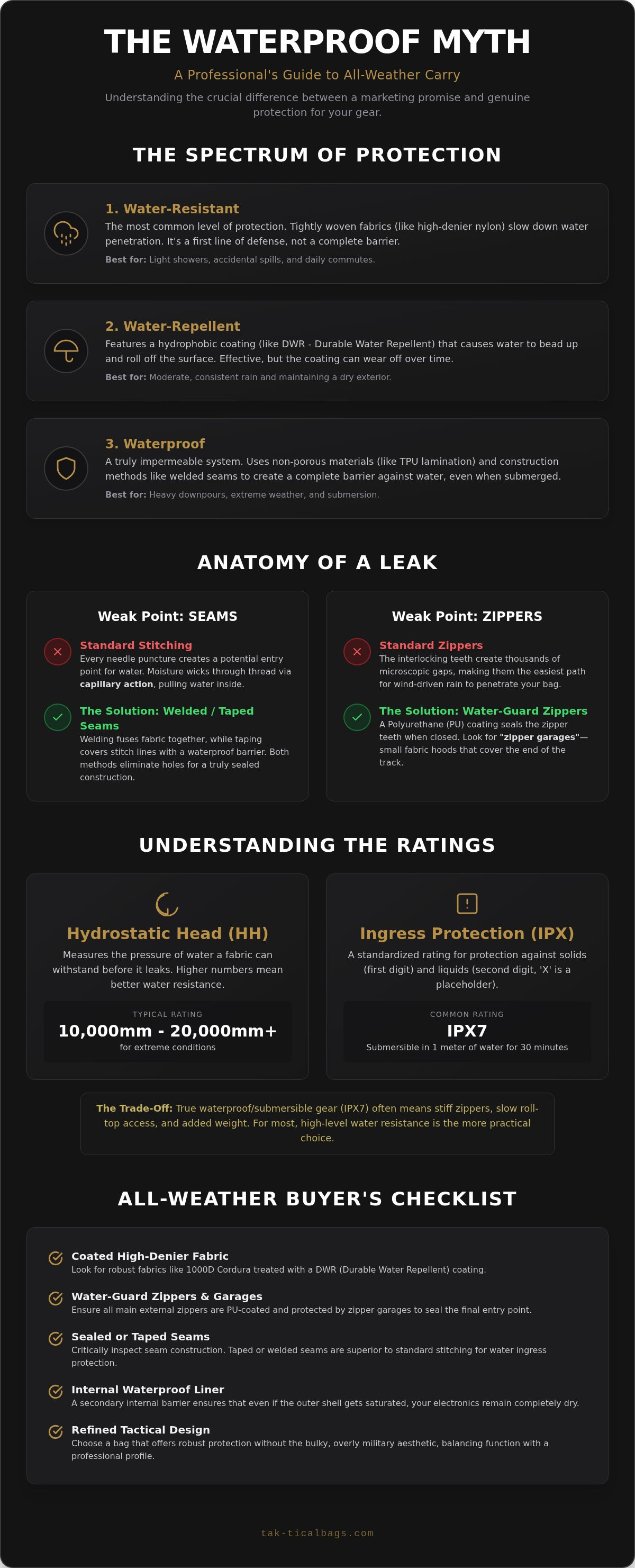
The industry uses three distinct terms: water-resistant, water-repellent, and waterproof. These are not synonyms. Water-resistant fabrics are the most common; they use tight weaves to slow moisture penetration. Water-repellent gear features a chemical coating that causes liquid to bead and roll off. A truly waterproof system is impermeable. It remains dry even when submerged or subjected to high-pressure environments.
Performance is measured by a Hydrostatic Head rating. This test determines how much water pressure a fabric can withstand before it leaks. A rating of 20,000mm or higher is suitable for extreme conditions. While these numbers sound impressive, absolute waterproofing is often overkill for urban environments. It adds significant weight. It also limits accessibility. For most professionals, the goal is not submersibility; it is reliable protection against the unexpected storm.
What is a Water-Resistant Tactical Bag?
Most high-quality backpacks fall into this category. They utilize Durable Water Repellent (DWR) coatings applied to high-denier fabrics. This combination is highly effective for daily commutes and light outdoor excursions. It manages light rain with ease. However, these coatings have limitations. They can wear off over time. During a prolonged downpour, moisture eventually finds its way through the weave or the stitch lines. It is a solution built for speed and versatility rather than aquatic survival.
The Reality of Fully Submersible Gear
Truly waterproof gear requires specialized construction. This involves TPU lamination and welded seams instead of traditional stitching. These bags often use IP Code ratings to certify their protection level. An IPX7 rating means the bag can survive full submersion in one meter of water for 30 minutes. The trade-off is functionality. Submersible zippers are stiff and difficult to pull. Roll-top closures are slow to open. Unless your journey involves river crossings or open-deck boat travel, the lack of quick access can become a daily frustration.
Materials and Construction: Why Most Tactical Bags Leak
High-denier nylon is the hallmark of tactical gear. While 1000D Cordura offers exceptional abrasion resistance, it isn't inherently waterproof. Many users confuse durability with dryness. Over time, standard nylon fibers can actually absorb moisture. This saturation adds unnecessary weight to your carry. It also risks seeping through to your internal electronics. A premium waterproof tactical backpack addresses this by integrating internal liners. These secondary layers act as a final barrier, ensuring that even if the outer shell becomes damp, your gear remains dry and organized.
The weakest links in any bag are the points where the fabric is punctured. Every stitch line is a potential entry point for water. In traditional designs, a high stitch count is praised for strength. However, without proper treatment, more stitches simply mean more holes. Moisture wicks through these points via a process known as capillary action. In the context of backpack thread, capillary action refers to the physical process where moisture is wicked through the microscopic gaps in stitching, effectively pulling water into the main compartment. Precision in construction is the only way to mitigate this risk.
The Zipper Problem: Water’s Easiest Path
Standard zippers utilize interlocking teeth that create thousands of microscopic entry points for wind-driven rain. Traditional tactical designs often rely on storm flaps to cover these gaps. While effective, flaps can be bulky and prone to catching. Modern solutions favor PU-coated water-guard zippers. These utilize a polyurethane layer to seal the teeth when closed. Always look for zipper garages. These small fabric hoods protect the tiny gap left at the end of the zipper track. For those seeking a balance of refined aesthetics and technical protection, explore our latest backpacks designed for the modern professional.
Seams and Stitching: The Hidden Vulnerability
Seam construction determines a bag’s true weather rating. Taped seams involve applying a waterproof film over the stitch lines to block moisture. This is effective but can peel over time. Sonic-welded seams are the superior alternative. This process uses high-frequency acoustic vibrations to fuse fabric layers together without needles or thread. It creates a permanent, airtight bond. If your bag relies on traditional stitching, ensure it features a secondary waterproof coating on the interior to combat the inevitable wicking that occurs during heavy exposure.
Tactical vs. Technical: Finding the Balance for Daily Carry
Choosing between a military-surplus aesthetic and a modern technical shell is a decision of intent. Traditional tactical bags are often defined by excessive MOLLE webbing and bulky silhouettes. These designs serve a specific purpose in the field; however, they often feel out of place in professional urban environments. A "Refined Tactical" approach offers the same durability with a minimalist signature. It prioritizes a sleek exterior while maintaining the rugged DNA of a waterproof tactical backpack. This evolution is central to the rise of tactical style everyday backpacks, where sophisticated design meets uncompromising readiness.
Protection must extend beyond the outer shell. In an all-weather environment, integrated tech sleeves are essential. These compartments should be suspended to protect against drops and padded to prevent scratches. Sophistication also involves physical comfort. Because waterproof materials are inherently non-breathable, a high-quality back panel is mandatory. Look for molded foam or mesh channels that facilitate airflow. This prevents the discomfort often associated with cheaper, rubberized bags that trap heat against your body.
Refined Utility for the Modern Professional
A small tactical backpack provides the perfect volume for the urban commuter. It offers enough space for a 16-inch laptop and daily essentials without the unnecessary bulk of a three-day assault pack. Neutral palettes like matte black, charcoal, and deep navy allow these bags to integrate seamlessly into professional environments. You get the peace of mind of a waterproof tactical backpack without looking like you are heading to a deployment. It is about quiet confidence and organized efficiency.
The Hybrid Advantage: City to Trail
Versatility is the highest form of efficiency. A bag that transitions from a morning meeting to a spontaneous day hike is a valuable asset. Look for hybrid features like removable waist straps and hydration bladder compatibility. These elements enhance readiness without compromising the bag's clean lines. For the mobile professional, these backpacks also serve as ideal carry-on companions. They fit easily into overhead bins while keeping critical gear protected during the transition from terminal to taxi in heavy rain.
A Buyer’s Checklist for Real-World Weather Protection
Identifying a high-quality waterproof tactical backpack requires a discerning eye. Marketing labels often obscure technical realities. Start with the foundation. Look for base materials like 500D to 1000D Cordura or Ballistic Nylon. These fabrics provide the necessary density to resist moisture while maintaining long-term durability. A bag's performance relies on its weakest point. Check the zippers immediately. Ensure they are YKK with weather-resistant coatings. These are the benchmark for preventing water ingress at the main entry points.
Consider the secondary points of failure that many manufacturers overlook. A comprehensive checklist ensures your gear remains dry in unpredictable environments:
- Reinforced Base: The bottom of your bag frequently contacts wet pavement or damp soil. A reinforced, extra-waterproof base is non-negotiable for ground protection.
- Drainage Grommets: External pockets should allow water to exit rather than pool. Look for small metal grommets at the base of side pouches. This prevents standing water from saturating the fabric.
- Internal Liners: High-visibility, waterproof internal liners provide a second barrier and make it easier to locate gear in low light.
The "Five-Minute Downpour" Test
You don't need a storm to verify your gear's integrity. Place a few sheets of dry paper inside the main compartment. Use a showerhead or garden hose to simulate a heavy downpour for five minutes. Focus the stream on the zipper tracks and top seams. Afterward, inspect the paper and internal seams for any signs of dampness. If you see dark spots on the liner, the bag has failed the test. Remember that DWR coatings are not permanent. Reapply a technical spray every six to twelve months to maintain the fabric's ability to bead water effectively.
Essential Accessories for Extreme Conditions
Even the best gear has limits. In torrential conditions, a dedicated rain cover provides an extra layer of defense. Conversely, internal dry bags offer absolute security for critical electronics during river crossings or severe storms. Use modular pouches to separate wet umbrellas or shells from your dry interior. External attachment points like MOLLE webbing are vital for more than just storage. Use them to clip wet gear to the outside of your pack, allowing it to air dry while you move. Ready to upgrade your carry? Explore our collection of premium backpacks designed for all-weather performance.
The Tak-tical Approach: Refined Durability for the Modern Citizen
We believe in Refined Utility. This philosophy prioritizes a minimalist signature without sacrificing the technical standards of a waterproof tactical backpack. We've intentionally stripped away the unnecessary bulk and aggressive aesthetics found in traditional military surplus. Every feature on our bags serves a specific, documented function. This focus on "Purposeful Carry" ensures you remain ready for any environment while maintaining a professional, composed appearance. It is about achieving a state of organized calm in a fast-paced world.
Superior quality shouldn't be a luxury dictated by retail markups. Our direct-to-consumer model allows us to utilize high-impact materials that survive the demanding urban jungle. We obsess over the details because we know you do too. We choose premium fabrics, reinforced bases, and weather-resistant hardware because your daily journey demands absolute reliability. By removing the middleman, we invest directly into the craftsmanship of every seam and zipper. It's a commitment to functional excellence that you can feel every time you pick up your gear.
Readiness is a mindset. It requires gear that doesn't just store items but integrates them into your lifestyle. Our designs reflect the needs of the modern professional who values efficiency and high-quality construction. We don't just build bags. We create reliable partners for your daily journey, ensuring that your tools are protected and your focus remains on the task at hand. This is the new standard for the mobile innovator.
Designed for Every Environment
Movement requires seamless integration. Our bags transition effortlessly from rain-slicked city streets to rugged mountain paths. A sleek profile is essential when navigating crowded transit or narrow office corridors. It prevents snagging and respects the personal space of those around you. We invite you to join a community of organized innovators who refuse to choose between aesthetics and utility. Whether you are commuting in a downpour or exploring a new trail, our gear provides the quiet empowerment of knowing your equipment is secure.
Ready for 2026 and Beyond
The future of carry is defined by refinement and movement. We are constantly evolving to craft the everyday carry backpack of the future. This involves a deep understanding of how modern professionals interact with their environment and their technology. Our goal is to provide a sense of elevated efficiency that lasts for years, not just seasons. We invite you to elevate your daily experience with gear that mirrors your ambition. Explore our collection of purposeful carry gear and discover the impact of intentional design.
Master Your Daily Environment
True readiness begins with understanding your gear's technical limits. You now know the vital difference between simple water resistance and the specialized engineering required for a waterproof tactical backpack. Identifying the right balance of submersibility and accessibility is key to navigating an unpredictable urban landscape. Prioritize high-performance materials like high-denier nylon and weather-guarded zippers to ensure your critical technology remains protected in any forecast. These specific details define the gap between a bag that merely looks rugged and one that performs under pressure.
Sleek design doesn't have to compromise durability. By choosing refined utility over military bulk, you maintain a professional edge while staying prepared for the unexpected. Our direct-to-consumer model ensures you receive premium craftsmanship and high-durability materials without unnecessary retail markups. It's a commitment to providing modern citizens with the tools they need for an organized, efficient lifestyle. Focus on what matters most and let your gear handle the rest.
Take the next step in your journey toward purposeful readiness. Elevate your daily carry with Tak-tical backpacks. Move forward with confidence, knowing you are equipped for whatever the day brings.
Frequently Asked Questions
Is a tactical backpack better than a regular one for rain?
Tactical designs generally offer superior protection. They utilize high-density fabrics like 1000D nylon that slow moisture ingress. Regular backpacks often rely on thin, porous materials that saturate in minutes. While not all tactical bags are fully submersible, their rugged construction provides a more reliable barrier for your daily essentials during a commute.
What makes a tactical backpack "waterproof" exactly?
A true waterproof tactical backpack achieves its status through impermeable membranes and seamless construction. This involves TPU-laminated fabrics and heat-welded seams instead of traditional stitching. Look for a specific IP rating, such as IPX6 or IPX7, to verify these claims. Without these technical features, a bag is merely water-resistant.
Can I wash a waterproof tactical backpack in a machine?
Avoid the washing machine at all costs. The mechanical agitation and detergents strip away the DWR coating and can delaminate internal waterproof layers. Use a damp cloth and a mild, pH-neutral soap for maintenance. Always air dry your bag in a shaded area to prevent UV damage to the technical fibers.
Do waterproof tactical bags protect laptops during heavy rain?
Protection depends on the specific design of the tech sleeve. Standard tactical bags may allow moisture to seep through zipper tracks during heavy rain. For absolute security, choose a high-quality waterproof tactical backpack with PU-coated zippers or a secondary internal dry compartment. This ensures your laptop remains isolated from any moisture that penetrates the outer shell.
How long does the water-resistant coating last on a tactical bag?
Expect a factory DWR coating to remain effective for six to twelve months of regular use. Friction from straps and exposure to sunlight will eventually degrade the finish. You'll know it's failing when water begins to soak into the fabric instead of beading on the surface. Reapplying a technical spray will restore this protection.
What is the difference between Cordura and Ballistic Nylon for waterproofing?
Cordura features a textured weave that holds DWR coatings exceptionally well. Ballistic Nylon has a smoother, double-weave structure that naturally sheds water more efficiently. Both require a secondary internal coating to be truly effective. Ballistic Nylon is often preferred for urban environments due to its sleek appearance and resistance to moisture absorption.
Are roll-top tactical backpacks better for waterproofing than zippers?
Roll-top designs are technically superior for extreme weather. They eliminate the vulnerability of zipper tracks, which are the most common entry point for water. While zippers provide quicker access for a mobile lifestyle, a roll-top creates a physical seal that handles high-volume rain with ease. It's the standard for maximum protection.
How do I know if my tactical bag has taped seams?
Inspect the interior of the main compartment. Taped seams appear as a thin, clear, or colored film applied directly over the stitch lines. This seal blocks the needle holes created during assembly. If you can see the raw thread and fabric edges, the bag lacks this critical barrier and will likely leak under pressure.